




The room in Khulna was quiet when she said it, “When the river floods in Katabon, employment opportunities decrease, and wages also go down. Even if men earn 1600 Taka weekly, women are paid only 1200 Taka.”
She, a female day labourer from Khulna, was not raising her voice. She was not accusing anyone. She was stating a fact she has lived with.
As we celebrate International Women’s Day, the celebration should not blur reality. In districts like Khulna and Nilphamari, climate change is not a distant debate. It is felt in wages, in water, in food, in dignity.
Through the “Bridging the Gender Gap” project, we began with a simple but uncomfortable question: if Bangladesh’s climate policies recognize gender equality, why do women still feel unheard? Bangladesh has progressive frameworks. Our NDCs, the National Adaptation Plan, and the Climate Change Gender Action Plan acknowledge women’s vulnerability and the importance of inclusion. On paper, gender matters. But in conversations with more than 100 women across baseline consultations in Khulna and Nilphamari, a different picture emerged. The commitments often stop before they reach the ground.
What struck me most during these consultations was not only the hardship. It was how climate change intensifies existing disparities. Inequality does not begin with climate change, but climate change makes it sharper.
When floods hit, work opportunities shrink. When salinity rises, drinking water becomes scarce. When crops fail, household stress increases. And in each of these situations, women carry an additional layer of burden. They walk further for water. They stretch smaller incomes. They absorb family stress. They accept lower wages.
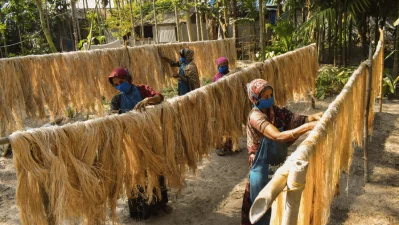
None of the women we spoke to framed their experience as “policy failure.” They did not speak in technical language. But they described a system that does not do justice to them. They described exclusion without using the word.
In Nilphamari, women spoke about cold waves affecting agricultural work and daily income. In Khulna, they spoke about river erosion and irregular flooding. What was common across districts was this: decisions are made somewhere else. Rarely with them. And yet, they are not passive victims.
During breakout discussions, women mapped risks, identified solutions, and prioritized actions. They spoke about alternative livelihoods, safer water systems, early warning communication, and fair wage practices. Their analysis was clear. Their suggestions were practical. What they lack is not knowledge. It is access to decision-making spaces.
The purpose of Bridging the Gender Gap is not simply to document suffering. It is to translate lived realities into policy language. To ensure that when Bangladesh prepares its NDC 3.0 Implementation Plan, these voices are not abstract references but concrete recommendations.
As I was sitting in those rooms, it changed how I understand climate governance. Policies often speak in aggregated numbers. Consultations bring you face-to-face with uneven impacts. You see how a flood is not just a flood. It is lost wages. It is unequal pay. It is compromised nutrition. It is a young girl leaving school.
This is why storytelling matters. Testimonies are not emotional add-ons to policy. They are evidence. They reveal the gap between intention and implementation.
Through Youth for NDCs, we are trying to create a bridge. Between women in climate-vulnerable districts and national policy processes. Between lived experience and formal documents. Between vulnerability and leadership. Because leadership is already there.
It is there when women organize to share water sources. It is there when they negotiate household budgets after crop losses. It is there when they sit in community meetings and speak, even when they are unsure if anyone will listen.
If climate justice is to mean anything, it must move beyond acknowledgment. Women’s testimonies must shape planning, budgeting, and implementation. Their realities must inform how adaptation funds are designed and distributed.
The woman in Khulna did not ask for sympathy. She asked for fairness.
Perhaps that is where climate action must begin.
