//ecdn.dhakatribune.net/contents/cache/images/900x0x1/uploads/dten/2016/10/Kolkata_final_3034999f.jpg
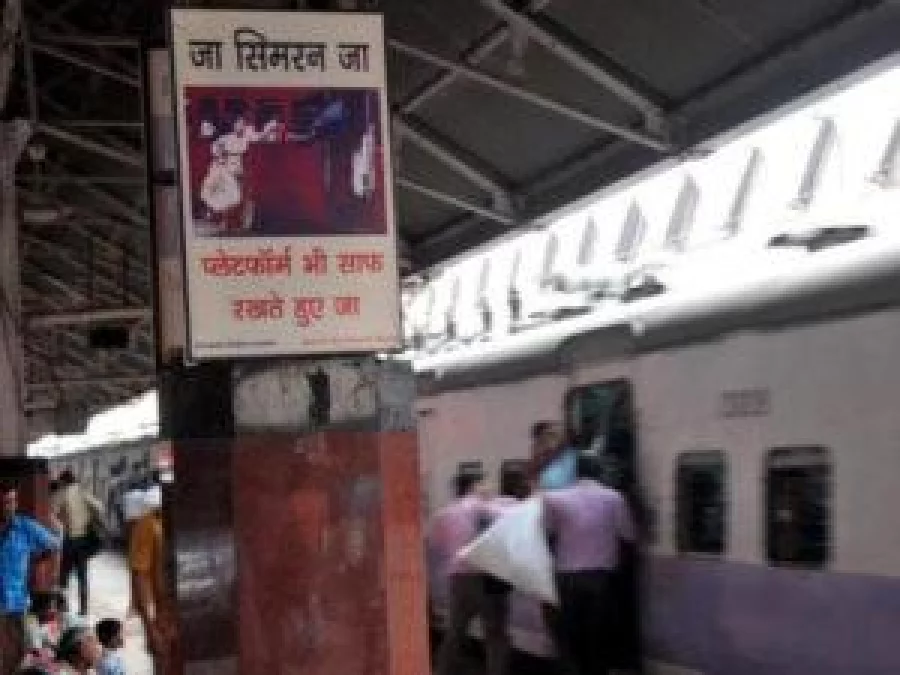
No doubt, Bollywood has become one of the biggest film industries in the world over the decades. The audience in India love movies. The government of India has therefore come up with an interesting idea to reach common people through cinema and has also implemented it. The idea is to change the habits of people, creating humour while giving them a healthy lesson. It all started when a hilarious meme of iconic scenes from five Bollywood films carrying a message of cleanliness for the public at Howrah Station went viral on social media, and changed the way the government sends out messages.
R Badri Narayan, the divisional railway manager, Howrah Division, who conceived and executed the idea, told a magazine, “Government messages are usually serious and appear to be preachy. The new posters have an element of humour and show that such messages can be funny.” He is also a doctorate in economics who believes that this Bollywood fandom has the habit of using dialogues from Hollywood to make a point in lectures and sometimes, even with his peers.
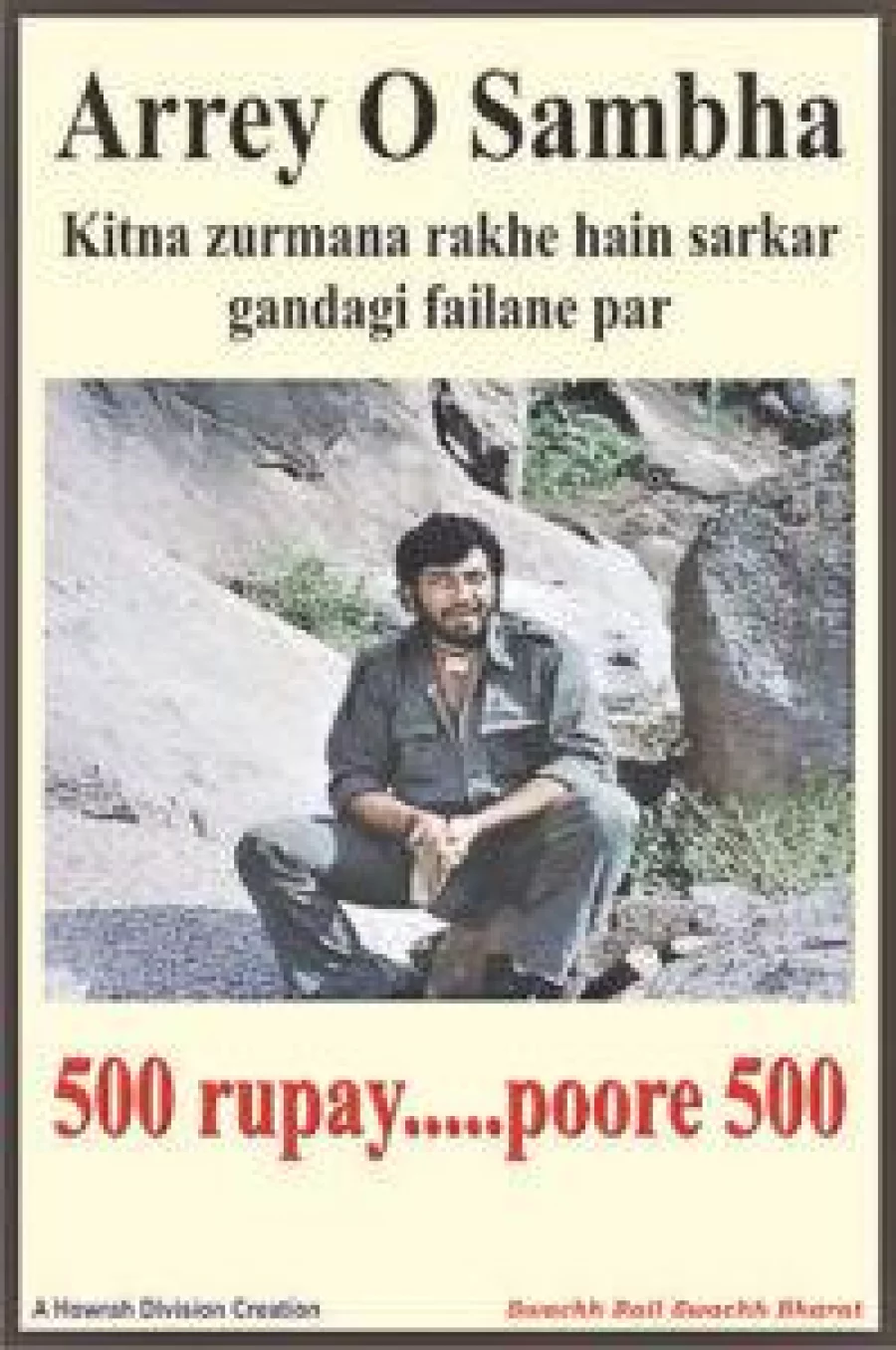
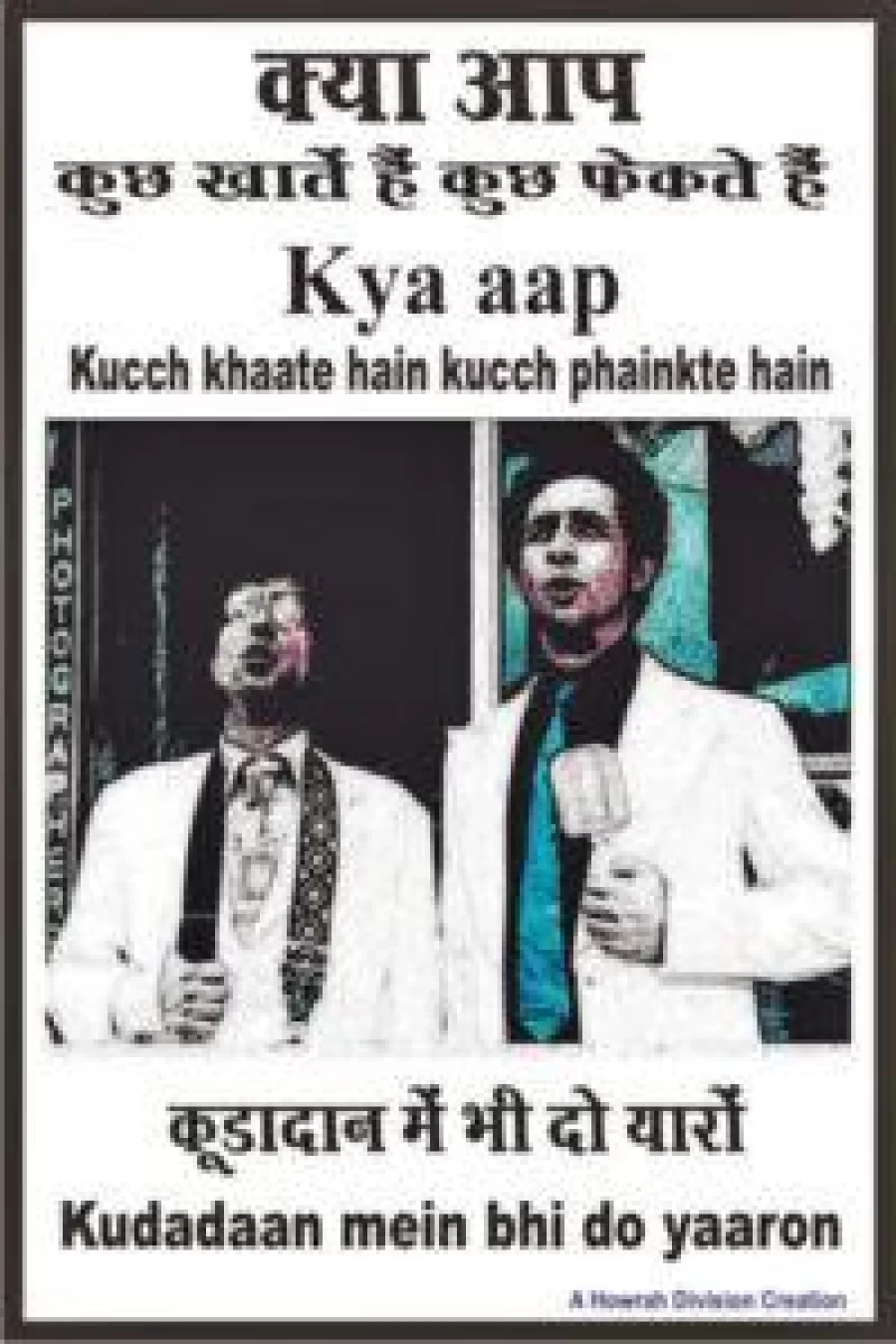
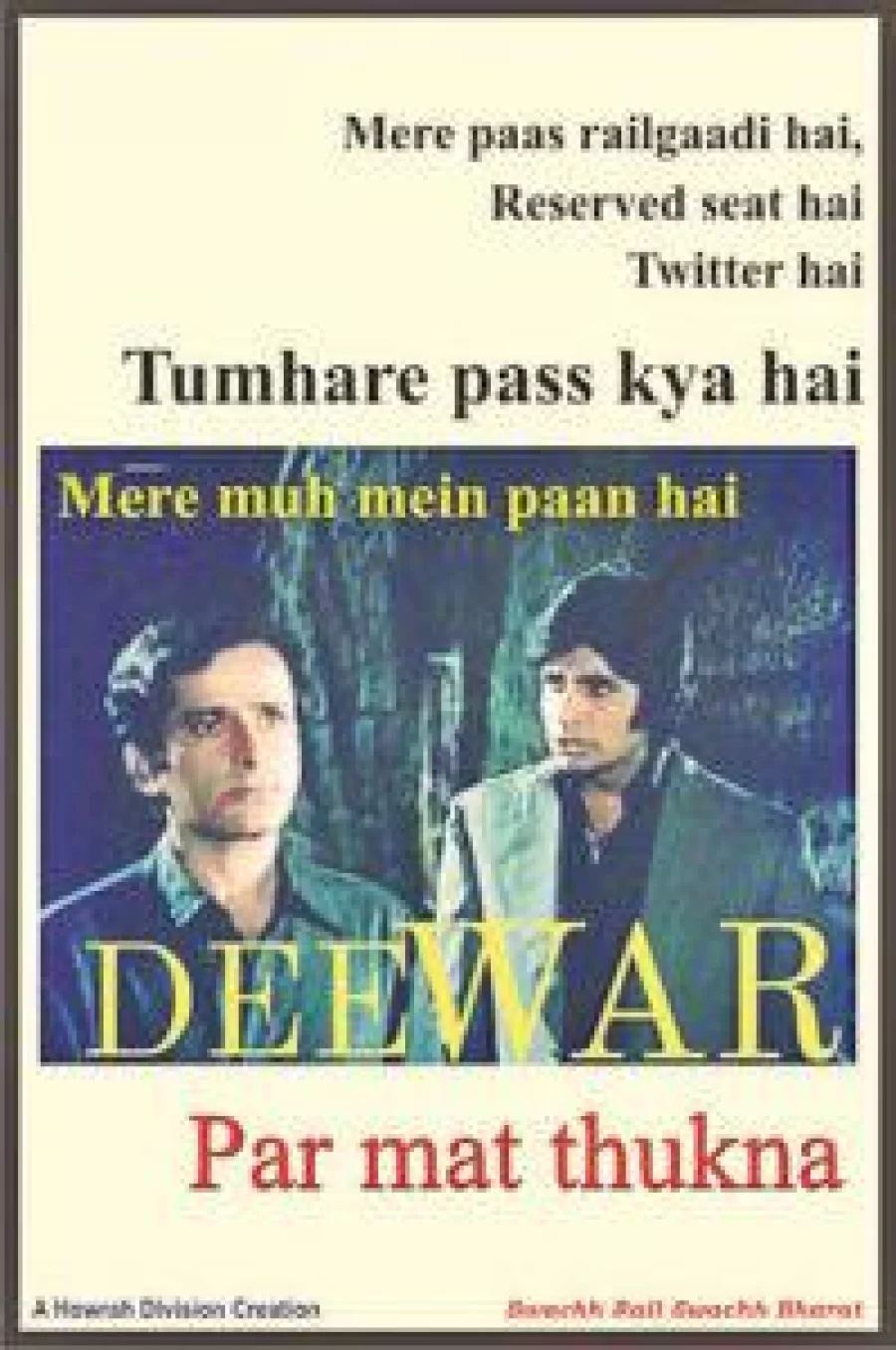
There is a dialogue “Thoda khao, thoda pheko. Maza aayega (Eat some, throw some. its good fun),” in a sequence from Jaanee Bhi Do Yaron, which is considered to be a cult comedy. Now a 30 inch by 20 inch poster depicting a still from the film with two main actors Naseeruddin Shah and Sudhir Mishra - asking (Kya aap thoda Khatein hain, Thoda Phekte Hain? (Do you Eat some and Throw some?). Followed by a message of using the dustbin. Imagine Gabbar in Sholay not concerned about the price on his head but the fine of spitting on a Railway platform. Or the most powerful dialogue in Deewaar, “Mere Paas Maa Hai” (I have a mother) being replaced with “Mere Muh Mein Paan hai” (I have betel leaf in my mouth).
The most popular meme is from the iconic Dilwale Dulhaniya Le Jaenge (DDLJ) where Amrish Puri (Baldeo Singh) lets Kajol (Simran) go and catch a train with Shah Rukh Khan (Raj) is also turned into a spoof to portray a cleanliness message, “Jaa Simran Jaa, Platform bhi saaf rakhte hue jaa” (Go Simran go, but ensure that the platform remains clean).
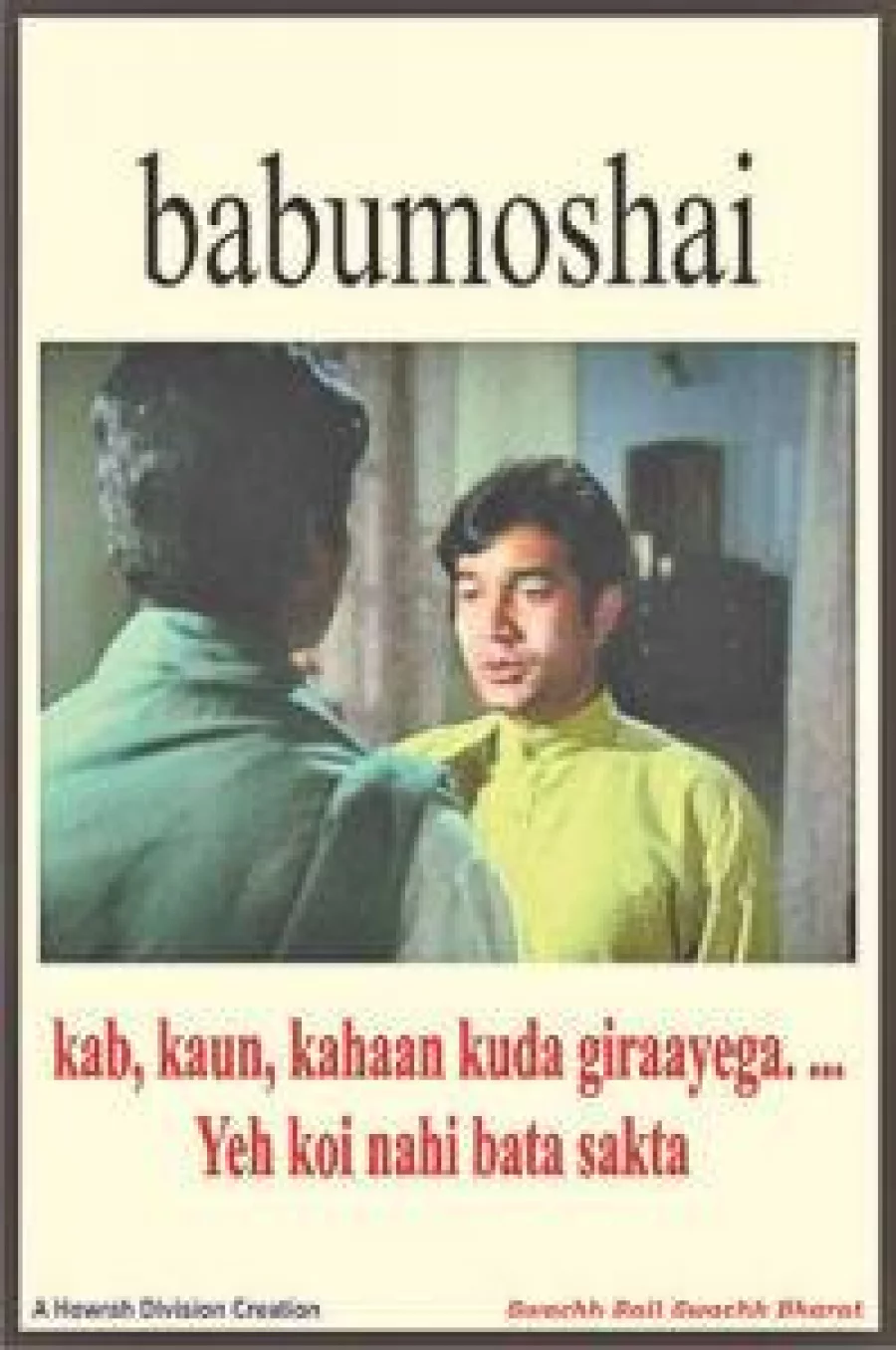
When it came to observing Railway Swatchata Saptah (Railway Cleanliness Week) from September 17, Narayan found that nothing was working out. On the night of September 16, he downloaded a still from Jaanee Bhi Do Yaron and put the message on the photograph. DDLJ, Deewar, Sholay and Anand followed days after. The photographs made their debut on Twitter and became an instant hit when they were put up on platforms in the last week of September.
“We have put up five such posters on platforms eight and nine. This is where the 'more cosmopolitan' passengers of trains like Rajdhani and Shatabdi Express board and de-board,” he said. It is not only the DRM but also the other officers of Eastern Railway who are elated at the response these posters have brought about.
Badri Narayan is already getting requests from other Railway Divisions to allow the posters to be put up at other stations.
While these posters will soon be put up on other platforms, the DRM has already finalised plans for a few others like this to be put on trains, most likely depicting scenes within a train. “I am not divulging the details. I want to keep the suspense alive,” he added.
Author and film critic Shoma Chatterji feels that the posters are becoming viral due to their association with Bollywood. “Anything to do with Bollywood becomes an instant hit in the city. However, being an instant success does not mean that it will have an impact on the psyche of the people,” she said.




 //ecdn.dhakatribune.net/contents/cache/images/900x0x1/uploads/dten/2016/10/Kolkata_final_3034999f.jpg
