




"Only one thing I did wrong / Stayed in Mississippi a day too long."
That recurring line from Bob Dylan’s "Mississippi"—a standout from his 2001 album Love and Theft—has always stuck with me. I first heard it just as I was returning home from my first visit to Washington, DC.
Three years later, while touring the Upper Midwest, I spent a week in the North Dakota city of Fargo and made a two-hour drive to Lake Itasca to see the source of the Mississippi River.
Looking back, my only regret is the exact opposite of Dylan’s: I stayed "a day too short," missing the chance to fully experience such a remarkable place.
The magic of Itasca State Park in north-central Minnesota is that you can literally walk across the mighty Mississippi. At its headwaters, the river is a modest, knee-deep stream only 20 to 30 feet wide.
It is a humble beginning for a river that wanders 3,800 kilometers through 10 U.S. states before emptying into the Gulf of Mexico. Together with its largest tributary, the Missouri, it forms the largest drainage basin in North America.
On that bright, sunny day, I stepped into the water, feeling the cool current swirl around my ankles. I hopped across the line of rocks strewn across the headwaters at Lake Itasca, the glacial lake that serves as the river’s primary source.
At this precise spot, the river is so narrow—roughly 18 feet across—that visitors can easily wade over a rock dam. This 45-foot-long barrier of stones, built in the 1930s, marks the exact point where the lake spills into the river. An iconic yellow-and-brown wooden marker stands nearby, charting the river's long journey to the sea.
I spent my time wading, posing for photos by the marker, and strolling along the boardwalk that follows the river's initial path. I was captivated by the sprawling greenery and the massive stands of Norway Pines.
Itasca is the second-oldest state park in the United States, established in 1891 (trailing only Niagara Falls, established in 1885), and I quickly realized I hadn't allotted enough time to explore its depths.
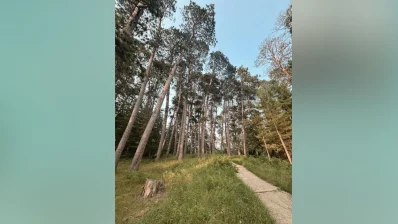
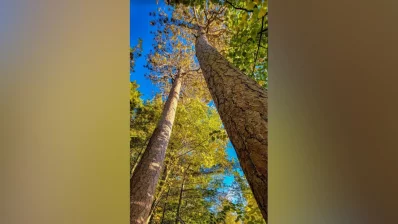
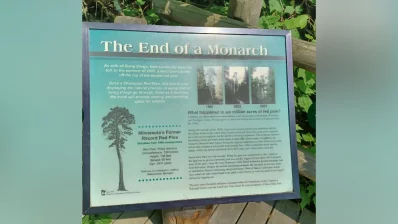
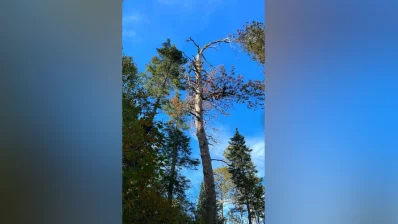
I will never forget the old-growth red pines (also known as Norway Pines). I had never seen such a dense concentration of towering trees. While parts of Michigan and Ontario boast similar heights, Itasca was home to the tallest red pine in the world until a 2007 windstorm sheared off its crown. Even so, the scale remains breathtaking; many of the trees I admired soared well above 100 feet. Park staff told me some of these giants are between 150 and 300 years old.
More than two decades after that visit, I was pleasantly surprised to receive a message from an old Fargo friend, Carol Lindvall, seeking feedback on the park’s new management plans. It was heartening to learn that they are adding cross-country ski trails and introducing new overnight camping facilities at the Pine Ridge Campground.
Reading her message, I realized it might finally be time to return to Itasca State Park. This time, I plan to get it "wrong" just like Dylan—and stay in Mississippi a day too long.
