




What do you believe is the significance of events like the Philosophy Olympiad in promoting philosophical inquiry among students?
In our national curriculum, there's no dedicated subject for Philosophy at school level. Therefore, students have limited opportunities to explore the world of Philosophy, leading to a missed chance to engage with this fascinating subject that forms the basis of various disciplines, including the sciences.
Physics was once a part of Philosophy up until the 17th century. Those who studied the subject were called natural philosophers, and natural philosophers sought to understand the universe around them. René Descartes, who we know from school as the creator of Cartesian geometry, was primarily a philosopher before a scientist and mathematician.
Despite the common misconception that Philosophy is solely a humanities subject, its interdisciplinary nature challenges that notion that many people aren’t aware of, and ultimately miss out on. I personally think Philosophy is a necessary foundational subject.
Many Western countries have introductory Philosophy classes available through their schools, but Bangladeshi high-schools don't provide that opportunity. The annual Philosophy Olympiad (BPO) is the only competition related to Philosophy that I know of in Bangladesh. When an event of this magnitude is organized, it motivates students to explore the subject and its offerings. So, I think the significance of this Olympiad is immense as it lets Bangladeshi high-school students dip their toes into the world of Philosophy early on.
How does the Philosophy Olympiad differ from other academic competitions or Olympiads?
Like other Olympiads, it's exclusive to high-school students. The Philosophy Olympiad is distinct from other academic competitions in its format. Participants are required to write a philosophical essay. During the International round (IPO), you have to write a philosophical essay in under four hours from a set of four topics. Similarly, the national round also involves writing a philosophical essay, usually with a word limit, while the international round has no word limit. To be eligible for the international round, students must first go through the national selection organized by the Bangladesh Philosophy Olympiad (BPO) every year, and two top performing students are selected based on the quality of their essays.
How did participating in the International Philosophy Olympiad shape your understanding of philosophy and critical thinking?
Both the BPO and IPO have helped me immensely in my personal growth. They not only deepened my understanding of Philosophy and critical thinking, but also instilled a greater appreciation for the subject.
In Lisbon, I had the opportunity to engage with Philosophy professors, teachers, and students from diverse backgrounds. It felt good to be in the same room as these Philosophy enthusiasts from around the world who shared similar viewpoints as me. Our discussions went beyond ancient Philosophy or Philosophers -- we explored how Philosophy is relevant in today's world and why subjects in the Humanities hold significance, despite universities reducing funding for these fields. They were exhilarating conversations!
Can you share your journey of participating in the International Philosophy Olympiad?
In 2020, I entered my essay in BPO, ranked first nationally, and got selected for IPO 2020 in Lisbon. I still remember how anxious I was before the announcements. It felt surreal that my essay won first place nationally especially when there are so many talented students.
I prepared hard for the IPO. Unfortunately, the pandemic shifted it online, leaving me disappointed after all the preparation. In 2021, e-IPO Slovenia took place, and being equipped, I earned an Honourable Mention for my essay -- a first for Bangladesh up until that point. The essay discussed the ethical challenges and complexities of individuals participating in technological systems.
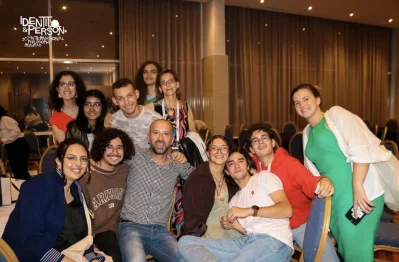
In 2022, after two years online, the IPO returned to in-person. Fortunately, I secured second place nationally and represented Bangladesh in Lisbon. When I reached Lisbon, it was a whole different experience altogether interacting with students face to face, living in the same dorms, and sharing meals together.
A disheartening moment that year was my teammate Faisal Hossain (Bates College ’27) missing the Olympiad due to an unfair visa issue. It's heartbreaking to hear each year that talented Bangladeshi students miss opportunities to represent their country internationally due to visa problems. Despite this, my trip to Lisbon was transformative, and I ranked 43rd globally at the IPO that year with my essay on ethics and morality.
As a current alum, I'm focused on giving back to the community. I'm in the process of developing resources, including a book, and offering coaching support to the national team. The goal is to help students so that they don't have to struggle with limited resources like I did.
How has the Philosophy Olympiad evolved over the years in terms of participation, scope, and impact?
Although the International Philosophy Olympiad has existed since 1993, Bangladesh is relatively new to participating in it. The country participated for the first time in 2015.
I've observed increased student participation and interest in the Olympiad, which is a good thing because it implies that more students are getting interested in this subject. However, there's still a need for improved funding, sponsorships to assist these students, and more volunteers to organize the Olympiad effectively, and reach a larger number of students.
Even though I secured Bangladesh's first title in the Olympiad’s history in the International Olympiad in 2021 and ranked 43rd globally in 2022, I feel I could have performed better with better training opportunities. Unfortunately, resources and funding are limited. Despite these challenges, I gave my best with what was available.
My hope is that someone from Bangladesh will achieve a Gold or Silver medal someday. To achieve this, it’s important to ensure that students receive support at every step, and we provide them with the necessary resources to excel in the International round.
Did the Olympiad encourage you to engage with philosophical texts and ideas outside of the competition?
Absolutely, participating in the Olympiad ignited my passion for philosophical exploration and encouraged me to delve deeper into philosophical texts and ideas. It solidified my intentions to study PPE (Philosophy, Politics & Economics) further.
An interesting outcome of the IPO was the creation of The Cogito Society, a philosophical society started by a few friends, including myself, who attended the Olympiad in Lisbon. The goal of the project is to promote Philosophy among youth around the world, and since we have members around the world, we achieved some success. It’s an interesting project to have come out of the Olympiad which we managed to sustain beyond the Olympiad itself. I also had the opportunity to talk with prominent philosopher Stephen Law in Lisbon and virtually meet Michael Sandel and Noam Chomsky in previous years when the competition went online due to the pandemic!
What advice would you offer to students preparing for the Philosophy Olympiad?
The national round of the Philosophy Olympiad typically takes place every February. My suggestion for students gearing up for the Olympiad is to focus on studying philosophical texts and grasp the structure of a philosophical essay. I recommend reading Bertrand Russell's A History of Western Philosophy -- a book that many participants at IPO mentioned studying. It gives you a basic idea of most of the Philosophical concepts. It’s a good starting point. To understand essay writing, the IPO essay guide on the Philosophy Olympiad website, created by teachers at the IPO, is a valuable resource. The national round evaluates essays using the same criteria as the IPO, making this guide extremely helpful.
