




The first Indo-Bangladesh bilateral summit was held in February 1972. The prime ministers of India and Bangladesh met in Calcutta (now Kolkata), the capital of the Indian state of West Bengal and addressed a large gathering at the Maidan, against the backdrop of the Victoria Memorial. Calcutta was historically the capital of British India, as well as modern India’s most populous city until it was overtaken by Bombay (now Mumbai) around the 1980s. The Bangladeshi premier travelled to Calcutta after the end of the Liberation War to express gratitude to the people of West Bengal for their support in 1971. This was an occasion of immense pride for people on both sides of the border after the victory of 1971. My own grandparents drove to Calcutta from Dhaka to witness the occasion. It was their first holiday since the end of the war.
At the summit itself, the two prime ministers agreed on several basic points. The first was that Indian allied forces would withdraw from Bangladesh by March 1972, before the scheduled visit of the Prime Minister of India. The second was the repatriation of Bangladeshi refugees, with both sides agreeing that repatriation would be applicable only to those who crossed the border after March 25, 1971. The third concerned measures to mitigate cross-border smuggling and modalities for export-import trade. The summit began to lay the groundwork for defining the parameters of the emerging bilateral relationship between modern Bangladesh and India. These basic points were reported back to the cabinet by the Prime Minister of Bangladesh.
The withdrawal of the Indian military from the territory of Bangladesh was completed ahead of schedule, with a formal withdrawal parade held on March 12, 1972. From a peak force of about 150,000 thousand in December 1971, the Indian military rapidly reduced its troop numbers inside Bangladesh to about 5,000 by February 1972. All troops were withdrawn by the third week of March 1972. During the withdrawal parade, Bangabandhu Sheikh Mujibur Rahman inspected a guard of honour from the first Rajput Regiment who were clad in scarlet turbans with golden tassels.
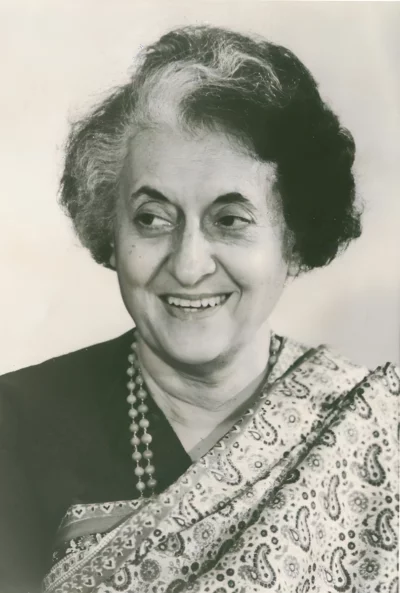
On March 17, 1972, Indira Gandhi arrived in Dhaka for the second bilateral summit. The summit concluded with a Joint Declaration, which was premised on the five principles of peaceful co-existence; and the signing of the Indo-Bangladesh Treaty of Peace and Friendship on March 19, 1972. The treaty laid down a framework for bilateral relations between the two countries. The preamble of the treaty referred to the United Nations Charter. It called for the development of bilateral ties in keeping with the national interests of both states, as well as the interests of lasting peace in Asia and the world. It called for a strengthening of international peace and security.
The 12 salient articles of the treaty are as follows:
- The high contracting parties, inspired by the ideals for which their respective peoples struggled and made sacrifices together, solemnly declare that there shall be lasting peace and friendship between their two countries and their peoples, each side shall respect the independence, sovereignty and territorial integrity of the other and refrain from interfering in the internal affairs of the other side. The high contracting parties shall further develop and strengthen the relations of friendship, good-neighbourliness and all-round cooperation existing between them, on the basis of the above-mentioned principles as well as the principles of equality and mutual benefit.
- Being guided by their devotion to the principles of equality of all peoples and states, irrespective of race or creed, the high contracting parties condemn colonialism and racialism in all forms and manifestations and are determined to strive for their final and complete elimination. The high contracting parties shall cooperate with other states in achieving these aims and support the just aspirations of people in their struggle against colonialism and racial discrimination and for their national liberation.
- The high contracting parties reaffirm their faith in the policy of non-alignment and peaceful co-existence as important factors for easing tension in the world, maintaining international peace and security, and strengthening national sovereignty and independence.
- The high contracting parties shall maintain regular contacts with each other on major international problems affecting the interests of both states, through meetings and exchanges of views at all levels.
- The high contracting parties shall continue to strengthen and widen their mutually advantageous and all-round cooperation in the economic, scientific and technical fields. The two countries shall develop mutual cooperation in the fields of trade, transport and communications between them on the basis of the principles of equality, mutual benefit and the most-favoured nation principle.
- The high contracting parties further agree to make joint studies and take point action in the fields of flood control, river basin development and the development of hydro-electric power and irrigation.
- The high contracting parties shall promote relations in the fields of art, literature, education, culture, sports and health.
- In accordance with the ties of friendship existing between the two countries each of the high contracting parties solemnly declares that it shall not enter into or participate in any military alliance directed against the other party. Each of the high contracting parties shall refrain from any aggression against the other party and shall not allow the use of its territory for committing any act that may cause military damage to or constitute a threat to the security of the other high contracting party.
- Each of the high contracting parties shall refrain from giving any assistance to any third party taking part in an armed conflict, against the other party. In case either party is attacked or threatened with attack, the high contracting parties shall immediately enter into mutual consultations in order to take appropriate effective measures to eliminate the threat and thus ensure the peace and security of their countries.
- Each of the high contracting parties solemnly declares that it shall not undertake any commitment secret or open, toward one or more States which may be incompatible with the present Treaty.
- The present treaty is signed for a term of twenty five years and shall be subject to renewal by mutual agreement of the high contracting parties. The treaty shall come into force with immediate effect from the date of its signature.
- Any differences in interpreting any article or articles of the present Treaty that may arise between the high Contracting Parties shall be settled on a bilateral basis by peaceful means in a spirit of mutual respect and understanding.
The friendship treaty was the most comprehensive instrument of hard law in Bangladesh-India relations to date. It provided a comprehensive framework for global, bilateral, economic, technical, scientific and cultural cooperation. Later treaties were focused on specific subjects, such as the land boundary or in terms of water sharing of common rivers. In more recent times, international law between Bangladesh and India has been based on soft law like Joint Declarations and Joint Communiques.
The treaty was operational for 25 years until its expiry in 1997. Both countries chose not to renew the treaty. Noting the criticism of the treaty among virulent anti-India circles in Bangladesh, Dr Kamal Hossain writes in his book Bangladesh: Quest for Freedom and Justice that “It is difficult to spell out any element which could be said to compromise Bangladesh’s sovereignty. This is evident not only from reading its provisions but the fact that its critics, when challenged, began to take a different line, namely that there was some ‘secret’ understanding or secret pact. The extent of absurdity to which some elements could go was evident when after the coup of August 15, the coup-makers were reported to have carried out searches in the Foreign Office to find ‘the secret pact’ which, of course, did not exist. Nor, indeed, have any of the post August 15 regimes sought to terminate this Treaty”. Dr Hossain further notes that “The actual record of how Bangladesh viewed its interests and how it sought to secure them during the period before August 15, 1975, speaks for itself in dispelling all motivated propaganda that national sovereignty or national interests had not been adequately safeguarded by Sheikh Mujib and his government.”
Umran Chowdhury works in the legal field.
