




When one begins to talk about fashion design, the image that comes to mind is of some high art that is the purview of the elite, and a level of sophistication that the masses can only aspire to. This image has endured even through the rise of fast fashion. Which is why Anuj Sharma’s concept of “button masala”, a technique that employs buttons, rubber bands and artful draping to construct functional garments out of available materials so that anyone can create a new outfit in a matter of minutes, is such a welcome change.
Sharma himself has studied apparel design at NID and specialized in high performance sportswear design when he went for his Masters at the University of Derby, UK. His ingenious formula, however, has proven that one doesn’t need extensive education, or even a lot of time to create something beautiful. Not only does this democratize high fashion, it is a time-saving, cost-saving, sustainable method that lends itself to boundless creativity.
“We should be paying more, buying less, and wearing it often”
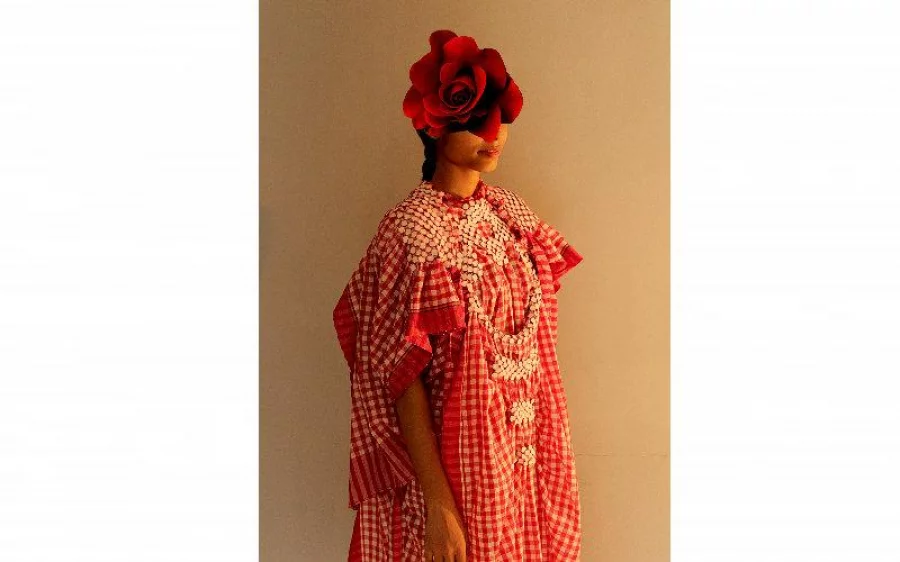
“It’s all about drapes so these clothes can be tailored to fit anybody and whether you put on or lose weight, it’s easy to open it out and redo it. You could also remove the buttons and rubber bands at any time and have the fabric back in the same state. You don’t have to throw them away,” he explained in an interview with BeBeautiful.in “There’s no wastage of energy – and I use local fabrics and materials that are easily available”. When the topic of sustainability came up in his conversation with Avenue T, Sharma had a lot to say about the state of fashion and consumerism. “We’ve already produced enough clothes to dress everyone on this planet for the next ten years. Everyone only wears about six colours and the same few basic designs that they keep buying small variations on, in order to show that they’re somehow different. And you can see what it [fast fashion] has done to the planet. We ought to be paying more, buying less and wearing it more often.”
For BFW2020 he teamed up with a Kerala-based non-profit called Save the Loom, using their handloom and handwoven fabric to produce his draped confections. With some au courant polka dots and chequered prints in bold colours against a backdrop of stark white, he used his artful draping to create the runway looks. Sharma completed his SS20 Dhaka tour with a workshop to teach his sustainable ways to eager young learners here.
