Reports about preventable death and mistreatment of patients by negligence of medical professionals in Bangladesh are a frequent phenomenon.
Amid the long standing controversy regarding the much needed professionalism in the country’s healthcare sector, the government drafted the Medical Care Protection Act, 2016, aiming to provide medical professionals with legal immunity for negligence in treatment.
Any act “performed in good faith” by medical professionals will not be considered a criminal act and complaints cannot be filed in the court against the person, says Section 25 of the draft law.
With the debate still in place, the government has come up with yet another controversial law-- Medical Services Act, the draft of which began in 2014.
This law contains a provision for a maximum of three years in jail or up to Tk5 lakh fine for assaulting doctors in any healthcare service-related issues.
These draft acts, if implemented, could be used with impunity to throw the patients’ rights under the bus.
In the last few years, there have been numerous allegations by patients and their relatives that wrong treatment and negligence is one of leading causes of patient death across the country.
On May 18 last year, a female student of University of Dhaka (DU) died due to alleged wrong treatment at the Central Hospital in Dhaka, causing uproar from different quarters, especially from her classmates.
The deceased, Afia Akter Chaity, 20, was a first year student at the zoology department of DU, said police sources.
Afia was admitted to the hospital after doctors diagnosed her with acute myeloblastic leukaemia (AML), a type of cancer. A prescription issued from the same hospital showed the same diagnosis.
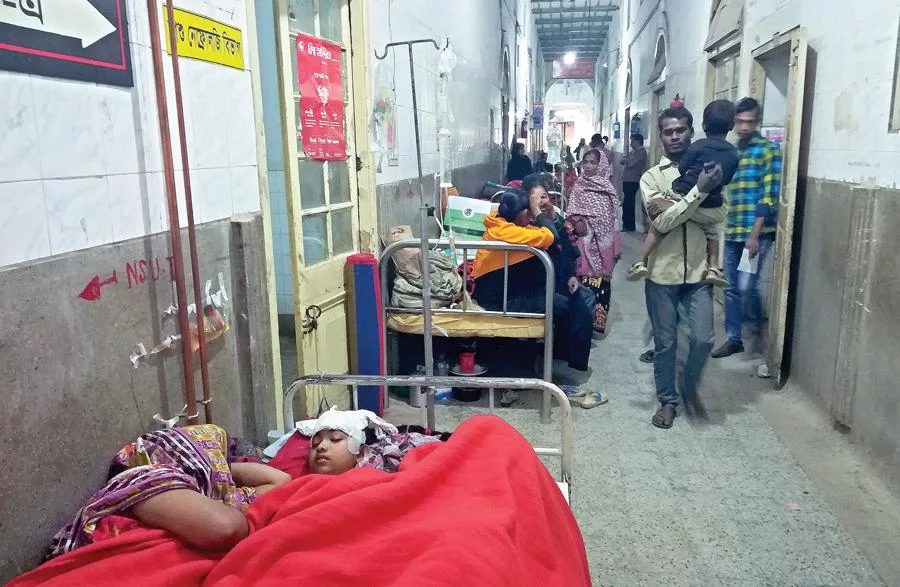
Photo:
Mahmud Hossain Opu/Dhaka TribuneHowever, Afia’s fellow students claimed that prior to Afia’s death the doctors told them she was suffering from dengue.
As the news of her passing reached the university campus, agitated students demanded punishment for the doctors responsible for the alleged misdiagnosis.
A group of students and other people went to the hospital and vandalised different parts of the facility. These events led to the arrest of the hospital director.
Speaking to the Dhaka Tribune, Chaity’s uncle Humayun Kabir pointed out the doctors should inquire the patient’s whereabouts from the person’s relatives first, then the treatment process should begin. Sometimes the doctors refused to share information about the patient with their family members, which can lead to wrong treatment.”
He added: “The medical care protection act can be very harmful for patients and the government should refrain from implementing the law for the sake of the people.”
On October 4, 2017, a newborn baby died a day after she was born. But she was already declared a stillborn at a private hospital in Chittagong on October 3.
Md Azizur Rahman Siddique, civil surgeon of Chittagong later claimed that the “ill-fated” infant could have been saved if she was not mistakenly declared dead.
The premature infant was declared stillborn by on-duty medics at the Centre for Specialised Care and Research (CSCR) Private Ltd. Charges of negligence of duty against the healthcare professionals were later withdrawn.
In another incident, Mustafiz (not real name) admitted his 8-month old baby to the United Hospital in 2011. The baby was immediately taken to the ICU.
After three days of admission, the doctors told Mustafiz that his baby is suffering from pneumonia. After three days in the ICU, the baby was shifted to a normal room, but was kept under ventilator for 18 days.
However, the baby died after 21 days in the hospital and the doctors did not provide any details on the cause of death.
Following the incident, Mustafiz opened a Facebook group titled “Blacklisted Doctors.” Within just a few days, the users posted the names of hundreds of doctors that were accused of malpractice.
The three above mentioned cases are among hundreds of others where patients lost their lives due to negligence or wrong treatment.
According to the rights group Ain-o-Salish Kendra, more than 500 people died across the country, due to similar medical mishaps between October, 2008 and February, 2016.
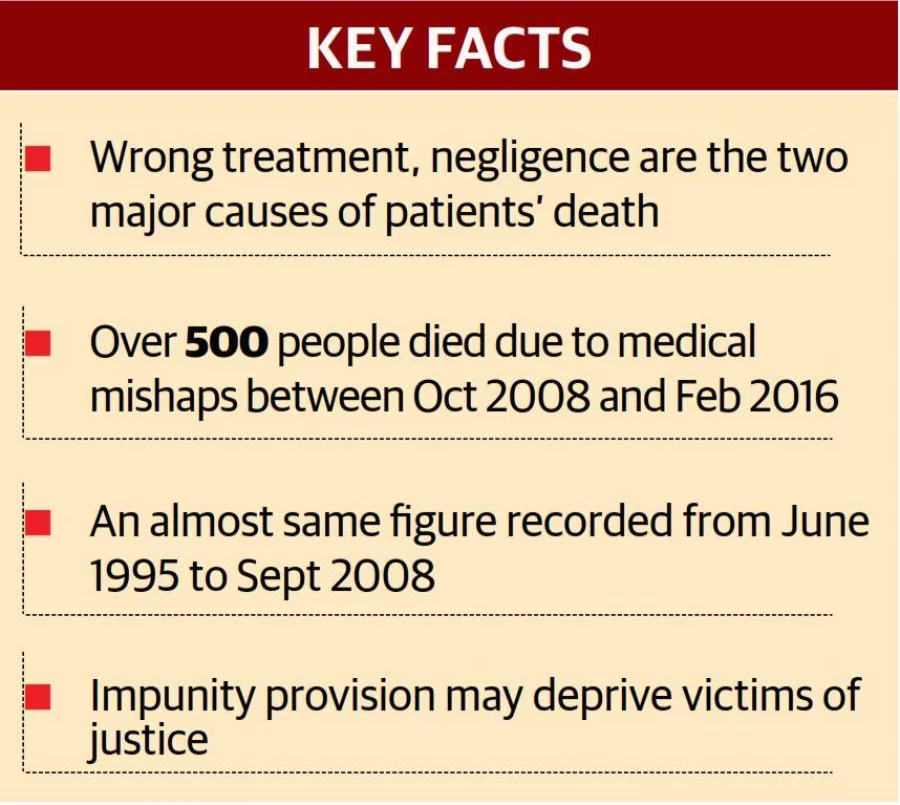
The figure was almost the same from June, 1995 to September, 2008.
This is already a much debated issue among healthcare experts, with many of them fearing that the law, once passed, will leave the victims or their families deprived of justice.
They also expressed concern that the law may deepen the existing crisis in the medical sector, as they predict more cases of death or bodily harm because of the supposed immunity.
Addressing the issue, Public health expert Dr Zafrullah Chowdhury said: “Good faith needs to be based on confidence, otherwise it would be an unpleasant experience for any patient.”
He also referred to a case in Comilla where a doctor stitched the stomach of a woman but forgot to remove one of twins inside her womb, reportedly thinking that the baby was a tumour.
“If any surgeon performs surgery on the right side of a patient’s stomach instead of the left one, it would be a crime. If it is caused by professional negligence, the accused must to be punished if proven guilty,” said Dr Zafrullah, who is also the founder of Gonoshasthaya Kendra.
Explaining “good faith” mentioned in the draft, he said: “For instance, if any police officer takes a man into custody with so called good faith and then beats him to death, accusing him of having terror links, he deserves to face legal action.”
He recommended that healthcare professionals should have the same level of accountability to the law.
However, the act could also help prevent clashes between healthcare professionals and patients, and protect doctors, nurses and hospital staff from incident arising from allegations of malpractice.
Sheepa Hafiza, executive director of the Ain o Salish Kendra (ASK), told the Dhaka Tribune that the government should strongly address the allegations of negligence in the healthcare sector.
Coordinator of the same organization, Abu Ahmed Faijul Kabir said: “The act does not serve the interest of the people, and the government should re-think about implementing the law in its current form.”
Mentioning a horrific incident in Gaibandha, Kabir said: “We have case in Gaibandha, where a private medical clinic doctor transfused blood of A+ group on a patient who needed B+ blood. A writ was filed in local court over this incident.”
He further said: “We are scrutinizing the proposed act to see that whether it serves the interest of the patients.”
On the other hand, Bangladesh Medical Association (BMA) and Swadhinata Chikitsak Parishad (Swachip) leaders are supporting the government move.
On February 15, 2017, they met Health Minister Mohammed Nasim to discuss the draft act, and then demanded that full protection be ensured for the doctors under the proposed law.
When contacted, BMA President Mustafa Jalal Mohiuddin stated that the law is yet to be finalised.
“We will fix it through a discussion with the health minister and we are going to meet him in a few days in this regard,” he added, refusing to disclose his take on the draft law.
Both the minister and BMA Secretary General Md Ehteshamul Huq Choudhury could not be reached for comments despite repeated attempts by the correspondent.
Speaking to the correspondent, Prof Parveen Fatima, chair of the Department of Obstetrics and Gynaecology at Bangabandhu Sheikh Mujib Medical University (BSMMU), said: “The proposed act would serve the interest of the healthcare professionals. The doctors always try to do what is best for the patients. But, if they make any mistakes, there is a committee in place to resolve the issue and take necessary action.”



 Photo: Mahmud Hossain Opu/Dhaka TribuneHowever, Afia’s fellow students claimed that prior to Afia’s death the doctors told them she was suffering from dengue.
As the news of her passing reached the university campus, agitated students demanded punishment for the doctors responsible for the alleged misdiagnosis.
A group of students and other people went to the hospital and vandalised different parts of the facility. These events led to the arrest of the hospital director.
Speaking to the Dhaka Tribune, Chaity’s uncle Humayun Kabir pointed out the doctors should inquire the patient’s whereabouts from the person’s relatives first, then the treatment process should begin. Sometimes the doctors refused to share information about the patient with their family members, which can lead to wrong treatment.”
He added: “The medical care protection act can be very harmful for patients and the government should refrain from implementing the law for the sake of the people.”
On October 4, 2017, a newborn baby died a day after she was born. But she was already declared a stillborn at a private hospital in Chittagong on October 3.
Md Azizur Rahman Siddique, civil surgeon of Chittagong later claimed that the “ill-fated” infant could have been saved if she was not mistakenly declared dead.
The premature infant was declared stillborn by on-duty medics at the Centre for Specialised Care and Research (CSCR) Private Ltd. Charges of negligence of duty against the healthcare professionals were later withdrawn.
In another incident, Mustafiz (not real name) admitted his 8-month old baby to the United Hospital in 2011. The baby was immediately taken to the ICU.
After three days of admission, the doctors told Mustafiz that his baby is suffering from pneumonia. After three days in the ICU, the baby was shifted to a normal room, but was kept under ventilator for 18 days.
However, the baby died after 21 days in the hospital and the doctors did not provide any details on the cause of death.
Following the incident, Mustafiz opened a Facebook group titled “Blacklisted Doctors.” Within just a few days, the users posted the names of hundreds of doctors that were accused of malpractice.
The three above mentioned cases are among hundreds of others where patients lost their lives due to negligence or wrong treatment.
According to the rights group Ain-o-Salish Kendra, more than 500 people died across the country, due to similar medical mishaps between October, 2008 and February, 2016.
Photo: Mahmud Hossain Opu/Dhaka TribuneHowever, Afia’s fellow students claimed that prior to Afia’s death the doctors told them she was suffering from dengue.
As the news of her passing reached the university campus, agitated students demanded punishment for the doctors responsible for the alleged misdiagnosis.
A group of students and other people went to the hospital and vandalised different parts of the facility. These events led to the arrest of the hospital director.
Speaking to the Dhaka Tribune, Chaity’s uncle Humayun Kabir pointed out the doctors should inquire the patient’s whereabouts from the person’s relatives first, then the treatment process should begin. Sometimes the doctors refused to share information about the patient with their family members, which can lead to wrong treatment.”
He added: “The medical care protection act can be very harmful for patients and the government should refrain from implementing the law for the sake of the people.”
On October 4, 2017, a newborn baby died a day after she was born. But she was already declared a stillborn at a private hospital in Chittagong on October 3.
Md Azizur Rahman Siddique, civil surgeon of Chittagong later claimed that the “ill-fated” infant could have been saved if she was not mistakenly declared dead.
The premature infant was declared stillborn by on-duty medics at the Centre for Specialised Care and Research (CSCR) Private Ltd. Charges of negligence of duty against the healthcare professionals were later withdrawn.
In another incident, Mustafiz (not real name) admitted his 8-month old baby to the United Hospital in 2011. The baby was immediately taken to the ICU.
After three days of admission, the doctors told Mustafiz that his baby is suffering from pneumonia. After three days in the ICU, the baby was shifted to a normal room, but was kept under ventilator for 18 days.
However, the baby died after 21 days in the hospital and the doctors did not provide any details on the cause of death.
Following the incident, Mustafiz opened a Facebook group titled “Blacklisted Doctors.” Within just a few days, the users posted the names of hundreds of doctors that were accused of malpractice.
The three above mentioned cases are among hundreds of others where patients lost their lives due to negligence or wrong treatment.
According to the rights group Ain-o-Salish Kendra, more than 500 people died across the country, due to similar medical mishaps between October, 2008 and February, 2016. The figure was almost the same from June, 1995 to September, 2008.
This is already a much debated issue among healthcare experts, with many of them fearing that the law, once passed, will leave the victims or their families deprived of justice.
They also expressed concern that the law may deepen the existing crisis in the medical sector, as they predict more cases of death or bodily harm because of the supposed immunity.
Addressing the issue, Public health expert Dr Zafrullah Chowdhury said: “Good faith needs to be based on confidence, otherwise it would be an unpleasant experience for any patient.”
He also referred to a case in Comilla where a doctor stitched the stomach of a woman but forgot to remove one of twins inside her womb, reportedly thinking that the baby was a tumour.
“If any surgeon performs surgery on the right side of a patient’s stomach instead of the left one, it would be a crime. If it is caused by professional negligence, the accused must to be punished if proven guilty,” said Dr Zafrullah, who is also the founder of Gonoshasthaya Kendra.
Explaining “good faith” mentioned in the draft, he said: “For instance, if any police officer takes a man into custody with so called good faith and then beats him to death, accusing him of having terror links, he deserves to face legal action.”
He recommended that healthcare professionals should have the same level of accountability to the law.
However, the act could also help prevent clashes between healthcare professionals and patients, and protect doctors, nurses and hospital staff from incident arising from allegations of malpractice.
Sheepa Hafiza, executive director of the Ain o Salish Kendra (ASK), told the Dhaka Tribune that the government should strongly address the allegations of negligence in the healthcare sector.
Coordinator of the same organization, Abu Ahmed Faijul Kabir said: “The act does not serve the interest of the people, and the government should re-think about implementing the law in its current form.”
Mentioning a horrific incident in Gaibandha, Kabir said: “We have case in Gaibandha, where a private medical clinic doctor transfused blood of A+ group on a patient who needed B+ blood. A writ was filed in local court over this incident.”
He further said: “We are scrutinizing the proposed act to see that whether it serves the interest of the patients.”
On the other hand, Bangladesh Medical Association (BMA) and Swadhinata Chikitsak Parishad (Swachip) leaders are supporting the government move.
On February 15, 2017, they met Health Minister Mohammed Nasim to discuss the draft act, and then demanded that full protection be ensured for the doctors under the proposed law.
When contacted, BMA President Mustafa Jalal Mohiuddin stated that the law is yet to be finalised.
“We will fix it through a discussion with the health minister and we are going to meet him in a few days in this regard,” he added, refusing to disclose his take on the draft law.
Both the minister and BMA Secretary General Md Ehteshamul Huq Choudhury could not be reached for comments despite repeated attempts by the correspondent.
Speaking to the correspondent, Prof Parveen Fatima, chair of the Department of Obstetrics and Gynaecology at Bangabandhu Sheikh Mujib Medical University (BSMMU), said: “The proposed act would serve the interest of the healthcare professionals. The doctors always try to do what is best for the patients. But, if they make any mistakes, there is a committee in place to resolve the issue and take necessary action.”
The figure was almost the same from June, 1995 to September, 2008.
This is already a much debated issue among healthcare experts, with many of them fearing that the law, once passed, will leave the victims or their families deprived of justice.
They also expressed concern that the law may deepen the existing crisis in the medical sector, as they predict more cases of death or bodily harm because of the supposed immunity.
Addressing the issue, Public health expert Dr Zafrullah Chowdhury said: “Good faith needs to be based on confidence, otherwise it would be an unpleasant experience for any patient.”
He also referred to a case in Comilla where a doctor stitched the stomach of a woman but forgot to remove one of twins inside her womb, reportedly thinking that the baby was a tumour.
“If any surgeon performs surgery on the right side of a patient’s stomach instead of the left one, it would be a crime. If it is caused by professional negligence, the accused must to be punished if proven guilty,” said Dr Zafrullah, who is also the founder of Gonoshasthaya Kendra.
Explaining “good faith” mentioned in the draft, he said: “For instance, if any police officer takes a man into custody with so called good faith and then beats him to death, accusing him of having terror links, he deserves to face legal action.”
He recommended that healthcare professionals should have the same level of accountability to the law.
However, the act could also help prevent clashes between healthcare professionals and patients, and protect doctors, nurses and hospital staff from incident arising from allegations of malpractice.
Sheepa Hafiza, executive director of the Ain o Salish Kendra (ASK), told the Dhaka Tribune that the government should strongly address the allegations of negligence in the healthcare sector.
Coordinator of the same organization, Abu Ahmed Faijul Kabir said: “The act does not serve the interest of the people, and the government should re-think about implementing the law in its current form.”
Mentioning a horrific incident in Gaibandha, Kabir said: “We have case in Gaibandha, where a private medical clinic doctor transfused blood of A+ group on a patient who needed B+ blood. A writ was filed in local court over this incident.”
He further said: “We are scrutinizing the proposed act to see that whether it serves the interest of the patients.”
On the other hand, Bangladesh Medical Association (BMA) and Swadhinata Chikitsak Parishad (Swachip) leaders are supporting the government move.
On February 15, 2017, they met Health Minister Mohammed Nasim to discuss the draft act, and then demanded that full protection be ensured for the doctors under the proposed law.
When contacted, BMA President Mustafa Jalal Mohiuddin stated that the law is yet to be finalised.
“We will fix it through a discussion with the health minister and we are going to meet him in a few days in this regard,” he added, refusing to disclose his take on the draft law.
Both the minister and BMA Secretary General Md Ehteshamul Huq Choudhury could not be reached for comments despite repeated attempts by the correspondent.
Speaking to the correspondent, Prof Parveen Fatima, chair of the Department of Obstetrics and Gynaecology at Bangabandhu Sheikh Mujib Medical University (BSMMU), said: “The proposed act would serve the interest of the healthcare professionals. The doctors always try to do what is best for the patients. But, if they make any mistakes, there is a committee in place to resolve the issue and take necessary action.”