




Though pottery is one of the oldest forms of art in the history of Bangladesh, potters are quitting their ancestral profession as this industry is now engulfed with many problems.
This long-traditional art form is losing its appeal day by day in the wake of falling demand for pottery products.
In the past, clay items served as essential daily entities, but now, people only occasionally utilize these products.
Many potters are leaving their ancestral profession due to low demand and other problems engulfing the old-age industry. Potters attribute this decline in profitability to the widespread availability of plastic and aluminum products flooding the market.
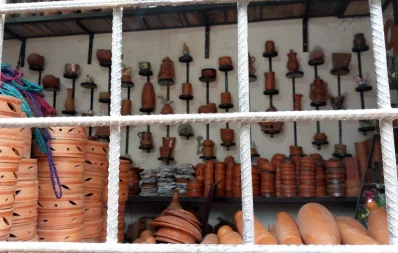
The professional community of Bangladesh, connected with this art since prehistoric times, is known as Kumbhakar, Kumar or Kumor. Their hereditary title is often “Paul”.
The place where the potters live is called Kumarbari or Paulbari and the neighbourhood or region in which they live is called Kumarpara or Paulpara.
Rayerbazar potter community
Rayerbazar is one of the historical areas, which is located on the western side of Dhaka and bears many testimonies of history.
According to historical data, this area was made habitable during colonial rule in the 19th century.
A community of potters was among the earliest settlers in this region drawn by the abundant clay resources and the convenience of transporting clay goods via the nearby Turag River.
The Rayerbazar region's potters are renowned nationally and internationally for their exceptional technical expertise and craftsmanship.
Approximately two centuries ago, pottery production thrived in Dhaka's Rayerbazar area.
At that time, they used to make different types of clay items including idols, dolls, tubs, tiles, pitchers, sara, jal patra, jalkanda, pots and pans, cauldrons, shankis, vessels, mudri frying pans, pots, bowls, pan daburs, kupi, gacha, pidim, flower tubs, matkas for keeping paddy-rice and betel nuts, nets, and other essentials.

From the Tannery intersection to the Satmasjid area, there were many potter families. There were approximately 750 Paul families covering an area of about one mile from Tannery intersection to Satmasjid in Dhaka district.
However, the current situation of Paulpara, Rayerbazar is no longer as vibrant and livable as before.
There are a few families who are still running this business.
Witnessing their present situation, it cannot be fathomed that Paulpara was once so renowned.
Potter Paran Babu’s struggle to save pottery
A potter named Prankrishna Paul Paran (locally known as Paran Babu) who is still running the pottery business said: “The use of aluminium is one of the major reasons behind its declining trend. People no longer want to use earthenware. This is why most of the potters have left this business.”
Paran Babu is the owner of a shop named “Baba Shahjalal Tundal Store.”
The store can be discovered when walking toward the Mahaprabhu Akhara temple. They specialize in crafting and selling all types of tandoor or bread ovens.
Paran Babu is the owner of the shop.
“We have been doing this (business) from generation to generation. I guess I am the last one who is maintaining our family’s traditions. My son does not want to continue it. The work is quite difficult, so no one wants to do it. I want to keep this tradition alive, but it has become impossible for me alone to save our ancestral profession. Everyone has to come forward to save this industry,” Paran Babu said.
There were only a handful of pottery shops in the entire area, and the majority of them were focused on the trade of tandoor stoves.
However, one particular shop stood out as it offered a diverse selection of earthenware, including pots, decorative items, and flower tubs, among other products.Paran Babu said that the tandoor stove is a unique product, and there is no alternative to it.
He said it was the reason why these stoves have huge demand.
The eyes of Paran Babu still have a ray of hope to save this business. He was still producing products for Comilla during this rainy season.
However, when inquired about the present state of this business, which he has been dedicated to for over 35 years, he expressed frustration, revealing that it has become exceedingly challenging for him to sustain this business.
“But this is the legacy of my father and grandfather. I have to maintain this,” he added.
