




 While presenting the report, ASK Coordinator Abu Ahmed Faizul Kabir said that despite some improvement in certain areas, civil and political rights in the country did not improve as expected.
“Extrajudicial killing, enforced disappearance, political violence, and repression on minorities decreased in 2017… but there was a worrying trend in enforced disappearances, as people from diverse backgrounds disappeared,” he said.
Among those who went missing or were forcibly disappeared in the year were teachers, students, publishers, political leaders and former diplomats.
According to the report, the number of rape and sexual assault, and incidents of violence against women were higher than in 2016, and freedom of expression was in under assault.
ASK Executive Director Shipa Hafiza said: “Human rights situations in any country should not deteriorate at such an alarming level. There should be measures to improve human rights for the sake of a country’s overall development.”
She urged stakeholders to come forward to help improve human rights in Bangladesh.
ASK, however, praised the government’s initiatives to achieve Sustainable Development Goals and include the private sector in accomplishing the SDGs.
It also commended the government’s efforts in giving shelter to the persecuted Rohingya people from strife-torn Rakhine state in Myanmar, delivery of verdict in the much-talked-about Narayanganj 7-murder case, and approval of draft of the Dowry Prohibition Act 2017.
While presenting the report, ASK Coordinator Abu Ahmed Faizul Kabir said that despite some improvement in certain areas, civil and political rights in the country did not improve as expected.
“Extrajudicial killing, enforced disappearance, political violence, and repression on minorities decreased in 2017… but there was a worrying trend in enforced disappearances, as people from diverse backgrounds disappeared,” he said.
Among those who went missing or were forcibly disappeared in the year were teachers, students, publishers, political leaders and former diplomats.
According to the report, the number of rape and sexual assault, and incidents of violence against women were higher than in 2016, and freedom of expression was in under assault.
ASK Executive Director Shipa Hafiza said: “Human rights situations in any country should not deteriorate at such an alarming level. There should be measures to improve human rights for the sake of a country’s overall development.”
She urged stakeholders to come forward to help improve human rights in Bangladesh.
ASK, however, praised the government’s initiatives to achieve Sustainable Development Goals and include the private sector in accomplishing the SDGs.
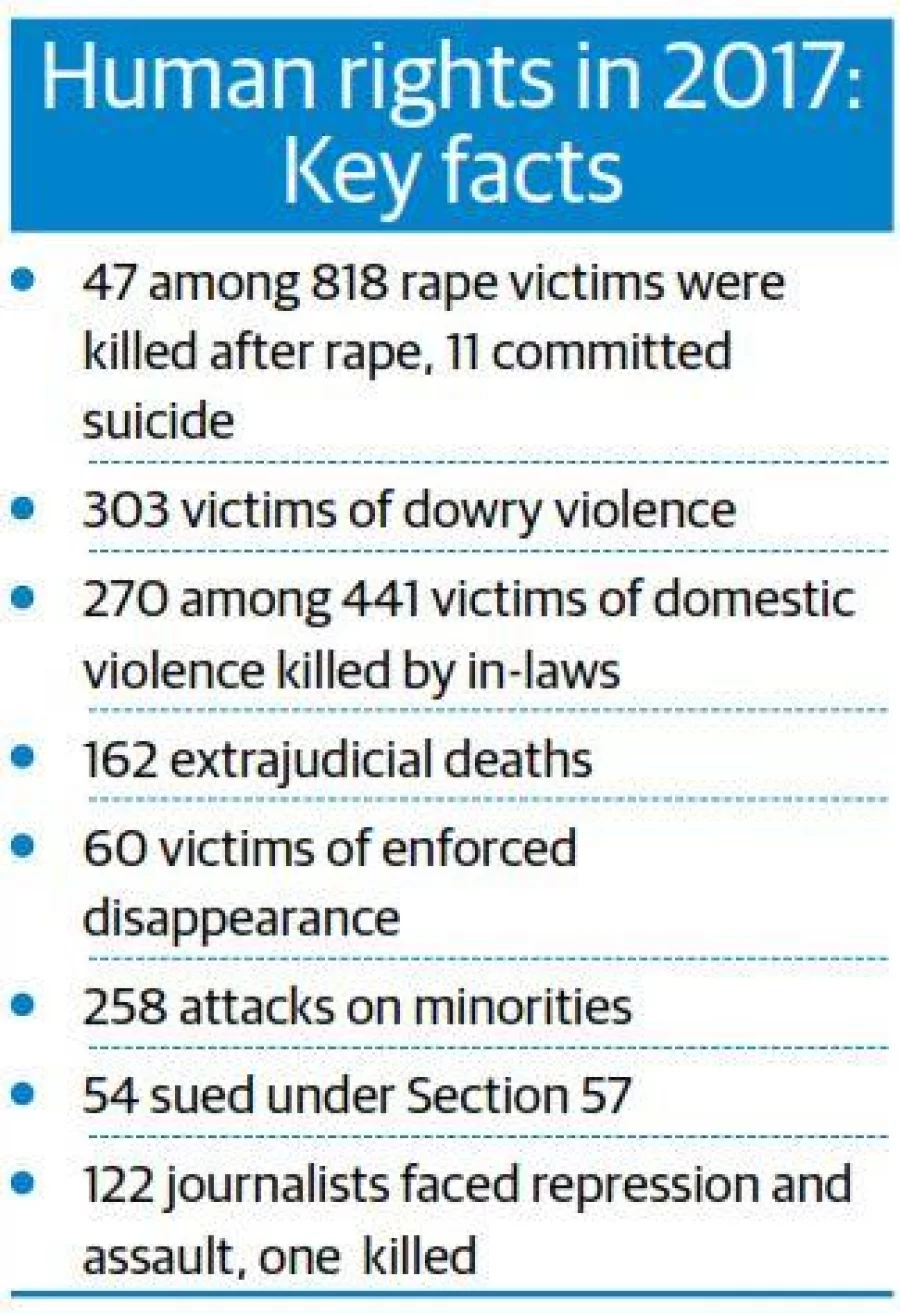
It also commended the government’s efforts in giving shelter to the persecuted Rohingya people from strife-torn Rakhine state in Myanmar, delivery of verdict in the much-talked-about Narayanganj 7-murder case, and approval of draft of the Dowry Prohibition Act 2017.The overall human rights situation in Bangladesh deteriorated in 2017, as incidents of violence against women and enforced disappearance increased, according to human rights organisation Ain o Salish Kenda (ASK).
The observation was made in an annual report styled “Human Rights Status of Bangladesh-2017: Observations of ASK” at a press briefing at Dhaka Reporters Unity on Sunday.
The report was prepared based on information from different sources, including eight national dailies. While presenting the report, ASK Coordinator Abu Ahmed Faizul Kabir said that despite some improvement in certain areas, civil and political rights in the country did not improve as expected.
“Extrajudicial killing, enforced disappearance, political violence, and repression on minorities decreased in 2017… but there was a worrying trend in enforced disappearances, as people from diverse backgrounds disappeared,” he said.
Among those who went missing or were forcibly disappeared in the year were teachers, students, publishers, political leaders and former diplomats.
According to the report, the number of rape and sexual assault, and incidents of violence against women were higher than in 2016, and freedom of expression was in under assault.
ASK Executive Director Shipa Hafiza said: “Human rights situations in any country should not deteriorate at such an alarming level. There should be measures to improve human rights for the sake of a country’s overall development.”
She urged stakeholders to come forward to help improve human rights in Bangladesh.
ASK, however, praised the government’s initiatives to achieve Sustainable Development Goals and include the private sector in accomplishing the SDGs.
It also commended the government’s efforts in giving shelter to the persecuted Rohingya people from strife-torn Rakhine state in Myanmar, delivery of verdict in the much-talked-about Narayanganj 7-murder case, and approval of draft of the Dowry Prohibition Act 2017.
While presenting the report, ASK Coordinator Abu Ahmed Faizul Kabir said that despite some improvement in certain areas, civil and political rights in the country did not improve as expected.
“Extrajudicial killing, enforced disappearance, political violence, and repression on minorities decreased in 2017… but there was a worrying trend in enforced disappearances, as people from diverse backgrounds disappeared,” he said.
Among those who went missing or were forcibly disappeared in the year were teachers, students, publishers, political leaders and former diplomats.
According to the report, the number of rape and sexual assault, and incidents of violence against women were higher than in 2016, and freedom of expression was in under assault.
ASK Executive Director Shipa Hafiza said: “Human rights situations in any country should not deteriorate at such an alarming level. There should be measures to improve human rights for the sake of a country’s overall development.”
She urged stakeholders to come forward to help improve human rights in Bangladesh.
ASK, however, praised the government’s initiatives to achieve Sustainable Development Goals and include the private sector in accomplishing the SDGs.
It also commended the government’s efforts in giving shelter to the persecuted Rohingya people from strife-torn Rakhine state in Myanmar, delivery of verdict in the much-talked-about Narayanganj 7-murder case, and approval of draft of the Dowry Prohibition Act 2017.
While presenting the report, ASK Coordinator Abu Ahmed Faizul Kabir said that despite some improvement in certain areas, civil and political rights in the country did not improve as expected.
“Extrajudicial killing, enforced disappearance, political violence, and repression on minorities decreased in 2017… but there was a worrying trend in enforced disappearances, as people from diverse backgrounds disappeared,” he said.
Among those who went missing or were forcibly disappeared in the year were teachers, students, publishers, political leaders and former diplomats.
According to the report, the number of rape and sexual assault, and incidents of violence against women were higher than in 2016, and freedom of expression was in under assault.
ASK Executive Director Shipa Hafiza said: “Human rights situations in any country should not deteriorate at such an alarming level. There should be measures to improve human rights for the sake of a country’s overall development.”
She urged stakeholders to come forward to help improve human rights in Bangladesh.
ASK, however, praised the government’s initiatives to achieve Sustainable Development Goals and include the private sector in accomplishing the SDGs.
It also commended the government’s efforts in giving shelter to the persecuted Rohingya people from strife-torn Rakhine state in Myanmar, delivery of verdict in the much-talked-about Narayanganj 7-murder case, and approval of draft of the Dowry Prohibition Act 2017.