



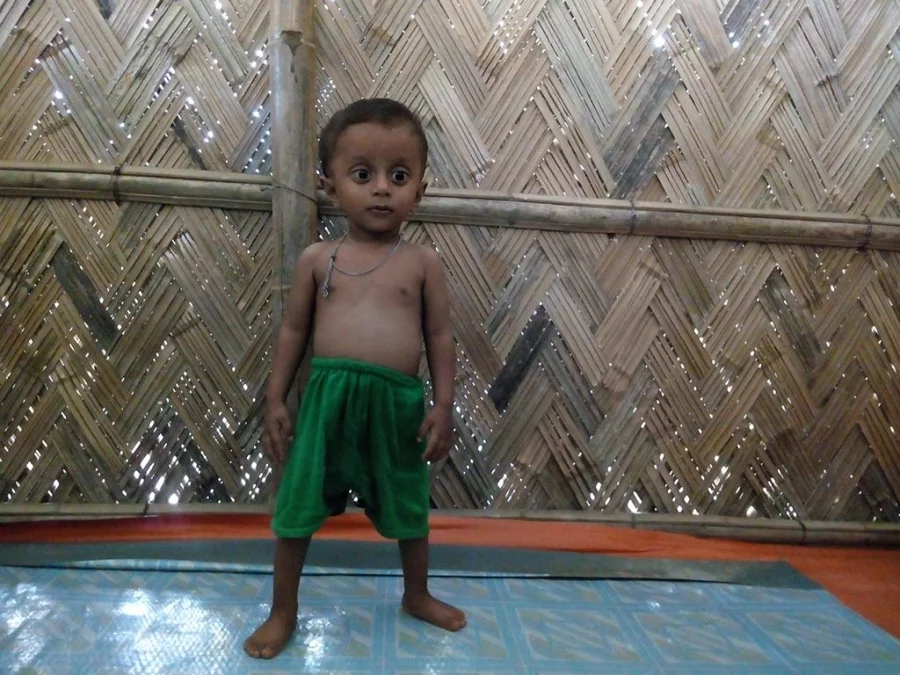
In the refugee camps in Cox's Bazar, 61,269 Rohingya children are under the age of five Afrose Jahan Chaity/Dhaka Tribune
Meanwhile, according to a September 24 report by the ISCG - an overarching structure set up by the International Organization for Migration (IOM) to ensure the humanitarian needs of the Rohingya are addressed - a total of 4,260 Rohingya children under the age of five had spent over a week in a malnutrition treatment and prevention programme in one of the camps. Dr Tahmeed Ahmed, senior director of nutrition and clinical services at ICDDRB, told the Dhaka Tribune that the shortage of food, water and sanitation facilities caused by the ongoing refugee crisis will increase the risk of malnutrition and death among the Rohingya children. “First, a fast assessment is needed to identify the exact number of children with malnutrition. Second, we have to ensure food security. And third, malnourished children should have access to nutritious food,” he said. Dr Tahmeed further said that children who are suffering from SAM must be provided with WHO recommended therapeutic food supplements. “SAM weakens the immune system and increases risk of several long-term infections,” he said. Children suffering from malnutrition have a 12% higher mortality rate compared to normal children. Earlier this year, Unicef reported that Rohingya children in western Rakhine state require urgent assistance, including access to healthcare and education. When the latest wave of violence began in northern Rakhine state on August 25, Action Against Hunger’s SAM treatment programme was supporting nearly 9,000 children. Since then, over 435,000 Rohingya people have fled to Bangladesh. According to a report by the World Food Programme, several regions of Rakhine state suffer from high levels of food insecurity while malnutrition is persistently high. Nutrition surveys conducted in late 2015 revealed alarming rates of global acute malnutrition (GAM), while in 2016, surveys indicated that a total of 18,900 children (12,200 aged under five and 6,700 aged over five) needed urgent treatment for SAM across Rakhine.
