A cyclone barrelled into the south-east coast of India on Monday, killing at least two people and bringing down trees and power lines as authorities moved tens of thousands of people from low-lying areas.
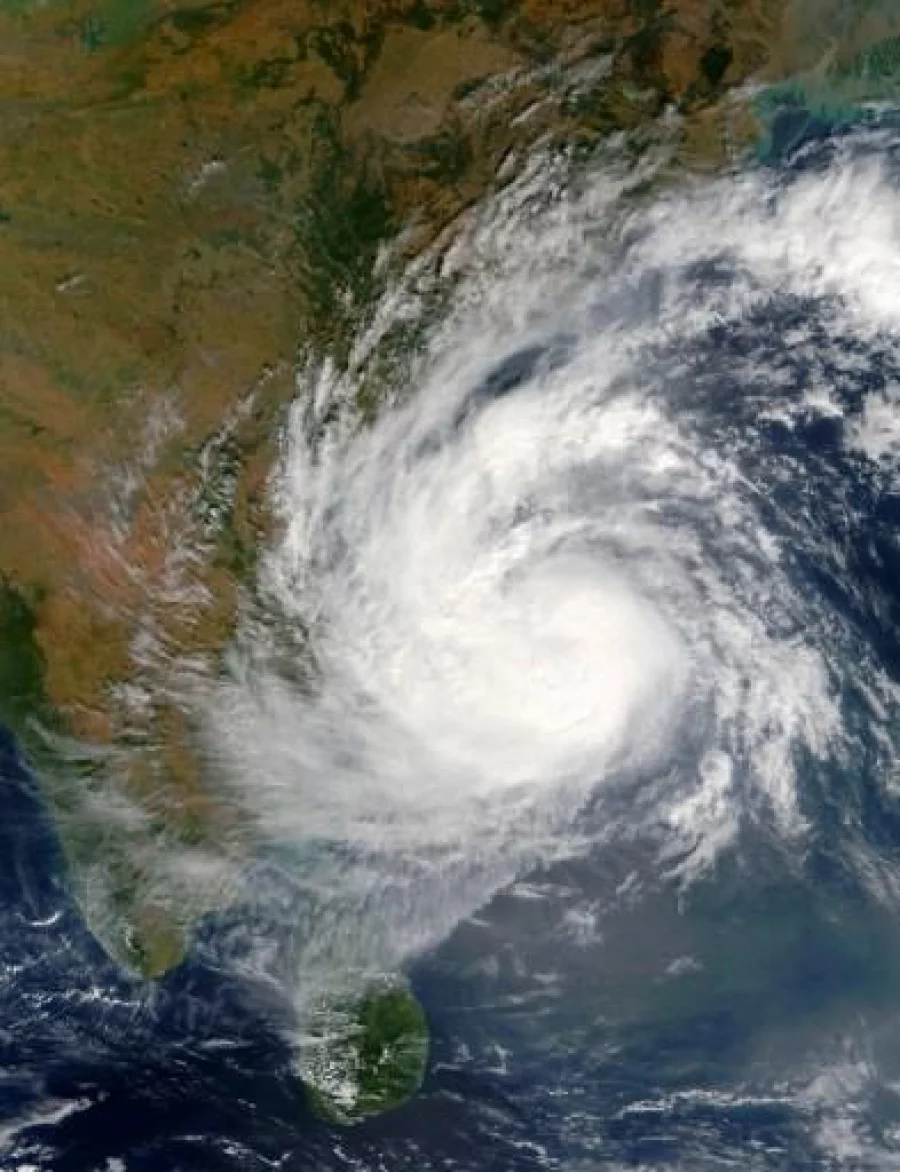
This December 11, 2016 Nasa satellite image shows Tropical Cyclone Vardah (05B) approaching India.
AFPCyclone Vardah moved west over the Bay of Bengal before hitting Chennai, capital of the southern state of Tamil Nadu, as well as neighbouring Andhra Pradesh, the Indian Meteorological Department said, describing it as a "very severe storm".
Strong wind of up to 140kph battered the densely populated coast, uprooting trees and bringing down electricity pylons. Flights at Chennai airport were cancelled, railway services in the area suspended and schools and colleges were closed. Chennai is home to Indian operations of major auto firms such as Ford Motor Daimler Hyundai and Nissan.
Vardah is forecast to pass over Chennai over the next few hours, drenching the city in heavy rain before easing in intensity, the National Disaster Management Authority (NDMA) said.
"Winds to pick up after current lull period. Everyone to not venture out," the NDMA said on Twitter, adding that two people had been killed and 24 homes damaged.
"Expect very heavy rainfall after few hours. To become better once system crosses completely."
A "storm surge" will be about three feet high.
More than 23,000 people in Tamil Nadu have been moved to relief centres, with plans for tens of thousands more to be evacuated if needed, a senior state official, K. Satyagopal, told Reuters.
More than 10,000 people from two districts in Andhra Pradesh state had also been moved, its disaster management commissioner, MV Seshagiri Babu, said.
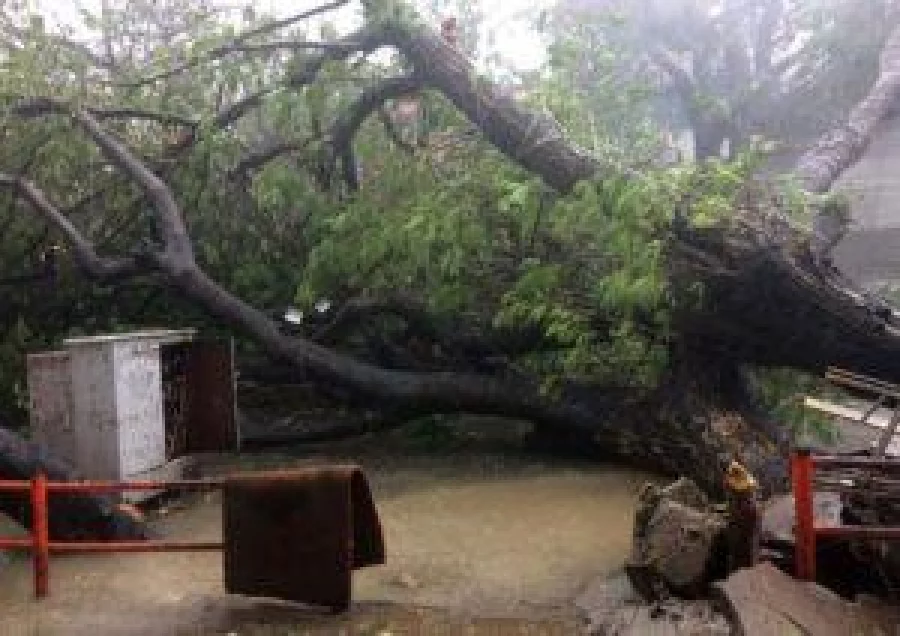
A ripped up tree lays across a street in Chennai as Cyclone Vardah approaches the Indian coast on December 12, 2016
AFPThe NDMA warned fishermen not to venture out to sea for the next 36 hours, and urged residents to stay in safe places.
Navy ships and aircraft, as well as 30 diving teams, were on standby to help move people and deliver aid if needed, a navy spokesman said.
India's cyclone season usually runs from April to December, with storms often causing dozens of deaths, evacuations of tens of thousands of people and widespread damage to crops and property.
Wind speeds topped 300kph in an Indian "super-cyclone" that killed 10,000 people in 1999, while a cyclone packing speeds of more than 200kph lashed the east coast in 2013.




 This December 11, 2016 Nasa satellite image shows Tropical Cyclone Vardah (05B) approaching India. AFPCyclone Vardah moved west over the Bay of Bengal before hitting Chennai, capital of the southern state of Tamil Nadu, as well as neighbouring Andhra Pradesh, the Indian Meteorological Department said, describing it as a "very severe storm".
Strong wind of up to 140kph battered the densely populated coast, uprooting trees and bringing down electricity pylons. Flights at Chennai airport were cancelled, railway services in the area suspended and schools and colleges were closed. Chennai is home to Indian operations of major auto firms such as Ford Motor Daimler Hyundai and Nissan.
Vardah is forecast to pass over Chennai over the next few hours, drenching the city in heavy rain before easing in intensity, the National Disaster Management Authority (NDMA) said.
"Winds to pick up after current lull period. Everyone to not venture out," the NDMA said on Twitter, adding that two people had been killed and 24 homes damaged.
"Expect very heavy rainfall after few hours. To become better once system crosses completely."
A "storm surge" will be about three feet high.
More than 23,000 people in Tamil Nadu have been moved to relief centres, with plans for tens of thousands more to be evacuated if needed, a senior state official, K. Satyagopal, told Reuters.
More than 10,000 people from two districts in Andhra Pradesh state had also been moved, its disaster management commissioner, MV Seshagiri Babu, said.
This December 11, 2016 Nasa satellite image shows Tropical Cyclone Vardah (05B) approaching India. AFPCyclone Vardah moved west over the Bay of Bengal before hitting Chennai, capital of the southern state of Tamil Nadu, as well as neighbouring Andhra Pradesh, the Indian Meteorological Department said, describing it as a "very severe storm".
Strong wind of up to 140kph battered the densely populated coast, uprooting trees and bringing down electricity pylons. Flights at Chennai airport were cancelled, railway services in the area suspended and schools and colleges were closed. Chennai is home to Indian operations of major auto firms such as Ford Motor Daimler Hyundai and Nissan.
Vardah is forecast to pass over Chennai over the next few hours, drenching the city in heavy rain before easing in intensity, the National Disaster Management Authority (NDMA) said.
"Winds to pick up after current lull period. Everyone to not venture out," the NDMA said on Twitter, adding that two people had been killed and 24 homes damaged.
"Expect very heavy rainfall after few hours. To become better once system crosses completely."
A "storm surge" will be about three feet high.
More than 23,000 people in Tamil Nadu have been moved to relief centres, with plans for tens of thousands more to be evacuated if needed, a senior state official, K. Satyagopal, told Reuters.
More than 10,000 people from two districts in Andhra Pradesh state had also been moved, its disaster management commissioner, MV Seshagiri Babu, said. A ripped up tree lays across a street in Chennai as Cyclone Vardah approaches the Indian coast on December 12, 2016 AFPThe NDMA warned fishermen not to venture out to sea for the next 36 hours, and urged residents to stay in safe places.
Navy ships and aircraft, as well as 30 diving teams, were on standby to help move people and deliver aid if needed, a navy spokesman said.
India's cyclone season usually runs from April to December, with storms often causing dozens of deaths, evacuations of tens of thousands of people and widespread damage to crops and property.
Wind speeds topped 300kph in an Indian "super-cyclone" that killed 10,000 people in 1999, while a cyclone packing speeds of more than 200kph lashed the east coast in 2013.
A ripped up tree lays across a street in Chennai as Cyclone Vardah approaches the Indian coast on December 12, 2016 AFPThe NDMA warned fishermen not to venture out to sea for the next 36 hours, and urged residents to stay in safe places.
Navy ships and aircraft, as well as 30 diving teams, were on standby to help move people and deliver aid if needed, a navy spokesman said.
India's cyclone season usually runs from April to December, with storms often causing dozens of deaths, evacuations of tens of thousands of people and widespread damage to crops and property.
Wind speeds topped 300kph in an Indian "super-cyclone" that killed 10,000 people in 1999, while a cyclone packing speeds of more than 200kph lashed the east coast in 2013.