




 What is the target of a tournament like the MCC?This carnival started from Rajshahi as a pilot project. It was a hit. Then the idea came to make it bigger. We had many players in the Dhaka league. Many players are now in their districts. They had dreams to contribute more for cricket. But they were lost. This event has given a chance to them to reunite again. Those senior players can share their idea about various things of their playing career and pass them on to the young generation. We can use the experience of former cricketers in various levels of cricket. I think many former players are interested to work in the various aspects of development in cricket. From this kind of tournament, we can find some of those ex-players who want to work with cricket.The Rajshahi cricket academy is working well. Do you think the other divisions can take a leaf out of Rajshahi's books and follow suit?I think credit goes to all academies. If a player is talented in the grass-root level, then he needs support from academies or senior players. Someone has to take the responsibility to work with these young talents. If you see Mustafizur [Rahman], Shakib [al Hasan] and Mashrafe [bin Mortaza], then you will see in age level they practised under some clubs or senior persons. Later, they came to the limelight and played in the national level. So the beginners' level has to improve more in order to find talents. Building academies in the division level is important. For example, Chittagong was full of national level players at one time. But they are lacking players now. So the senior players can come forward and build a set-up to produce more players. Organisers should come forward and set up academies or run leagues in division level so that more players can be produced. In the district level, we can start relegation system to improve competitiveness. So that teams and players can play their divisional leagues more intensely and competitively. Cricket will be developed and more quality players would be produced in such way.
https://www.youtube.com/watch?v=tU4etXVBsdwYou hit a famous sixer against Martin Suji in the 1997 ICC Trophy final. What were you going through at that exact moment?I had the belief that we could win. As a batsman I was not that nervous. Actually there was not much time to get nervous. It was a memorable win obviously.You blasted a brilliant Test century against the West Indies. How were you feeling that time? It was a good West Indies team with a good pace attack. We played well in the first innings. And they played aggressively in their first innings. We took the lead. But in the second innings we lost quick wickets and were six for 79 at one stage. I had to score runs to increase the lead and also keep my wicket intact. From that position I scored a century and helped to draw the Test. Obviously it was a special innings for me. Tapash Baisya and Tarek Aziz Khan gave good support in that innings. They gave me courage and support as a tail-ender and I made that crucial hundred.Any special DPL innings that gives you satisfaction as a batsman?I played premier league for many years. For 23 years. There are lots of innings like that. But if I can remember one particular innings, it was against Abahani. It was a title-deciding match seven-eight years ago. I was playing for Mohammedan, owned by Lutfur Rahman Badal. We were losing. We needed 36 off 12 balls. Pakistan all-rounder Rana Naved ul Hasan scored 28 against Shakib. Then came Mohammad Rafique in the last over. Eventually I came out to bat when four runs were needed in the last ball. The bowler was Rafique and about him, what can I say! I never won a battle against him in the nets (smiles). I was premeditated to play the sweep shot. They placed fielders in the leg side boundary. Eventually I played the sweep and it was a top-edge. The ball flew past the wicket-keeper and short third man before reaching the boundary. And we won the title out of nowhere. That one-ball, four-run innings was special.As a wicket-keeper you have kept against many bowlers. Any pacer or spinner who deserves special mention?There were many. If I have to mention a few then I can say Hasibul Hossain Shanto and Mashrafe. Shanto in his peak was a terrific pacer. He was really quick in his prime. Then Mashrafe in his early career was quick as well. I enjoyed keeping to their pace as they got extra bounce. They were really aggressive in terms of pace bowling. Manjural Islam Manju also bowled in good areas with good swing. As a spinner I would say Rafique and Enamul Hauqe [Moni] bhai were the best. Believe me, if Rafique had come 15 years later in these times, then he could have easily been the No 1 T20 player in the country as he had brilliant bowling skills and power-hitting ability.
https://www.youtube.com/watch?v=xRWiDT6dPAsYou were the go-to-man most of the times during your career. Did you enjoy the role?Actually I was an attacking batsman early in my career. When I started my career with Rajshahi I played as an opener or at No 3. I played all types of shots, cuts, pulls, drives. But later in my career I was given the role of carrying the innings. I was good in leaving the ball. So in order to score a respectable total, I played defensive cricket most of the times. But now I realise I should have scored from bad deliveries rather than just leaving the ball. Because after playing 100 balls, I can get out off a good delivery scoring only 20. That innings is not attractive and effective. Today the concept has changed. Nowadays batsmen don’t leave the bad ball, even in Test cricket the bad ball is always dispatched. If you give bad ball to someone like David Warner then he will hit four even in Test cricket. So attack is the best defence now.You played during the transition period of Bangladesh cricket. How do you see the recent development?Development is huge. Now national team players play with more confidence and are way ahead than our times in terms of mentality. In our times, we only played three-four matches in the Asia Cup against players like [Sachin] Tendulkar, [Mohammad] Azharuddin and [Sourav] Ganguly. They were like the ocean and we were like a small pond. We were mentally way behind. We only played for a respectable total. There were some individual performances from players like Akram [Khan] bhai, [Minhajul Abedin] Nannu bhai, [Aminul Islam] Bulbul bhai. Later there were [Shahriar Hossain] Biddut and [Mehrab Hossain] Opee. They were technically solid players. But that was not enough. Players in this generation are mentally much more ahead. I think mentality is the most important thing in cricket. I believe cricket is 70-80% mental game. You might be a technically solid player. But you are afraid to face Brett Lee then it will be useless. It's important to play with courage. Our current national team are mentally very strong and have that courage.What is your expectation from our current national team in the future days?Obviously Bangladesh cricket will grow more. Cricket is a culture now. Players now understand that cricket is a genuine profession. They know if they want to play in the national team or top level cricket then they have to perform well.
What should be done to increase the crowd in the DPL?People these days are used to watching international cricket. Now many international matches are being played compared to our time. But to revive spectators' presence I think DPL should be promoted in different ways. Televised DPL could be a solution. So people can watch DPL match even from home.
What is the target of a tournament like the MCC?This carnival started from Rajshahi as a pilot project. It was a hit. Then the idea came to make it bigger. We had many players in the Dhaka league. Many players are now in their districts. They had dreams to contribute more for cricket. But they were lost. This event has given a chance to them to reunite again. Those senior players can share their idea about various things of their playing career and pass them on to the young generation. We can use the experience of former cricketers in various levels of cricket. I think many former players are interested to work in the various aspects of development in cricket. From this kind of tournament, we can find some of those ex-players who want to work with cricket.The Rajshahi cricket academy is working well. Do you think the other divisions can take a leaf out of Rajshahi's books and follow suit?I think credit goes to all academies. If a player is talented in the grass-root level, then he needs support from academies or senior players. Someone has to take the responsibility to work with these young talents. If you see Mustafizur [Rahman], Shakib [al Hasan] and Mashrafe [bin Mortaza], then you will see in age level they practised under some clubs or senior persons. Later, they came to the limelight and played in the national level. So the beginners' level has to improve more in order to find talents. Building academies in the division level is important. For example, Chittagong was full of national level players at one time. But they are lacking players now. So the senior players can come forward and build a set-up to produce more players. Organisers should come forward and set up academies or run leagues in division level so that more players can be produced. In the district level, we can start relegation system to improve competitiveness. So that teams and players can play their divisional leagues more intensely and competitively. Cricket will be developed and more quality players would be produced in such way.
https://www.youtube.com/watch?v=tU4etXVBsdwYou hit a famous sixer against Martin Suji in the 1997 ICC Trophy final. What were you going through at that exact moment?I had the belief that we could win. As a batsman I was not that nervous. Actually there was not much time to get nervous. It was a memorable win obviously.You blasted a brilliant Test century against the West Indies. How were you feeling that time? It was a good West Indies team with a good pace attack. We played well in the first innings. And they played aggressively in their first innings. We took the lead. But in the second innings we lost quick wickets and were six for 79 at one stage. I had to score runs to increase the lead and also keep my wicket intact. From that position I scored a century and helped to draw the Test. Obviously it was a special innings for me. Tapash Baisya and Tarek Aziz Khan gave good support in that innings. They gave me courage and support as a tail-ender and I made that crucial hundred.Any special DPL innings that gives you satisfaction as a batsman?I played premier league for many years. For 23 years. There are lots of innings like that. But if I can remember one particular innings, it was against Abahani. It was a title-deciding match seven-eight years ago. I was playing for Mohammedan, owned by Lutfur Rahman Badal. We were losing. We needed 36 off 12 balls. Pakistan all-rounder Rana Naved ul Hasan scored 28 against Shakib. Then came Mohammad Rafique in the last over. Eventually I came out to bat when four runs were needed in the last ball. The bowler was Rafique and about him, what can I say! I never won a battle against him in the nets (smiles). I was premeditated to play the sweep shot. They placed fielders in the leg side boundary. Eventually I played the sweep and it was a top-edge. The ball flew past the wicket-keeper and short third man before reaching the boundary. And we won the title out of nowhere. That one-ball, four-run innings was special.As a wicket-keeper you have kept against many bowlers. Any pacer or spinner who deserves special mention?There were many. If I have to mention a few then I can say Hasibul Hossain Shanto and Mashrafe. Shanto in his peak was a terrific pacer. He was really quick in his prime. Then Mashrafe in his early career was quick as well. I enjoyed keeping to their pace as they got extra bounce. They were really aggressive in terms of pace bowling. Manjural Islam Manju also bowled in good areas with good swing. As a spinner I would say Rafique and Enamul Hauqe [Moni] bhai were the best. Believe me, if Rafique had come 15 years later in these times, then he could have easily been the No 1 T20 player in the country as he had brilliant bowling skills and power-hitting ability.
https://www.youtube.com/watch?v=xRWiDT6dPAsYou were the go-to-man most of the times during your career. Did you enjoy the role?Actually I was an attacking batsman early in my career. When I started my career with Rajshahi I played as an opener or at No 3. I played all types of shots, cuts, pulls, drives. But later in my career I was given the role of carrying the innings. I was good in leaving the ball. So in order to score a respectable total, I played defensive cricket most of the times. But now I realise I should have scored from bad deliveries rather than just leaving the ball. Because after playing 100 balls, I can get out off a good delivery scoring only 20. That innings is not attractive and effective. Today the concept has changed. Nowadays batsmen don’t leave the bad ball, even in Test cricket the bad ball is always dispatched. If you give bad ball to someone like David Warner then he will hit four even in Test cricket. So attack is the best defence now.You played during the transition period of Bangladesh cricket. How do you see the recent development?Development is huge. Now national team players play with more confidence and are way ahead than our times in terms of mentality. In our times, we only played three-four matches in the Asia Cup against players like [Sachin] Tendulkar, [Mohammad] Azharuddin and [Sourav] Ganguly. They were like the ocean and we were like a small pond. We were mentally way behind. We only played for a respectable total. There were some individual performances from players like Akram [Khan] bhai, [Minhajul Abedin] Nannu bhai, [Aminul Islam] Bulbul bhai. Later there were [Shahriar Hossain] Biddut and [Mehrab Hossain] Opee. They were technically solid players. But that was not enough. Players in this generation are mentally much more ahead. I think mentality is the most important thing in cricket. I believe cricket is 70-80% mental game. You might be a technically solid player. But you are afraid to face Brett Lee then it will be useless. It's important to play with courage. Our current national team are mentally very strong and have that courage.What is your expectation from our current national team in the future days?Obviously Bangladesh cricket will grow more. Cricket is a culture now. Players now understand that cricket is a genuine profession. They know if they want to play in the national team or top level cricket then they have to perform well.
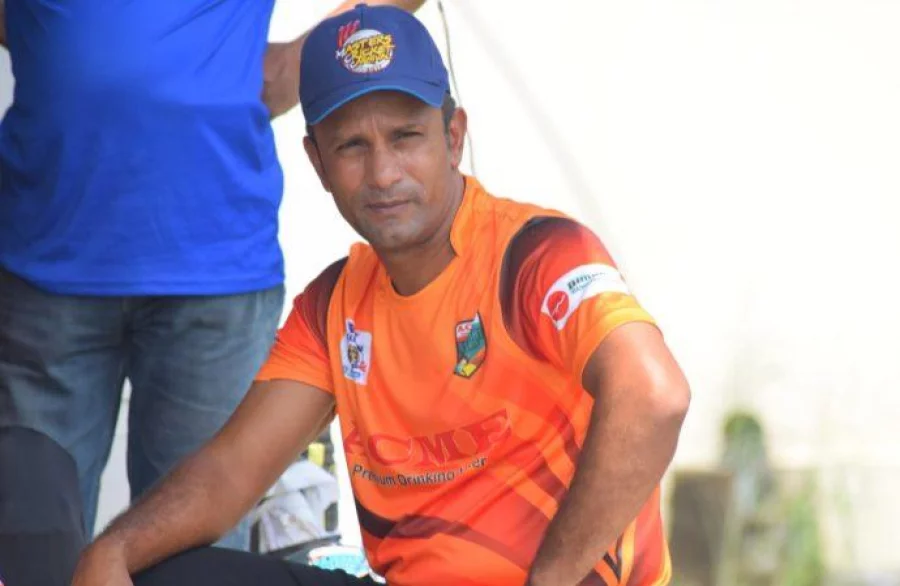
What should be done to increase the crowd in the DPL?People these days are used to watching international cricket. Now many international matches are being played compared to our time. But to revive spectators' presence I think DPL should be promoted in different ways. Televised DPL could be a solution. So people can watch DPL match even from home.Arguably one of the Tigers' greatest wicket-keepers in history, Khaled Mashud's name will forever be associated with Bangladesh cricket, especially for his mesmerising six off Martin Suji in the last over of the 1997 ICC Trophy final.
Since then, Mashud became a regular fixture in the Bangladesh set-up. Not only a reliable presence behind the stumps, Mashud was a dependable batsman and came to the Tigers' rescue many a time.
Following his retirement, Mashud decided to return to the game in the capacity of a coach and has done well since.
Currently playing in the Masters Cricket Carnival, Mashud spoke to Dhaka Tribune regarding his playing and coaching career, and shared his thoughts on how to improve the game in the grass-roots level, among other topics.
Here are the excerpts:How are you doing now?I left cricket three years ago. I love the field. Right now I am working at Akij Food and Beverage as Clemon sports head. We are running seven cricket academies. I'm also operating various tournaments, like indoor inter-university competitions. Also, during the Dhaka Premier Division Cricket League, I was the coach of Prime Bank Cricket Club. I also worked with Comilla Victorians last year. Actually I always try to stay busy with sports. In the other times, I work for the development of sports. I enjoy event management. I believe sports is required in every level of our society. As a senior player or an ex-player, I always try to arrange such tournaments. What is the target of a tournament like the MCC?This carnival started from Rajshahi as a pilot project. It was a hit. Then the idea came to make it bigger. We had many players in the Dhaka league. Many players are now in their districts. They had dreams to contribute more for cricket. But they were lost. This event has given a chance to them to reunite again. Those senior players can share their idea about various things of their playing career and pass them on to the young generation. We can use the experience of former cricketers in various levels of cricket. I think many former players are interested to work in the various aspects of development in cricket. From this kind of tournament, we can find some of those ex-players who want to work with cricket.The Rajshahi cricket academy is working well. Do you think the other divisions can take a leaf out of Rajshahi's books and follow suit?I think credit goes to all academies. If a player is talented in the grass-root level, then he needs support from academies or senior players. Someone has to take the responsibility to work with these young talents. If you see Mustafizur [Rahman], Shakib [al Hasan] and Mashrafe [bin Mortaza], then you will see in age level they practised under some clubs or senior persons. Later, they came to the limelight and played in the national level. So the beginners' level has to improve more in order to find talents. Building academies in the division level is important. For example, Chittagong was full of national level players at one time. But they are lacking players now. So the senior players can come forward and build a set-up to produce more players. Organisers should come forward and set up academies or run leagues in division level so that more players can be produced. In the district level, we can start relegation system to improve competitiveness. So that teams and players can play their divisional leagues more intensely and competitively. Cricket will be developed and more quality players would be produced in such way.
https://www.youtube.com/watch?v=tU4etXVBsdwYou hit a famous sixer against Martin Suji in the 1997 ICC Trophy final. What were you going through at that exact moment?I had the belief that we could win. As a batsman I was not that nervous. Actually there was not much time to get nervous. It was a memorable win obviously.You blasted a brilliant Test century against the West Indies. How were you feeling that time? It was a good West Indies team with a good pace attack. We played well in the first innings. And they played aggressively in their first innings. We took the lead. But in the second innings we lost quick wickets and were six for 79 at one stage. I had to score runs to increase the lead and also keep my wicket intact. From that position I scored a century and helped to draw the Test. Obviously it was a special innings for me. Tapash Baisya and Tarek Aziz Khan gave good support in that innings. They gave me courage and support as a tail-ender and I made that crucial hundred.Any special DPL innings that gives you satisfaction as a batsman?I played premier league for many years. For 23 years. There are lots of innings like that. But if I can remember one particular innings, it was against Abahani. It was a title-deciding match seven-eight years ago. I was playing for Mohammedan, owned by Lutfur Rahman Badal. We were losing. We needed 36 off 12 balls. Pakistan all-rounder Rana Naved ul Hasan scored 28 against Shakib. Then came Mohammad Rafique in the last over. Eventually I came out to bat when four runs were needed in the last ball. The bowler was Rafique and about him, what can I say! I never won a battle against him in the nets (smiles). I was premeditated to play the sweep shot. They placed fielders in the leg side boundary. Eventually I played the sweep and it was a top-edge. The ball flew past the wicket-keeper and short third man before reaching the boundary. And we won the title out of nowhere. That one-ball, four-run innings was special.As a wicket-keeper you have kept against many bowlers. Any pacer or spinner who deserves special mention?There were many. If I have to mention a few then I can say Hasibul Hossain Shanto and Mashrafe. Shanto in his peak was a terrific pacer. He was really quick in his prime. Then Mashrafe in his early career was quick as well. I enjoyed keeping to their pace as they got extra bounce. They were really aggressive in terms of pace bowling. Manjural Islam Manju also bowled in good areas with good swing. As a spinner I would say Rafique and Enamul Hauqe [Moni] bhai were the best. Believe me, if Rafique had come 15 years later in these times, then he could have easily been the No 1 T20 player in the country as he had brilliant bowling skills and power-hitting ability.
https://www.youtube.com/watch?v=xRWiDT6dPAsYou were the go-to-man most of the times during your career. Did you enjoy the role?Actually I was an attacking batsman early in my career. When I started my career with Rajshahi I played as an opener or at No 3. I played all types of shots, cuts, pulls, drives. But later in my career I was given the role of carrying the innings. I was good in leaving the ball. So in order to score a respectable total, I played defensive cricket most of the times. But now I realise I should have scored from bad deliveries rather than just leaving the ball. Because after playing 100 balls, I can get out off a good delivery scoring only 20. That innings is not attractive and effective. Today the concept has changed. Nowadays batsmen don’t leave the bad ball, even in Test cricket the bad ball is always dispatched. If you give bad ball to someone like David Warner then he will hit four even in Test cricket. So attack is the best defence now.You played during the transition period of Bangladesh cricket. How do you see the recent development?Development is huge. Now national team players play with more confidence and are way ahead than our times in terms of mentality. In our times, we only played three-four matches in the Asia Cup against players like [Sachin] Tendulkar, [Mohammad] Azharuddin and [Sourav] Ganguly. They were like the ocean and we were like a small pond. We were mentally way behind. We only played for a respectable total. There were some individual performances from players like Akram [Khan] bhai, [Minhajul Abedin] Nannu bhai, [Aminul Islam] Bulbul bhai. Later there were [Shahriar Hossain] Biddut and [Mehrab Hossain] Opee. They were technically solid players. But that was not enough. Players in this generation are mentally much more ahead. I think mentality is the most important thing in cricket. I believe cricket is 70-80% mental game. You might be a technically solid player. But you are afraid to face Brett Lee then it will be useless. It's important to play with courage. Our current national team are mentally very strong and have that courage.What is your expectation from our current national team in the future days?Obviously Bangladesh cricket will grow more. Cricket is a culture now. Players now understand that cricket is a genuine profession. They know if they want to play in the national team or top level cricket then they have to perform well.
What should be done to increase the crowd in the DPL?People these days are used to watching international cricket. Now many international matches are being played compared to our time. But to revive spectators' presence I think DPL should be promoted in different ways. Televised DPL could be a solution. So people can watch DPL match even from home.
What is the target of a tournament like the MCC?This carnival started from Rajshahi as a pilot project. It was a hit. Then the idea came to make it bigger. We had many players in the Dhaka league. Many players are now in their districts. They had dreams to contribute more for cricket. But they were lost. This event has given a chance to them to reunite again. Those senior players can share their idea about various things of their playing career and pass them on to the young generation. We can use the experience of former cricketers in various levels of cricket. I think many former players are interested to work in the various aspects of development in cricket. From this kind of tournament, we can find some of those ex-players who want to work with cricket.The Rajshahi cricket academy is working well. Do you think the other divisions can take a leaf out of Rajshahi's books and follow suit?I think credit goes to all academies. If a player is talented in the grass-root level, then he needs support from academies or senior players. Someone has to take the responsibility to work with these young talents. If you see Mustafizur [Rahman], Shakib [al Hasan] and Mashrafe [bin Mortaza], then you will see in age level they practised under some clubs or senior persons. Later, they came to the limelight and played in the national level. So the beginners' level has to improve more in order to find talents. Building academies in the division level is important. For example, Chittagong was full of national level players at one time. But they are lacking players now. So the senior players can come forward and build a set-up to produce more players. Organisers should come forward and set up academies or run leagues in division level so that more players can be produced. In the district level, we can start relegation system to improve competitiveness. So that teams and players can play their divisional leagues more intensely and competitively. Cricket will be developed and more quality players would be produced in such way.
https://www.youtube.com/watch?v=tU4etXVBsdwYou hit a famous sixer against Martin Suji in the 1997 ICC Trophy final. What were you going through at that exact moment?I had the belief that we could win. As a batsman I was not that nervous. Actually there was not much time to get nervous. It was a memorable win obviously.You blasted a brilliant Test century against the West Indies. How were you feeling that time? It was a good West Indies team with a good pace attack. We played well in the first innings. And they played aggressively in their first innings. We took the lead. But in the second innings we lost quick wickets and were six for 79 at one stage. I had to score runs to increase the lead and also keep my wicket intact. From that position I scored a century and helped to draw the Test. Obviously it was a special innings for me. Tapash Baisya and Tarek Aziz Khan gave good support in that innings. They gave me courage and support as a tail-ender and I made that crucial hundred.Any special DPL innings that gives you satisfaction as a batsman?I played premier league for many years. For 23 years. There are lots of innings like that. But if I can remember one particular innings, it was against Abahani. It was a title-deciding match seven-eight years ago. I was playing for Mohammedan, owned by Lutfur Rahman Badal. We were losing. We needed 36 off 12 balls. Pakistan all-rounder Rana Naved ul Hasan scored 28 against Shakib. Then came Mohammad Rafique in the last over. Eventually I came out to bat when four runs were needed in the last ball. The bowler was Rafique and about him, what can I say! I never won a battle against him in the nets (smiles). I was premeditated to play the sweep shot. They placed fielders in the leg side boundary. Eventually I played the sweep and it was a top-edge. The ball flew past the wicket-keeper and short third man before reaching the boundary. And we won the title out of nowhere. That one-ball, four-run innings was special.As a wicket-keeper you have kept against many bowlers. Any pacer or spinner who deserves special mention?There were many. If I have to mention a few then I can say Hasibul Hossain Shanto and Mashrafe. Shanto in his peak was a terrific pacer. He was really quick in his prime. Then Mashrafe in his early career was quick as well. I enjoyed keeping to their pace as they got extra bounce. They were really aggressive in terms of pace bowling. Manjural Islam Manju also bowled in good areas with good swing. As a spinner I would say Rafique and Enamul Hauqe [Moni] bhai were the best. Believe me, if Rafique had come 15 years later in these times, then he could have easily been the No 1 T20 player in the country as he had brilliant bowling skills and power-hitting ability.
https://www.youtube.com/watch?v=xRWiDT6dPAsYou were the go-to-man most of the times during your career. Did you enjoy the role?Actually I was an attacking batsman early in my career. When I started my career with Rajshahi I played as an opener or at No 3. I played all types of shots, cuts, pulls, drives. But later in my career I was given the role of carrying the innings. I was good in leaving the ball. So in order to score a respectable total, I played defensive cricket most of the times. But now I realise I should have scored from bad deliveries rather than just leaving the ball. Because after playing 100 balls, I can get out off a good delivery scoring only 20. That innings is not attractive and effective. Today the concept has changed. Nowadays batsmen don’t leave the bad ball, even in Test cricket the bad ball is always dispatched. If you give bad ball to someone like David Warner then he will hit four even in Test cricket. So attack is the best defence now.You played during the transition period of Bangladesh cricket. How do you see the recent development?Development is huge. Now national team players play with more confidence and are way ahead than our times in terms of mentality. In our times, we only played three-four matches in the Asia Cup against players like [Sachin] Tendulkar, [Mohammad] Azharuddin and [Sourav] Ganguly. They were like the ocean and we were like a small pond. We were mentally way behind. We only played for a respectable total. There were some individual performances from players like Akram [Khan] bhai, [Minhajul Abedin] Nannu bhai, [Aminul Islam] Bulbul bhai. Later there were [Shahriar Hossain] Biddut and [Mehrab Hossain] Opee. They were technically solid players. But that was not enough. Players in this generation are mentally much more ahead. I think mentality is the most important thing in cricket. I believe cricket is 70-80% mental game. You might be a technically solid player. But you are afraid to face Brett Lee then it will be useless. It's important to play with courage. Our current national team are mentally very strong and have that courage.What is your expectation from our current national team in the future days?Obviously Bangladesh cricket will grow more. Cricket is a culture now. Players now understand that cricket is a genuine profession. They know if they want to play in the national team or top level cricket then they have to perform well.
What should be done to increase the crowd in the DPL?People these days are used to watching international cricket. Now many international matches are being played compared to our time. But to revive spectators' presence I think DPL should be promoted in different ways. Televised DPL could be a solution. So people can watch DPL match even from home.
What is the target of a tournament like the MCC?This carnival started from Rajshahi as a pilot project. It was a hit. Then the idea came to make it bigger. We had many players in the Dhaka league. Many players are now in their districts. They had dreams to contribute more for cricket. But they were lost. This event has given a chance to them to reunite again. Those senior players can share their idea about various things of their playing career and pass them on to the young generation. We can use the experience of former cricketers in various levels of cricket. I think many former players are interested to work in the various aspects of development in cricket. From this kind of tournament, we can find some of those ex-players who want to work with cricket.The Rajshahi cricket academy is working well. Do you think the other divisions can take a leaf out of Rajshahi's books and follow suit?I think credit goes to all academies. If a player is talented in the grass-root level, then he needs support from academies or senior players. Someone has to take the responsibility to work with these young talents. If you see Mustafizur [Rahman], Shakib [al Hasan] and Mashrafe [bin Mortaza], then you will see in age level they practised under some clubs or senior persons. Later, they came to the limelight and played in the national level. So the beginners' level has to improve more in order to find talents. Building academies in the division level is important. For example, Chittagong was full of national level players at one time. But they are lacking players now. So the senior players can come forward and build a set-up to produce more players. Organisers should come forward and set up academies or run leagues in division level so that more players can be produced. In the district level, we can start relegation system to improve competitiveness. So that teams and players can play their divisional leagues more intensely and competitively. Cricket will be developed and more quality players would be produced in such way.
https://www.youtube.com/watch?v=tU4etXVBsdwYou hit a famous sixer against Martin Suji in the 1997 ICC Trophy final. What were you going through at that exact moment?I had the belief that we could win. As a batsman I was not that nervous. Actually there was not much time to get nervous. It was a memorable win obviously.You blasted a brilliant Test century against the West Indies. How were you feeling that time? It was a good West Indies team with a good pace attack. We played well in the first innings. And they played aggressively in their first innings. We took the lead. But in the second innings we lost quick wickets and were six for 79 at one stage. I had to score runs to increase the lead and also keep my wicket intact. From that position I scored a century and helped to draw the Test. Obviously it was a special innings for me. Tapash Baisya and Tarek Aziz Khan gave good support in that innings. They gave me courage and support as a tail-ender and I made that crucial hundred.Any special DPL innings that gives you satisfaction as a batsman?I played premier league for many years. For 23 years. There are lots of innings like that. But if I can remember one particular innings, it was against Abahani. It was a title-deciding match seven-eight years ago. I was playing for Mohammedan, owned by Lutfur Rahman Badal. We were losing. We needed 36 off 12 balls. Pakistan all-rounder Rana Naved ul Hasan scored 28 against Shakib. Then came Mohammad Rafique in the last over. Eventually I came out to bat when four runs were needed in the last ball. The bowler was Rafique and about him, what can I say! I never won a battle against him in the nets (smiles). I was premeditated to play the sweep shot. They placed fielders in the leg side boundary. Eventually I played the sweep and it was a top-edge. The ball flew past the wicket-keeper and short third man before reaching the boundary. And we won the title out of nowhere. That one-ball, four-run innings was special.As a wicket-keeper you have kept against many bowlers. Any pacer or spinner who deserves special mention?There were many. If I have to mention a few then I can say Hasibul Hossain Shanto and Mashrafe. Shanto in his peak was a terrific pacer. He was really quick in his prime. Then Mashrafe in his early career was quick as well. I enjoyed keeping to their pace as they got extra bounce. They were really aggressive in terms of pace bowling. Manjural Islam Manju also bowled in good areas with good swing. As a spinner I would say Rafique and Enamul Hauqe [Moni] bhai were the best. Believe me, if Rafique had come 15 years later in these times, then he could have easily been the No 1 T20 player in the country as he had brilliant bowling skills and power-hitting ability.
https://www.youtube.com/watch?v=xRWiDT6dPAsYou were the go-to-man most of the times during your career. Did you enjoy the role?Actually I was an attacking batsman early in my career. When I started my career with Rajshahi I played as an opener or at No 3. I played all types of shots, cuts, pulls, drives. But later in my career I was given the role of carrying the innings. I was good in leaving the ball. So in order to score a respectable total, I played defensive cricket most of the times. But now I realise I should have scored from bad deliveries rather than just leaving the ball. Because after playing 100 balls, I can get out off a good delivery scoring only 20. That innings is not attractive and effective. Today the concept has changed. Nowadays batsmen don’t leave the bad ball, even in Test cricket the bad ball is always dispatched. If you give bad ball to someone like David Warner then he will hit four even in Test cricket. So attack is the best defence now.You played during the transition period of Bangladesh cricket. How do you see the recent development?Development is huge. Now national team players play with more confidence and are way ahead than our times in terms of mentality. In our times, we only played three-four matches in the Asia Cup against players like [Sachin] Tendulkar, [Mohammad] Azharuddin and [Sourav] Ganguly. They were like the ocean and we were like a small pond. We were mentally way behind. We only played for a respectable total. There were some individual performances from players like Akram [Khan] bhai, [Minhajul Abedin] Nannu bhai, [Aminul Islam] Bulbul bhai. Later there were [Shahriar Hossain] Biddut and [Mehrab Hossain] Opee. They were technically solid players. But that was not enough. Players in this generation are mentally much more ahead. I think mentality is the most important thing in cricket. I believe cricket is 70-80% mental game. You might be a technically solid player. But you are afraid to face Brett Lee then it will be useless. It's important to play with courage. Our current national team are mentally very strong and have that courage.What is your expectation from our current national team in the future days?Obviously Bangladesh cricket will grow more. Cricket is a culture now. Players now understand that cricket is a genuine profession. They know if they want to play in the national team or top level cricket then they have to perform well.
What should be done to increase the crowd in the DPL?People these days are used to watching international cricket. Now many international matches are being played compared to our time. But to revive spectators' presence I think DPL should be promoted in different ways. Televised DPL could be a solution. So people can watch DPL match even from home.