When I first learned from a social media post that a special exhibition dedicated to the works of Bangladesh’s pioneer sculptor Novera Ahmed was underway at our national museum—running from July 4 to 21—I decided almost immediately that it was a must-visit.
By the time I found out about the exhibition, titled “Novera, নভেরা,” it was already more than halfway through. Unfortunately, I initially picked a Thursday to visit, only to discover it was the museum's weekly day off. Finally, I managed to get a close look at her masterpieces on display at the Nalini Kanta Bhattasali Exhibition Gallery of the Bangladesh National Museum on the final day of the show, July 21st.
It was truly rewarding, particularly for someone like me who never had the chance to meet this preeminent sculptor during her lifetime, but whose generation has always been deeply appreciative of her. Novera remains an immense source of inspiration for subsequent generations of artists, not just for her creations, but for her radical spirit. For too long, Novera Ahmed and her works remained shrouded in mystery—partly due to her long absence from Bangladesh and extended stay abroad, and partly because of a historical lack of public understanding regarding an art form that the vast majority of people were unfamiliar with in the 1950s, 60s, and 70s.
Interestingly, Novera belonged to a matriarchal generation of sculptors. In a league of her own alongside Rabia Zuberi, Meera Mukherjee, and Pilloo Pochkhanawala, these all-female artistic pathfinders of British India pioneered modern sculpting across the geographical territories of today's Bangladesh, Pakistan, and India. Novera Ahmed single-handedly introduced modernist, three-dimensional sculpting into East Pakistan.
Born in 1939 in the Sundarbans region due to the professional posting of her father, Syed Ahmed, her ancestral home was actually in North Para, Askar Dighi, Chittagong. She spent her childhood in Kolkata, matriculating from the Loreto School there. Following the partition of the subcontinent, she moved to East Pakistan with her family in 1947, studying first at Comilla Victoria College and later at Chittagong College.
While Novera was transforming herself into a trailblazing sculptor in East Pakistan and traveling widely through the capital cities of Southeast Asia and Europe, a few other female artists were also making their names by introducing modern sculpture to India and Pakistan. Often hailed as the "Queen Mother of Arts" and Pakistan's first professional female sculptor, Rabia Zuberi (1940–2022) was a massive institutional and creative force in Pakistani art. Meanwhile, artists like Pilloo Pochkhanawala (1923–1986), Meera Mukherjee (1923–1998), and Leela Mukherjee (1916–2002) were busy introducing modern sculpting to India.
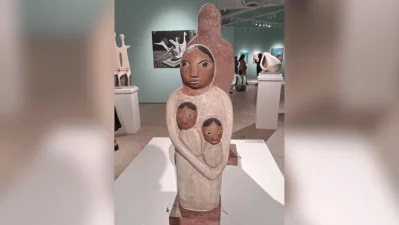
Among this small crowd of the subcontinent’s first-generation modern female sculptors, our very own Novera Ahmed stood out in many respects. She blended Western avant-garde styles (heavily influenced by Henry Moore) with local folk traditions and rural themes. Her work focused on geometric, anthropomorphic human and animal forms, particularly themes of womanhood. Novera, who studied sculpture at the Camberwell School of Arts and Crafts in London from 1951 to 1955 under the tutelage of the eminent Czech sculptor Dr. Karel Vogel, achieved a National Diploma in Design.
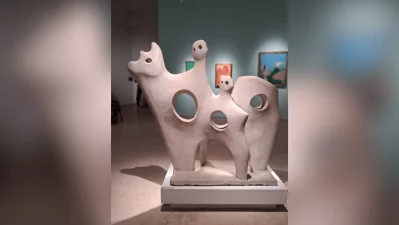
She received further training in Florence from Venturino Venturi, and went on to produce East Pakistan’s first frieze on the wall of the Central Public Library in 1957, as well as its first open-air sculpture, Cow with Two Figures, in 1958.
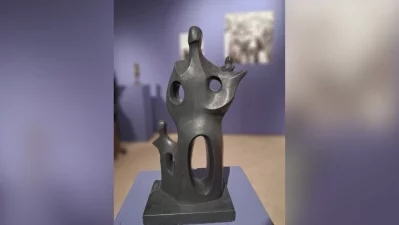
In August 1960, she held her first solo exhibition, Inner Gaze, in Dhaka, showcasing 75 exhibits executed mainly in cement between 1956 and 1960. This was likely the first-ever solo sculpture exhibition by any sculptor in Bangladesh. Novera also assisted Hamidur Rahman in designing the initial artistic layout of the iconic Central Shaheed Minar monument, though work was temporarily suspended when martial law was imposed in 1958. That same year, she installed the outdoor courtyard sculpture Cow and Two Figures at the residence of an industrialist in the Tejgaon industrial area.
After her historic 1960 exhibition at the Central Public Library—held under the joint aegis of the Pakistan United Nations Association and the Asia Foundation—Novera traveled to Lahore at the invitation of the renowned poet Faiz Ahmed Faiz. There, her sculpture Child Philosopher won first prize at the All Pakistan Painting and Sculpture Exhibition in 1961. She subsequently traveled extensively through India, Myanmar, Thailand, Hong Kong, France, Greece, Italy, and Switzerland, bridging South Asian heritage with global avant-garde art movements.
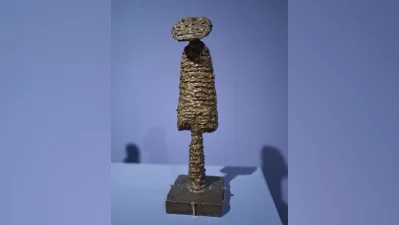
During her travels through Thailand, Japan, Malaysia, and Laos in 1968, she witnessed the horrors of the Vietnam War. Consequently, for a 1970 exhibition in Bangkok, she constructed 11 monumental sculptures using aluminum scraps recovered from crashed US military warplanes. This process of transforming instruments of destruction into expressions of creativity carried a profound pacifist and non-violent message. By the end of that year, she permanently relocated to Paris.
Following a successful sculpture exhibition in Paris in 1973, she entered a period of self-imposed exile, dedicating the remainder of her life primarily to painting rather than sculpture. In 1975, Novera survived a severe road accident in Paris that left her with permanent leg injuries, causing her to walk with a limp for the rest of her life. She suffered a stroke in 2013 and passed away in a Paris hospital on May 6, 2015.
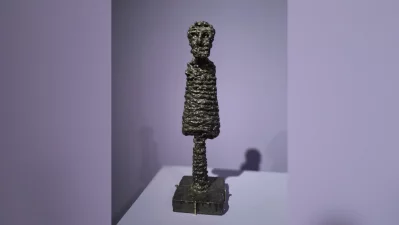
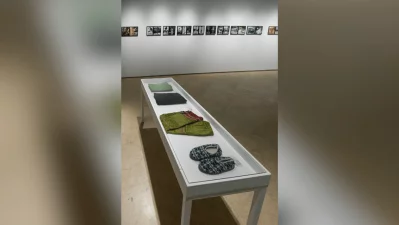
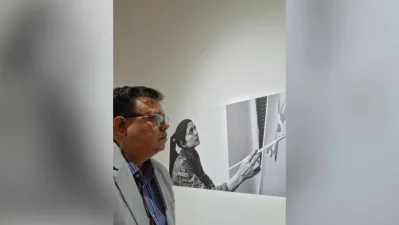
The exhibition that rounded off in Dhaka on July 21st gave me a rare opportunity to time-travel through Novera’s life journey by admiring her legendary works. The gallery was beautifully arranged with sculptures on white plinths, biographical panels spread across the walls, and a glass case containing her garments and personal belongings, giving visitors a direct, intimate sense of the artist’s presence alongside her creative history.
The show offered a unique opportunity for the new generation to rediscover a legendary artist who profoundly shaped the history of modern sculpture in Pakistan and Bangladesh. Bangladesh has since honored her memory and contributions by bestowing upon her both the Ekushey Padak and the Independence Award.
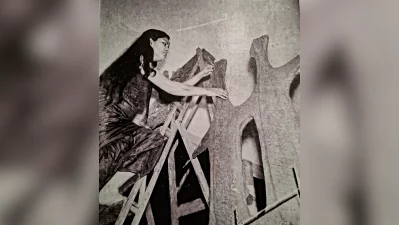
Across the Indian subcontinent, the introduction and popularization of modern sculpture were pioneered by extraordinary, trailblazing women who shattered deep-seated social taboos in a heavily male-dominated field. As one of the premier pioneering forces of this movement, Novera’s legacy will continue to inspire a new breed of sculptors in our part of the world. The revolution Novera Ahmed carved into stone, wood, and cement will remain an eternal source of inspiration for today’s youth and progressive artists worldwide.