Misinformation and disinformation online increase significantly during periods of social, political, and economic unrest. Public health emergencies also see a rise in the spread of false information.
Recently, misleading narratives during the July movement overshadowed critical messages related to safe zones, blood donations, and vital safety updates.
Cyberbullying is also on the rise in the country. Insights reveal that more than half of cybercrime victims in Bangladesh have experienced cyberbullying, with women disproportionately affected by online harassment.
These insights were discussed at a roundtable titled “Unmasking Violence: Combating Misinformation, Disinformation & Cyberbullying,” organized by USAID and Dhaka Tribune as part of the “16 Days of Activism against Gender-Based Violence.”
The event was held on Monday morning at the Krishibid Institute in Dhaka.
Stakeholders, including media professionals, lawyers, students, activists, and development workers, emphasized the importance of digital literacy, addressing policy gaps, and improving accountability in cyberspace to tackle misinformation, disinformation, and cyberbullying.
USAID Director of Communication Troy Beckman remarked: “It’s hard to solve a problem if voices are not heard. Media amplifies the voices of women. We need to make sure that nobody gets left behind.”
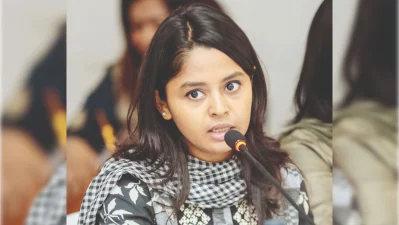
Sirazum Munira Raiyan, HR Associate, Youth Policy Forum shared insights from grassroots communities.
The findings revealed that 89% of cyberbullying victims are aged 18-30, and nearly three-quarters of them did not pursue any legal action. Cyberbullying often includes pornography, derogatory statements, and offensive messages.
Sirazum Munira said: “Crimes are heavily skewed against women, and cyberbullying is no exception.”
“Most victims of cyberbullying prefer to report incidents anonymously due to fears of social stigma and victim-blaming,” she added.
Role of media
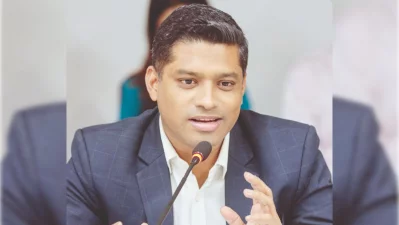
Dhaka Tribune Executive Editor Reaz Ahmad said: “As part of our daily routine, we have to deal with misinformation and disinformation.”
“As mainstream media, we must deliver truthful information, whether people exposed to social media disinformation like it or not,” he added.
Senior Programme Officer and Gender Focal of MRDI, Sarwat Tarannum Nadia, said: “The mainstream media needs to play a significant role in combating misinformation and disinformation.”
“This is an infodemic, and many journalists are making mistakes regularly,” she added.
Senior Reporter of Prothom Alo, Abdul Al Hossain Alif, said: “Sometimes we (media professionals) publish soundbites that can convey double meanings. This especially happens on digital platforms.”
“The entertainment beat also sometimes chooses angles that can lead to cyberbullying,” he added.
He further said: “We have to be careful about the angle of a video when presenting someone. We practice this in our
organization.”
Jamuna TV Senior Broadcast Journalist remarked: “Sometimes media use sensational words to make content trend. If we increase accountability, we can combat this.”
Awareness and digital literacy
Maliha Tabassum, a researcher specializing in AI in journalism and a faculty member at Bangladesh University of Professionals (BUP), said: “Citizens lack AI literacy. People in remote areas often cannot identify a deepfake or an AI-generated or distorted image because the school curriculum does not include such topics.”
“There is a gap in our curriculum and digital space, and this gap is widening every day,” she added.
Dipty Chowdhury emphasized the lack of awareness regarding existing policies: “Many people don’t even realize they are engaging in cyberbullying.”
Umama Fatema, a coordinator of the Anti-Discrimination Student Movement, remarked: “The politics of misinformation is a significant issue.”
“Misinformation on Facebook has become a norm nowadays,” she added.
Poet and activist Ferdouse Ara Rumi suggested that digital literacy has taken a wrong turn, noting that many people in villages use the phrase “I will make it viral” as a threat.
She explained: “This perpetuates harmful practices like child marriage.”
Event moderator Dipty Chowdhury shared: “Sometimes I wake up to discover new information about myself that I didn’t even know existed.”
“Misinformation travels faster than the truth,” she added.
Musarrat Jahan Esha, founder of Cake Fiction, shared her experience of receiving hate speech in her social media inbox.
Dhaka University student Adnan Rahmatullah Turjo commented: “Misinformation and cyberbullying have become part of our culture because we do not receive related education during our school years.”
Legal and law enforcement aspects
Supreme Court lawyer and researcher Barrister Miti Sanjana said: “The existing Cyber Security Act has undergone many changes.”
“Moreover, filing a charge under the act is challenging. In most cases, the police station will not accept the case; one must file it at the tribunal,” she added.
Sanjana said: “Now the government has decided to repeal the act. What will happen in the interim between canceling the current one and drafting a new act?”
She further remarked: “The stigma has extended from social to legal frameworks.”
Sanjana also noted that the Cyber Security Act does not address cyberbullying that occurs in private inboxes. Its jurisdiction is limited to defamation in public spaces.
TBS reporter Zia Chowdhury commented: “Law enforcement agencies are the first responders to cybercrime.”
He shared his observations of police officials being preoccupied with online shopping scams targeting the wives of bureaucrats.
“If we can enhance their accountability, cases of misinformation, disinformation, and cyberbullying will decrease,” he said.
Zia also pointed out that when a victim tries to file a cyberbullying case, the initial response from law enforcement officers is often dismissive, saying things like “Why did they (the offender) choose your photo to photoshop?”
He emphasized: “It is high time we worked on the mindset of law enforcement officers.”
Anti-discrimination student protester Nusrat Zahan; Policy Initiative lead at Youth Policy Forum, Sad Ebne Walid; Content Manager at Toffee (Banglalink Digital), Pari Rukh Al Matin; Ognie Foundation President, Trishia Nashtaran; Mithela Haque Nova, Manager of YLO and Advocacy at Bijoyee, BYLC; JAAGO Gender and Inclusion Specialist, Munmun Khan; Channel 24 Staff Reporter, Zummatull Bida; Jamuna TV Broadcast Journalist, Lamia Sultana Tithi; Dhaka Tribune Senior Reporter, Nawaz Farhin Antara; Dhaka University student, Taizul Islam Shuvo; Meherun Nahar Moury from BUP; and Jagannath University student, Sadiya Yasmin Anyanna also spoke at the roundtable.
What the speakers said
Umama Fatema
Coordinator, Anti-Discrimination Student Movement
The government should be concerned about disinformation to incite mobs online. Women need to come forward if another woman is getting harassed. We can not do politics by removing our womanhood. We need to create space for other women.
Barrister Miti Sanjana
Supreme Court lawyer and researcher
Women and underage girl children are the most victims of cyberbullying online. Only 1% of the crimes get reported.
Ferdouse Ara Rumi
Poet and Activist
We need to address the issue that probably being bullied in cyberspace is also a reason for many child marriages.
Sarwat Tarannum Nadia
Senior Programme Officer and Gender Focal, MRDI
Fact-checking and media literacy should start from the grassroots. AI also can detect misinformation and disinformation; we need to learn how to use that.
Abdul Al Hossain Alif
Senior Reporter, Prothom Alo
We need to be careful when we are picking an angle of a news.
Maliha Tabassum
Researcher, AI in Journalism, Faculty in BUP
AI literacy among mothers should be introduced. People in remote areas can not often identify a deepfake or distorted or AI-generated image.
Zia Chowdhury
Reporter, TBS
You have to ask the law enforcement agency why there are not any female officers in the cyber unit.
Sirazum Munira Raiyan
HR Associate, Youth Policy Forum
We have a lack of proper fact-checking infrastructure. Online safety and reporting should be added to the ICT curriculum. Solving these issues will require a multistakeholder approach.
Taijul Islam
Student, University of Dhaka
If a post of someone goes against a specific group of people, they propagate a wave from their affiliated pages to harras them. Where is the responsibility and accountability of the tech companies?
Adnan Rahmatullah Turjo
Student, Dhaka University
We need to introduce literacy curriculums from the kindergarten or primary level, which can prepare the students from early on.
Pari Rukh Al Matin
Content Manager, Toffee, Banglalink Digital
We have comment filter options on Facebook, we can use that. Facebook also needs to go through verification and identification to avoid cyber bullies.
Meherun Nahar Moury
Student, BUP
The internet is not only limited to entertainment purposes anymore; it is a part of our professional life. We need to change the family orientation to make social media more effective.
Sad Ebne Walid
Lead of Policy Initiative, Youth Policy Forum
Now the youth is getting a disorder to get attention. Their main target is to produce content which can get more likes and comments. Sometimes it lead to cyberbullying.
Ahmed Reza
Senior Broadcast Journalist, Jamuna TV
Males are also being bullied on social media. We can do more work from this place.
Zummatull Bida
Staff Reporter, Channel 24
Only 1.2% of the gender-based violence cases got punishment. The reason behind this is the lack of law and order. Till the basic rights are ensured, females will doubt before going to police.