The twelfth national parliamentary election of Bangladesh is scheduled to be held on January 7, 2024. In the meantime, the government parties and their alliances are preparing to participate in the elections in 300 seats of the country, while political parties with di erent opinions in the country are also contemplating election preparations.
However, the country’s main opposition political party, the Bangladesh Nationalist Party (BNP), still maintains that they will not participate in the elections. They are protesting in the eld for their one-point demand to hold the polls under a neutral caretaker government and have criticized the announcement of the election schedule, feeling that the party is being isolated.
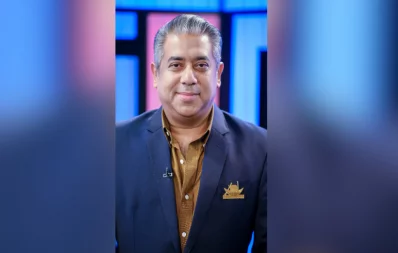
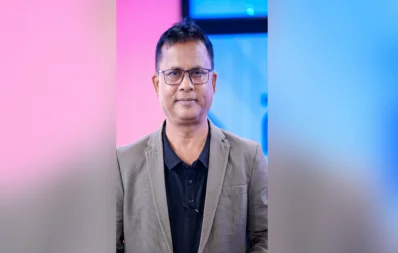
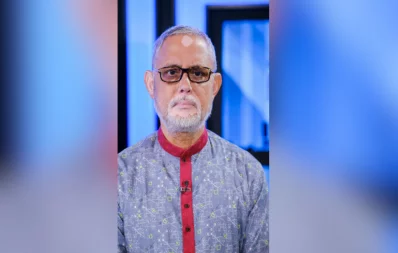
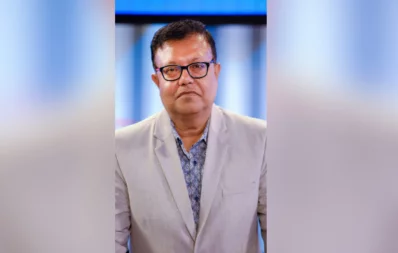
The three potential candidates of Rangpur-5 constituency commented on the second episode of the TV show “Election Debate,” organized by Dhaka Tribune. Rasheq Rahman, member, Central Sub-Committee on Publicity and Publication, Bangladesh Awami League; Md Shazedur Rahman Rana, former joint secretary and present convening member, Rangpur Zilla BNP; and SM Fakhar Uz Zaman, former Presidium member, Jatiya Party, were present. This program was moderated by Dhaka Tribune Executive Editor Reaz Ahmad.
The program aired on Channel 24 TV on November 23, where the three leaders from Bangladesh Awami League, the main opposition BNP, and the current opposition in Parliament Jatiya Party expressed their views on the political situation, their current goals, the global situation, economic challenges, and their plans for the Rangpur-5 Constitution. Additionally, the respective parties discussed their political differences, freedom of expression, and the party’s commitment to anti-corruption. BNP leader Shazedur Rahman Rana said: “In the current global situation, how the post-election government of Bangladesh will deal with the nancial challenges depends on how the elections will be held.
To emerge from the previous controversy about elections and meet the challenge, an inclusive participatory election is required. If we are isolated, then we cannot play a role. As the representative of the party, we all demand elections in a festive atmosphere. Not only our party but also experts for a long time have opined that the government should be formed through a fair election. When that happens, the government will be capable of dealing with all kinds of economic challenges.”
Commenting on the plan for socio-economic development of the Mithapukur area, he mentioned that the land is very fertile. “Despite many obstacles, this area is prosperous. A diversity in agriculture has come to this area. Agriculture can be further improved if agro-based industry initiatives increase in this area for preservation,” he said.
Awami League leader Rasheq Rahman said: “If we prepare ourselves now to face the global economic challenges ahead of the twelfth election, we can harness the opportunities and possibilities of the Fourth Industrial Revolution. if we can enrich the IT sector by adding this technology and education, I think we can reach more than 40-50 billion in export earnings annually.
“If I talk about my area, Mithapukur is the only upazila with 23 colleges, more than 500 schools, and 100% electricity supply reaching the area. Even my father, H.N. Ashequr Rahman, was elected MP from Awami League ve times and worked for the area. As a continuation of which, I am the successor of my father, and development in this area will continue under the leadership of Awami League,” he added.
Jatiya Party leader SM Fakhar Uz Zaman said: “There is no chance to ignore the global challenges that Bangladesh has to face the way the whole world will face them. But the people of Bangladesh who will elect the leader should give them the minimum right in electing their leader. Any situation can be dealt with if the leadership is right."
“If I think about the area of development in Mithapukur, then we can increase employment and growth through the implementation of local product-based industries and industrialization. We are already working on the plan which has already been undertaken by us at the individual level, and we hope to be able to implement it within 2024,” he added.
BNP leader Rana said: “BNP was born after 1975 through the establishment of freedom of speech and freedom of the media. If we want to build a smart Bangladesh, then freedom of dissent must be given a place.”
He described the corruption situation in Bangladesh as a failure and said: “Unfortunately, Bangladesh could not get out of the corruption situation in the last 53 years. No party could prevent corruption. This is the failure of politicians; I will not mark it as the failure of any specific political party.”
However, blaming the situation on the BNP regime, Awami League leader Rasheq said: “They brought 10 truckloads of weapons while they were in power, and they attacked Sheikh Hasina with grenades. There was no freedom of speech. They could not establish democracy. If these crimes are not prosecuted, if they do not atone, democracy will not be established in this country.”
He further said: “Prevention of corruption is not possible without democracy. There is a need for national unity to prevent corruption. If there is no unity of faith, values, and justice at the national level, then a specific party cannot prevent corruption. A system must be put in place to prevent it, and when it can be established that the corrupt will be punished, it will be possible to prevent.”
Agreeing with Rasheq, Jatiya Party leader SM Fakhar Uz Zaman said that corruption cannot be prevented unless all parties unite. “Everyone needs to work together in this space. If corruption is not prosecuted, it will not stop,” he said.
What they said
Rasheq Rahman, Member of the Central Sub-Committee on Publicity and Publication of Awami League has said: "If we prepare ourselves now to face the global economic challenges ahead of the twelfth election, we can now harness the opportunities and possibilities of the Fourth Industrial Revolution. And if we can enrich the IT sector by adding this technology and education, I think we can reach more success. With that a system must be put in place to prevent corruption. When it can be established then corrupt will be punished. here needs a national unity to prevent corruption. If there is no unity of faith, values, and justice at the national level, then a speci c party cannot prevent it."
Md Shazedur Rahman Rana, Ex-Joint Secretary and Present Convening Member of Rangpur Zilla BNP said: "Not only our party but also experts for a long time have opined that the government should be formed through a fair election; when that happens, this government will be capable of dealing with all kinds of economic challenges. Unfortunately, Bangladesh could not get out of the corruption situation in the last 53 years. No party could prevent corruption. This is the failure of politicians; I will not mark it as the failure of any speci c political party. If we want to build a smart Bangladesh, then freedom of dissent must be given place."
SM Fakhar Uz Zaman, Ex Presidium Member of Jatiya Party said: "After 1990, no government has undertaken any development of Hakaluki Haor. If I am elected on behalf of my party, my first priority will be to work on a mega plan for the development of Hakaluki. Along with that, we will improve the welfare trust of tea workers. On the other hand, regarding the price hike situation, the government party syndicate is behind it, and they are unable to prevent it. The situation was similar during BNP’s tenure. There was no corruption during Ershad’s tenure."
Reaz Ahmad, Executive Editor, Dhaka Tribune, said: "From Bangladesh’s Rangpur-5 Constituency, BNP, AL, and Jatiya Party will present their party and personal positions, evaluations, political stances, analyses, as well as future commitments to the people. We hope the audience will gain insights from these discussions. At the same time, we hope that they will be able to present their party’s position to the general public in terms of their commitment to preventing corruption, addressing political dissent, and ensuring the freedom to express independent opinions in the mass media. We can find out what kind of difference they are able to make in all these matters."