




When the river eats away another homestead in the north, or the tide surges through the southern coast, it is not only land that disappears -- it’s people’s futures, memories, and often their dignity that vanish too. And in these silent crises, it is the women who stand on the most fragile frontlines.
In Bangladesh’s char lands and coastal belts, climate change is not an abstract idea discussed in conferences. It is a lived experience -- in every broken embankment, every displaced family, and every meal skipped so children can eat first.
Women, in particular, carry the double burden: They bear the weight of climate shocks while navigating deep-rooted social norms that limit their choices.
The northern struggle: Displacement and social chains
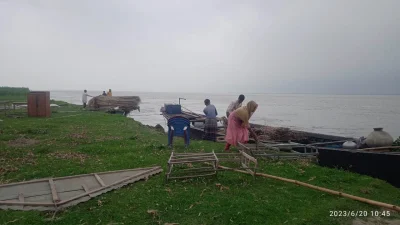
In the north, shifting rivers constantly redraw the map of people’s lives. River erosion, floods, and forced migration leave families in a cycle of loss and rebuilding. The char dwellers, already cut off from government services like health centres, police stations, and union councils, live in constant uncertainty.
For women, the challenge is multiplied. With limited mobility and access to justice, they depend heavily on male relatives or informal networks. Poverty and instability have also reinforced harmful social practices -- child marriage, dowry -- all of which rise when families feel cornered by crisis. Climate stress doesn’t just wash away homes; it erodes social values and increases gender-based vulnerabilities.
The southern reality: Saline soil and storm tides
The southern coast tells a similar story with different colours -- the white salt crust on the land, the taste of brackish water in the ponds, and the ever-present fear of the next cyclone. Frequent tidal surges and saline intrusion have changed agriculture and fisheries. What used to grow easily now withers in saltwater.
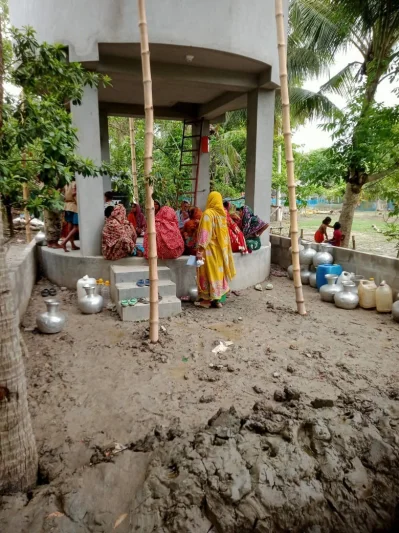
Women here struggle to maintain household food security while men migrate to towns or to slums like Karail in Dhaka in search of work. Many women stay behind -- managing families, livestock and small plots -- but with limited access to credit or agricultural inputs. Initiatives such as the introduction of salt-tolerant rice varieties (like BRRI dhan97 and dhan99) have brought hope, but the benefits reach women farmers only when extension and credit services are inclusive and accessible.
A wider lens: Well-being and empowerment
To truly understand women’s empowerment in these contexts, it helps to recall Nobel laureate Amartya Sen’s “capability approach” -- the idea that development is about expanding people’s real freedoms to live the lives they value.
For women in climate-vulnerable communities, empowerment cannot mean just higher income or new projects. It must mean genuine freedom -- the ability to move safely, to earn and decide independently, to access healthcare and justice, and to live without fear or dependency.
Sen also reminds us that a woman’s sense of well-being is deeply connected to her family’s welfare. She feels stronger when her children are fed, her husband employed, and her household safe. Empowerment, therefore, must strengthen both individual agency and family security -- not one at the cost of the other.
Policy promises and global context
Bangladesh’s Eighth Five-Year Plan (2020–2025) recognized gender equality as a cross-cutting issue linking women’s empowerment with poverty reduction, climate adaptation, and disaster resilience. In the ninth Five-Year Plan, the challenge is to turn these commitments into action -- especially in areas that remain literally off the map during floods and tides.
Globally, the “gender in development” discourse has evolved from treating women as passive beneficiaries to recognizing them as active agents of change. Bangladesh’s journey -- from girls’ education to microfinance -- has inspired many countries. But climate change now tests that legacy. True gender-responsive adaptation demands more than inclusion; it requires rights, resources, and representation.
What needs to change on the ground
- Government services must reach women where they live -- not the other way around. Mobile health clinics, legal aid desks, and women-led extension networks could bridge the gap in chars and coastal wards.
- Climate-smart technologies should be introduced with women’s ownership in mind. From saline-tolerant crops to floating gardens and small-scale solar pumps, every intervention should ask: Can women access it, control it, and benefit directly?
- Social protection and financial inclusion must recognize women as the heads of climate resilience. Cash transfers, small business loans, and green microcredit should be designed so that women have real control over how funds are used.
- Addressing gender-based violence and harmful practices must be central to climate policy. Disasters and displacement often lead to spikes in domestic abuse and child marriage. Empowerment cannot exist without safety and dignity.
- Women must be included in decision-making. Their lived experience -- where the floodwaters rise first, which crops survive, which roads disappear -- is data that no satellite can capture.
Beyond survival and towards freedom
Bangladesh has become a global example in disaster management and adaptation. Yet resilience will remain incomplete unless women are at the centre -- not as beneficiaries, but as leaders.
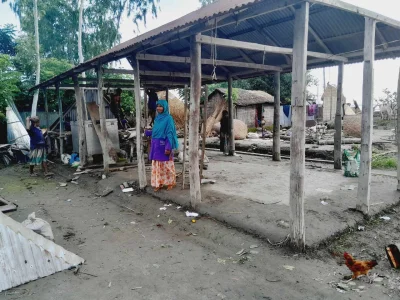
Empowerment is not a slogan; it is the freedom to make choices in the face of uncertainty. When a woman in the coastal belt can plant a salt-tolerant variety of crop, send her daughter to school, visit a clinic without fear, and decide how to spend her earnings -- that is what real climate resilience looks like.
Bangladesh must ensure that women’s empowerment is not treated as an afterthought. It is the foundation for building communities that can stand firm against both rising tides and rising inequalities.
Ahmed Toufiqur Rahman works in the development sector and writes on climate, governance and social inclusion. Email: [email protected].
