April already sizzles with the portent of a scorching summer ahead of us, and as Earth Day rolls around, it bears thinking seriously about this little planet we call home. Putting aside larger climate change issues such as oil wells and coal mines and carbon emissions, one industry that has recently been seeing a lot of flak is the fashion industry, particularly the rising threat of “fast fashion.” Eileen Fisher, award-winning clothing industry magnate has even gone so far as to say “The clothing industry is the second largest polluter in the world ... second only to oil."

From filling landfills with discarded clothings, to chemical dyes polluting the water, to microfibres choking marine wildlife, and certainly not least of all, the human rights abuses in fashion sweatshops, the evils of fast fashion are many.
While Bangladesh, with its sizeable garments sector, is certainly no stranger to these problems (one has merely to glance at the Buriganga for visual confirmation), the couture scene is actually working extremely hard to make fashion more sustainable in as many ways as possible. From promoting fair trade to the use of organic vegetable dyes, local designers have been tireless in their attempt to be more responsible in their practices.
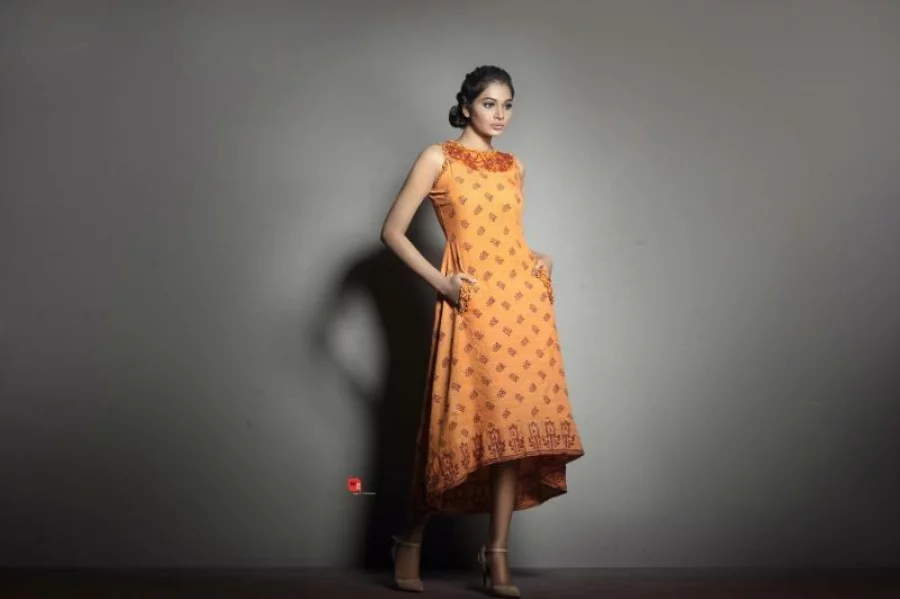
You can’t begin to talk about sustainable fashion without mentioning khadi. The ancient handwoven and handloom textile is labour intensive, and has a much lower carbon footprint than other textiles, and can be a bridge between our rich cultural heritage and fashion of the future.
Over the past two years, the Fashion Design Council, Bangladesh, has been relentlessly promoting these textiles, and with two consecutive years of successful festivals, have definitely made ripples of awareness about our handloom traditions.

On Earth Day, however, Maheen Khan, founder of the fashion house Mayasir, and President of the FDCB, appears to be in a brooding frame of mind. “We’ve been trying to show, through our shows, how khadi is the ideal fabric for the Bangladeshi heat and humidity. Not only is it a more eco-friendly fabric, but requires very little capital investment to set up and can help generate income in rural households, particularly for women, for whom economic independence is important,” she says. “However, unless we are able to remunerate the labour of the khadi artisans at market value, they are forced to look for other means of employment. Our studies have shown large numbers of weavers migrating to other professions to sustain their families. Naturally, the handloom and handwoven industry takes a hit. The scenario is quite bleak.”

A lot of this forced migration can be blamed on the demand for mass-produced readymade garments, and the popularity of Indian and Pakistani clothes as opposed to local textiles and local styles. Other environmental factors that contribute to this is the lack of locally produced cotton, owing to water shortages, climate change, and the dwindling of arable land.
The iconic fashion designer refuses to get pessimistic, however. “People are slowly starting to care about these things. They’re getting more interested in things like where their food comes from, expressing concern about things like formalin or other forms of food adulteration. I’d like to think this growing awareness will bleed into other areas of life, such as clothing choices. We at the FDCB are of course, continuing our efforts to promote green fabrics.”
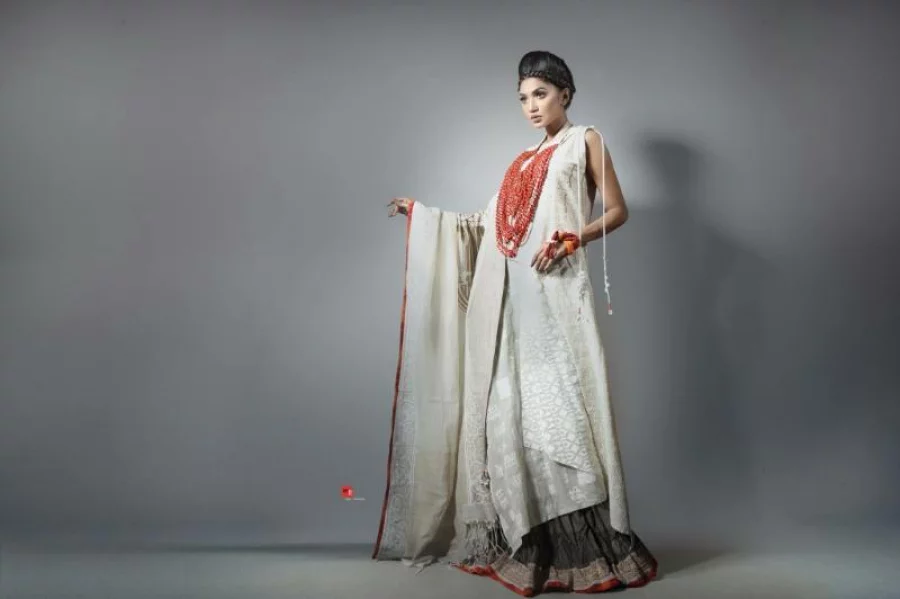
As Maheen Khan and her compatriots gear up for the annual khadi festival in December, her message to readers and fashion enthusiasts, is to try and instill good environmental values in the next generation, and to practice green fashion by respecting tradition, buying organic clothing, and adopting practices such as recycling and upcycling. “Don’t try to just go for a readymade Bollywood outfit. Take your own piece, be it a kurti or even a cotton sari, and try to use your imagination to accessorise, and mix and match, and make it your own.”
Fast fashion facts
* 2 billion pairs of jeans are produced globally every year. It take 7000 litres of water to make just one pair (Source: Forbes magazine)
* It takes 2700 litres of water to make just one machine-made cotton t-shirt (Source: bettercotton.org)
* An estimated 400 billion square meters of textiles are produced annually, of which 60 billion square meters are left on the cutting room floor (Source: greenpeace.org)
* Only a quarter of discarded garments gets recycled. The rest go to landfills, or are incinerated (Source: greenpeace.org)
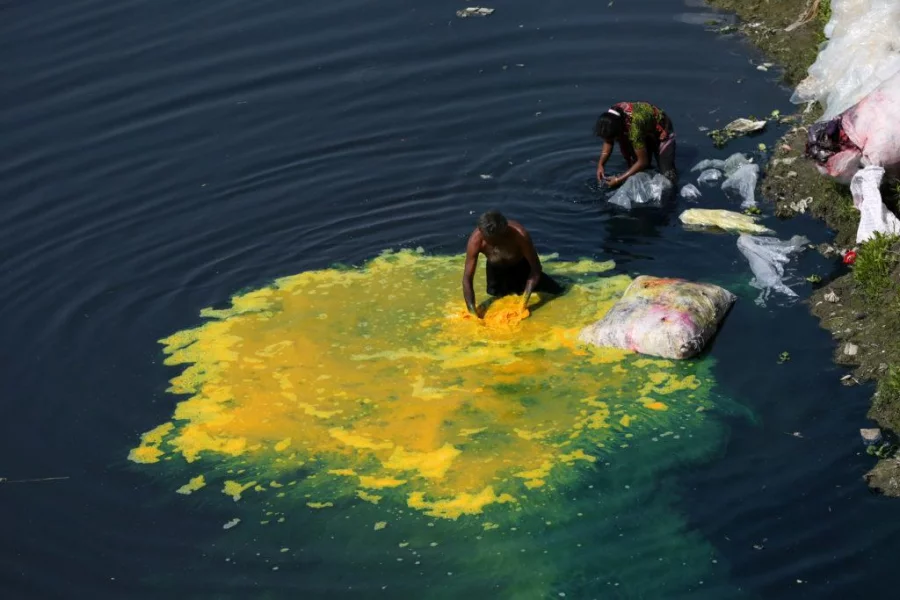
Photo: Zakir Hossain, 1.7 million tonnes of various chemicals are used annually around the world to dye/waterproof clothes. A lot of these chemicals leach into our rivers, harming wildlife
“Buy less, choose well, make it last” ~ Vivianne Westwood
*Instead of splurging on a new garment you’re going to tire of in a month, arrange for clothes swap programmes with your friends. The perfect excuse to make a party of it. Youtube has plenty of “haulternative” videos to help you organise these.
* Upcycling! Put your craft skills to use (or get your tailor involved) to turn old garments to new. Thus an old sari can be made into a new kameez, an old kameez into a new kurti, and so on and so forth
* Look for eco-friendly options, such as clothes that use vegetable dye
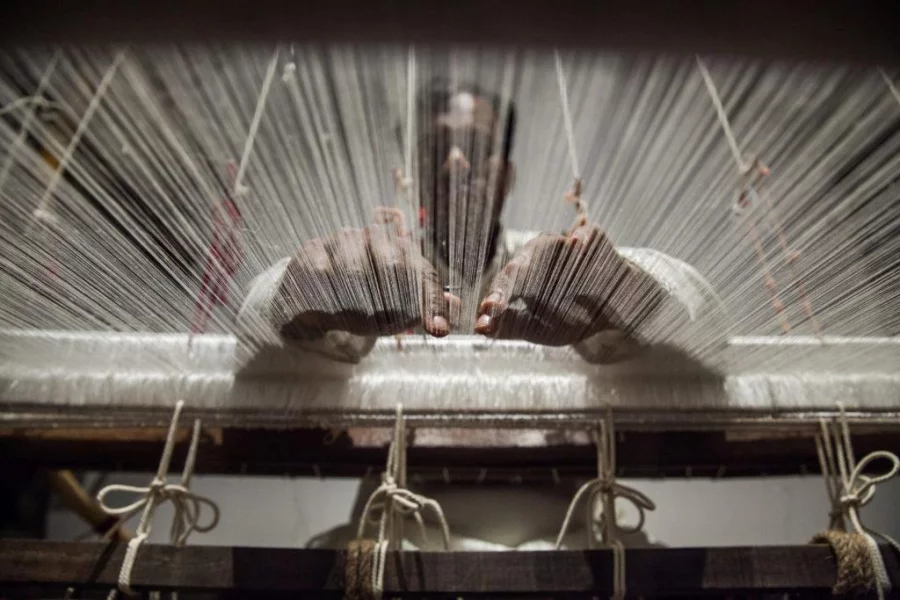
Photo: Rajib Dhar, The rising popularity of fast fashion is forcing handloom weavers out of jobs




 From filling landfills with discarded clothings, to chemical dyes polluting the water, to microfibres choking marine wildlife, and certainly not least of all, the human rights abuses in fashion sweatshops, the evils of fast fashion are many.
While Bangladesh, with its sizeable garments sector, is certainly no stranger to these problems (one has merely to glance at the Buriganga for visual confirmation), the couture scene is actually working extremely hard to make fashion more sustainable in as many ways as possible. From promoting fair trade to the use of organic vegetable dyes, local designers have been tireless in their attempt to be more responsible in their practices.
From filling landfills with discarded clothings, to chemical dyes polluting the water, to microfibres choking marine wildlife, and certainly not least of all, the human rights abuses in fashion sweatshops, the evils of fast fashion are many.
While Bangladesh, with its sizeable garments sector, is certainly no stranger to these problems (one has merely to glance at the Buriganga for visual confirmation), the couture scene is actually working extremely hard to make fashion more sustainable in as many ways as possible. From promoting fair trade to the use of organic vegetable dyes, local designers have been tireless in their attempt to be more responsible in their practices. You can’t begin to talk about sustainable fashion without mentioning khadi. The ancient handwoven and handloom textile is labour intensive, and has a much lower carbon footprint than other textiles, and can be a bridge between our rich cultural heritage and fashion of the future.
Over the past two years, the Fashion Design Council, Bangladesh, has been relentlessly promoting these textiles, and with two consecutive years of successful festivals, have definitely made ripples of awareness about our handloom traditions.
You can’t begin to talk about sustainable fashion without mentioning khadi. The ancient handwoven and handloom textile is labour intensive, and has a much lower carbon footprint than other textiles, and can be a bridge between our rich cultural heritage and fashion of the future.
Over the past two years, the Fashion Design Council, Bangladesh, has been relentlessly promoting these textiles, and with two consecutive years of successful festivals, have definitely made ripples of awareness about our handloom traditions. On Earth Day, however, Maheen Khan, founder of the fashion house Mayasir, and President of the FDCB, appears to be in a brooding frame of mind. “We’ve been trying to show, through our shows, how khadi is the ideal fabric for the Bangladeshi heat and humidity. Not only is it a more eco-friendly fabric, but requires very little capital investment to set up and can help generate income in rural households, particularly for women, for whom economic independence is important,” she says. “However, unless we are able to remunerate the labour of the khadi artisans at market value, they are forced to look for other means of employment. Our studies have shown large numbers of weavers migrating to other professions to sustain their families. Naturally, the handloom and handwoven industry takes a hit. The scenario is quite bleak.”
 A lot of this forced migration can be blamed on the demand for mass-produced readymade garments, and the popularity of Indian and Pakistani clothes as opposed to local textiles and local styles. Other environmental factors that contribute to this is the lack of locally produced cotton, owing to water shortages, climate change, and the dwindling of arable land.
The iconic fashion designer refuses to get pessimistic, however. “People are slowly starting to care about these things. They’re getting more interested in things like where their food comes from, expressing concern about things like formalin or other forms of food adulteration. I’d like to think this growing awareness will bleed into other areas of life, such as clothing choices. We at the FDCB are of course, continuing our efforts to promote green fabrics.”
A lot of this forced migration can be blamed on the demand for mass-produced readymade garments, and the popularity of Indian and Pakistani clothes as opposed to local textiles and local styles. Other environmental factors that contribute to this is the lack of locally produced cotton, owing to water shortages, climate change, and the dwindling of arable land.
The iconic fashion designer refuses to get pessimistic, however. “People are slowly starting to care about these things. They’re getting more interested in things like where their food comes from, expressing concern about things like formalin or other forms of food adulteration. I’d like to think this growing awareness will bleed into other areas of life, such as clothing choices. We at the FDCB are of course, continuing our efforts to promote green fabrics.” As Maheen Khan and her compatriots gear up for the annual khadi festival in December, her message to readers and fashion enthusiasts, is to try and instill good environmental values in the next generation, and to practice green fashion by respecting tradition, buying organic clothing, and adopting practices such as recycling and upcycling. “Don’t try to just go for a readymade Bollywood outfit. Take your own piece, be it a kurti or even a cotton sari, and try to use your imagination to accessorise, and mix and match, and make it your own.”
 Photo: Zakir Hossain, 1.7 million tonnes of various chemicals are used annually around the world to dye/waterproof clothes. A lot of these chemicals leach into our rivers, harming wildlife
 Photo: Rajib Dhar, The rising popularity of fast fashion is forcing handloom weavers out of jobs