




 This photograph taken on October 31, 2017, shows chinese engineers working on the neelum-Jhelum Hydropower Project in nosari, in Pakistan-administered Kashmir’s neelum Valley AFPThe Indus Water Treaty, painfully ratified in 1960 under the auspices of the World Bank, theoretically regulates water allocation between the countries and is considered a rare diplomatic success story amid a bitter history.
It provides India with access to three eastern rivers (the Beas, Ravi and Sutlej) and Pakistan with three in the west (the Indus, Chenab and Jhelum), while setting the conditions for water usage.
This photograph taken on October 31, 2017, shows chinese engineers working on the neelum-Jhelum Hydropower Project in nosari, in Pakistan-administered Kashmir’s neelum Valley AFPThe Indus Water Treaty, painfully ratified in 1960 under the auspices of the World Bank, theoretically regulates water allocation between the countries and is considered a rare diplomatic success story amid a bitter history.
It provides India with access to three eastern rivers (the Beas, Ravi and Sutlej) and Pakistan with three in the west (the Indus, Chenab and Jhelum), while setting the conditions for water usage.Several hundred metres underground, thousands of labourers grind away day and night on a mammoth hydroelectric project in contested Kashmir, where India and Pakistan are racing to tap the subcontinent's diminishing freshwater supplies.
The arch rivals have been building duelling power plants along the banks of the turquoise Neelum River for years.
The two projects, located on opposite sides of the Line of Control - the de facto border in Kashmir - are now close to completion, fuelling tensions between the neighbours with Pakistan particularly worried their downstream project will be deprived of much-needed water by India.
The Himalayan region of Kashmir is at the heart of a 70-year conflict between the nuclear-armed foes, with both sides laying claim to the conflict-riven territory.
The rivalry on the Neelum is underlined by both countries' unquenchable need for freshwater, as their surging populations and developing economies continue to stress already diminished waters tables.
This situation represents a serious challenge to Pakistan's food security and long-term growth, its central bank recently warned in a report.
The geography of the wider region only exacerbates the problem.
The Indus River - into which the waters of the Neelum ultimately flow - is one of the longest on the continent, cutting through ultra-sensitive borders in the region.
It rises in Tibet, crosses Kashmir and waters 65% of Pakistan's territory, including the vast, fertile plains of Punjab province - the country's bread basket - before flowing into the Indian Ocean.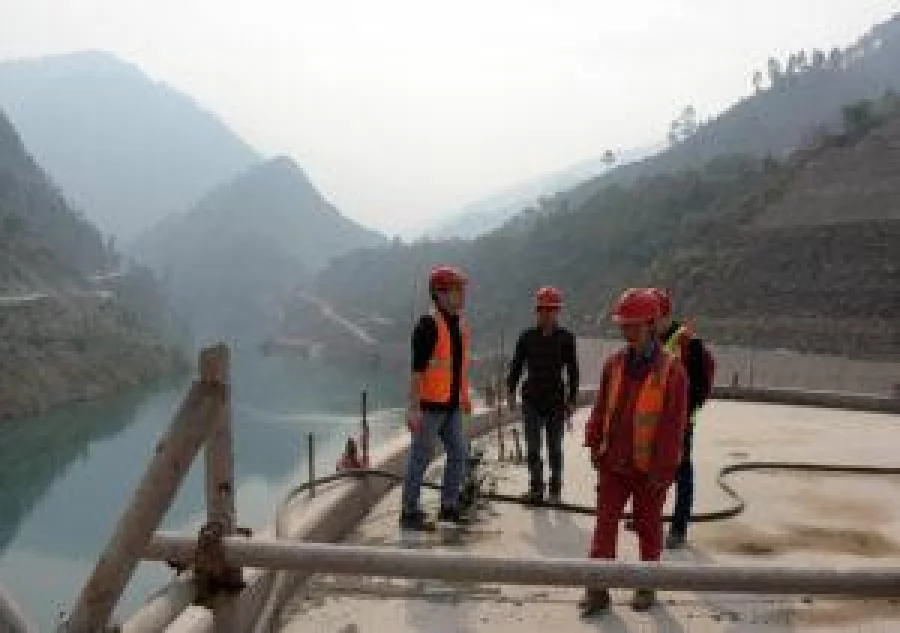 This photograph taken on October 31, 2017, shows chinese engineers working on the neelum-Jhelum Hydropower Project in nosari, in Pakistan-administered Kashmir’s neelum Valley AFPThe Indus Water Treaty, painfully ratified in 1960 under the auspices of the World Bank, theoretically regulates water allocation between the countries and is considered a rare diplomatic success story amid a bitter history.
It provides India with access to three eastern rivers (the Beas, Ravi and Sutlej) and Pakistan with three in the west (the Indus, Chenab and Jhelum), while setting the conditions for water usage.
This photograph taken on October 31, 2017, shows chinese engineers working on the neelum-Jhelum Hydropower Project in nosari, in Pakistan-administered Kashmir’s neelum Valley AFPThe Indus Water Treaty, painfully ratified in 1960 under the auspices of the World Bank, theoretically regulates water allocation between the countries and is considered a rare diplomatic success story amid a bitter history.
It provides India with access to three eastern rivers (the Beas, Ravi and Sutlej) and Pakistan with three in the west (the Indus, Chenab and Jhelum), while setting the conditions for water usage.
This photograph taken on October 31, 2017, shows chinese engineers working on the neelum-Jhelum Hydropower Project in nosari, in Pakistan-administered Kashmir’s neelum Valley AFPThe Indus Water Treaty, painfully ratified in 1960 under the auspices of the World Bank, theoretically regulates water allocation between the countries and is considered a rare diplomatic success story amid a bitter history.
It provides India with access to three eastern rivers (the Beas, Ravi and Sutlej) and Pakistan with three in the west (the Indus, Chenab and Jhelum), while setting the conditions for water usage.