


That the debt deal has been announced is great, that means we're not going to have wholly crashing financial markets real soon now. But there will be milder effects, such as on the T-Bill ( US3M) markets. That, in turn, will echo through into other parts if the financial markets. It's entirely possible that this will increase the stress on the regional banks - PacWest and so on - that we all had such fun with a few weeks back. None of this is certain of course, but there are a series of entirely reasonable surmises that can be made here.
But note what has been happening here. The Treasury hasn't been issuing new T-Bills. For they had already hit the debt limit. What's been happening the last few months is that government has been looking down the back of the couch for any spare change in order to meet the bills. So, the debt limit gets raised, those stashes around the government accounts need to get refilled and the way to do that is have a wave of T-Bill issuance: “Since it hit the debt ceiling the US government has been drawing down money held in the Treasury General Account with the Fed. As a result its balance there has dropped from about $700bn at the end of 2022 to under $50bn now. Quickly rebuilding that buffer will boost Treasury bill issuance to $730bn over the next three months, and about $1.25tn over the rest of the year, according to Morgan Stanley.”
So, T-Bill yields rise, prices (because they are bills, only a little) fall.
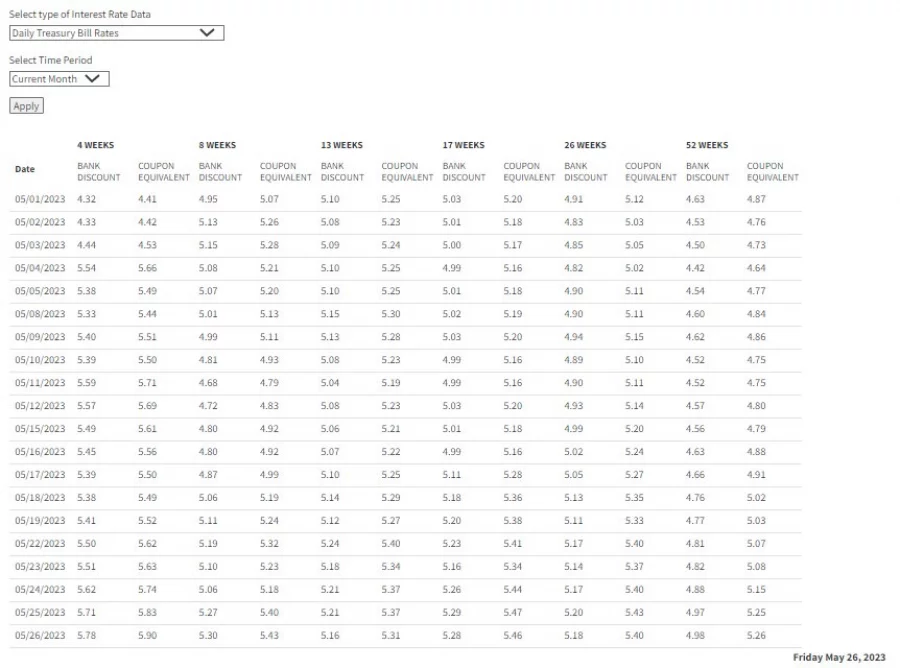
TBill rates from US Treasury
What then happens? Well, a lot of that money that would have been going into T-Bills has been going into money market funds. Or possibly even sticking in bank deposit accounts. But now those relative prices change, T-bills are more attractive. Some portion of that money will therefore flow into them. At least that $1.25 trillion in fact, possibly more.
So, who gets hurt by that movement of money? Well, the people at the end of the chain are those banks with considerable hot money deposits. Exactly those banks that got into trouble a couple of months back Silicon Valley Bank and all that - the hot money moved, this revealed the losses of capital which had to be crystalised, one dead bank.
So, debt deal done, what happens next? No, we can't say that there will be more dead banks. What we must say though is that the risk of dead banks has just risen.
Economics is fun, isn't it?
