


Technology Minerals (LON: TM1) is up 15% today and near 300% over the pst month and a bit, on the grounds that their lithium battery recycling plant is now permitted and near ready to go. They're waiting on the fire suppression equipment installation and they should then be able to start work. Well, there're definitely more Li-ion batteries around, lithium is expensive (although near half the price it was 6 months back) and so yes, recycling such batteries looks like a god business to be in.
The base metallurgy here is that there's some mixture of iron, lithium, cobalt nickel and so on (the precise mix depends upon the exact battery) inside those new car batteries. Those are all elements of varying value. Having that stuff above ground and recyclable may well be a decent source of those very elements. Possibly cheaper than going and mining new product. OK, so recycling could be a good thing to be doing. Take end of life batteries, recycle them into raw materials for more batteries. In this process extract from batteries and grind down into “black mass” which can then be sent to refiners. Sounds like a plan.
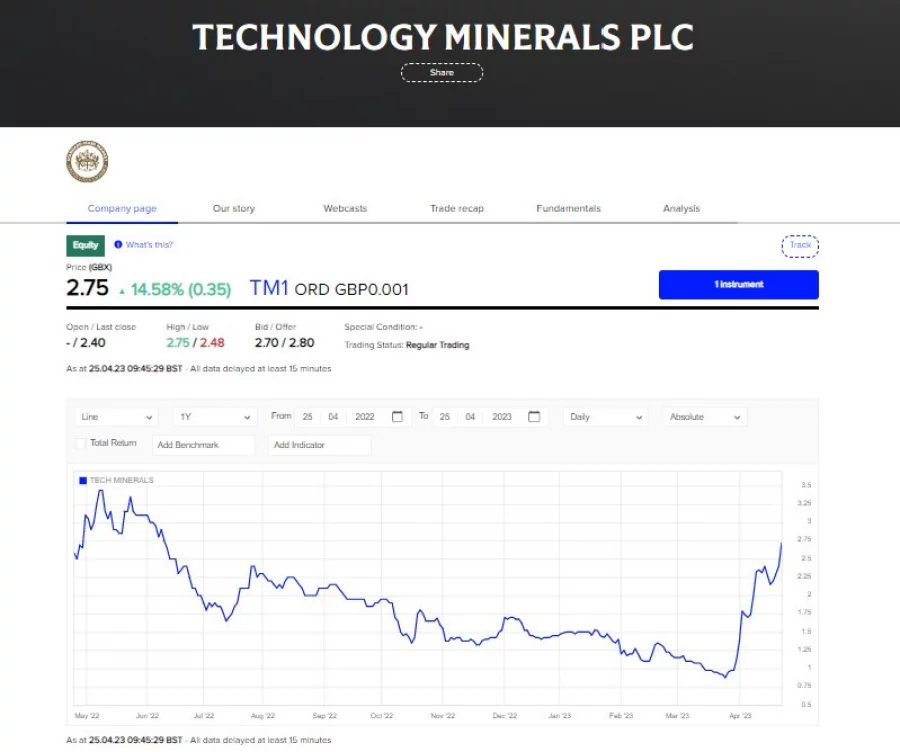
Technology Minerals share price from London Stock Exchange
The announcement of the TM1 plant gaining approval is here. Yes, very well done and so on. But there's one detail that worries us - worries a lot: “Following commencement of operations, Recyclus anticipates the receipt of gate fees for collection and storage of Li-ion batteries,” that is, they expect to be paid for taking away the batteries. That's not something that's going to survive any growth in competition. Really, it's just not.
Think it through for a moment. The idea is that recycling the batteries is a cheaper way of producing the elements for making new batteries - there's value in recycling that is. So, what happens in that circumstance is that the recyclers pay for the batteries. You do not pay to deliver copper to a scrap merchant, the scrap merchant pays you - because there's money in copper recycling. So, if there's money in battery recycling then far from the recycler being paid to take them, the recycler must pay for the privilege of being able to make that profit.
We're really not sure the economics assumed here will survive the growth of any competition.
