




Intel recently launched its latest line of processors, the Core Ultra 200 series, marking a major shift in design, performance, and energy efficiency.
This new lineup promises impressive gains in both performance and power efficiency, making it a strong contender in the ongoing battle between Intel and its competitors, particularly AMD.
Modular architecture
At the heart of the Core Ultra 200 series is Intel’s innovative modular chip design, departing from the traditional monolithic architecture.
In previous generations, Intel integrated all components into a single silicon block. With the new series, Intel introduces a disaggregated architecture, which allows different functional components, or “tiles,” to be assembled like building blocks onto a central base tile.
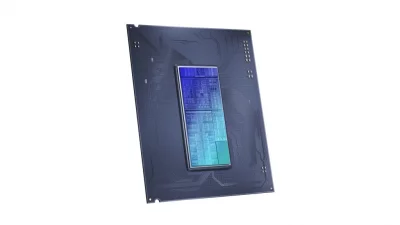
This Lego-like design provides flexibility, enabling Intel to optimize chips for different tasks by combining the necessary tiles, such as the GPU tile for graphics processing or the SLC tile for memory control.
It also includes less active components, such as the filler tile, which acts as a stabilizer, similar to wedging a piece of cardboard under a wobbly table leg.
The Intel Core Ultra 200 series utilizes Intel’s advanced 18A process node, which include technologies like RibbonFET transistors and PowerVia for enhanced performance and power deficiency.
Processor Lineup
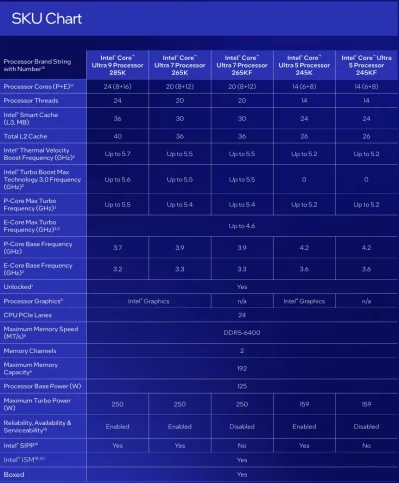
Intel’s Core Ultra 200 series features a versatile lineup tailored to meet different needs —whether you're a power gamer, a data-crunching researcher, or a content creator pushing your machine to its limits.
At the top of the lineup is the flagship Core Ultra 9 285K, optimized for tasks like gaming, video rendering, and AI workloads.
Intel has dropped Hyper-Threading in this series, a decision made to focus on power efficiency and cooling.
Rather than using virtual cores, the chip compensates by delivering superior performance through physical cores.
For those who need robust performance but with slightly lower power requirements, Intel offers two variants in the Core Ultra 7 series: the Core Ultra 7 265K, and for those who don’t require integrated graphics, the Core Ultra 7 265KF.
At the entry-level, the Core Ultra 5 245K is designed for everyday power users and also comes in a GPU-less variant (245KF), ideal for users who rely on dedicated graphics cards for gaming or rendering.
Here's a comprehensive look at the full processor lineup:
Core performance
Intel claims leadership core performance with the Core Ultra 9 285K, which outperforms the previous Core i9 14900K in several key areas.
While there are instances where competitors like AMD’s Ryzen 9 9950X may edge ahead—such as in Geekbench single-threaded tests, where AMD leads by around 8%—Intel still offers strong results, narrowing the gap to about 5% overall.
In more respected benchmarks, like SPECint 2017, the Core Ultra 9 surpasses the Ryzen 9 by about 6%, and in Cinebench, Intel leads by 8%. Additionally, in 3DMark’s CPU profile, Intel edges AMD by 11%, demonstrating strong performance across multi-threaded and computationally intensive tasks.
While Intel may not claim victory in every benchmark, it consistently delivers top-tier performance where it matters, particularly in multi-threaded workloads and power efficiency.
Power efficiency
One of Intel’s key promises for the Arrow Lake platform, which underpins the Core Ultra 200 Series, is improved power efficiency.
Intel claims the new processors can reduce power consumption by up to 40% while delivering a 15% increase in multi-threaded performance.
This represents a significant shift from previous generations, which were known for running hot and consuming a lot of power.
Arrow Lake claims to reduce package temperatures by up to 10°C while gaming, a notable improvement for both performance and longevity.
In practical terms, you can expect lower energy consumption during everyday tasks such as running Microsoft Office 365, participating in Zoom calls, or using light AI-based applications.
For example, Intel claims that using the Core Ultra 9 285K during these tasks can lead to substantial power savings, with up to a 58% reduction in power consumption during a Zoom call.
Similarly, for other tasks like running Procyon AI computer vision or single-core operations in Cinebench 2024, Intel reports power savings of around 42%, and for standard office tasks, up to 44%.
If these claims hold up in real-world reviews, Arrow Lake could represent a significant step forward in efficiency, performance, and cooling for Intel's desktop CPUs.
Platform and connectivity
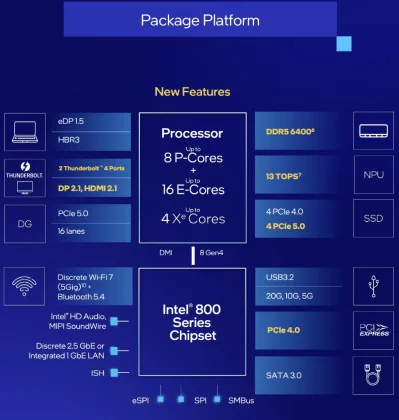
The new Intel Core Ultra 200 series will use a brand-new LGA 1851 socket, replacing the now end-of-life LGA 1700 socket.
One advantage of the LGA 1851 socket is its increased PCIe lane support.
While LGA 1700 provided only 16 PCIe lanes, this limited the ability to fully utilize both PCIe 5.0 GPUs and SSDs simultaneously.
With LGA 1851, you will have access to 20 PCIe 5.0 lanes, putting Intel on par with AMD.
This means you'll be able to run PCIe 5.0 GPUs alongside PCIe 5.0 SSDs without bandwidth limitations.
In total, LGA 1851 supports 48 PCIe lanes, along with 10 USB 3.2 ports, 14 USB 2.0 ports, and 8 SATA ports, most of which are likely controlled by the motherboard's I/O chip.
In terms of connectivity, the Core Ultra 200 series includes Thunderbolt 4, Wi-Fi 6E, and Bluetooth 5.3, with options for Thunderbolt 5 and Wi-Fi 7 through motherboard upgrades.
Memory
While it may not seem like a major change at first glance, Arrow Lake platform introduces support for Q DIMM and KSO DIMM technologies, which weren’t available in previous generations.
These technologies integrate a clock driver directly into the DIMMs, allowing the CPU to drive higher memory frequencies (6400 M/Ts) while maintaining stable, generic clock speeds.
Previously, you could install up to 192GB of RAM using high-capacity DIMMs on the LGA 1700 platform, which also supported dual-channel memory and SEC (Single Error Correction).
Q DIMM is used for standard desktop configurations, while KSO DIMM is more commonly found in compact systems like all-in-ones.
This integration allows for higher memory performance without needing manual tuning, something that wasn’t fully optimized in 14th Gen Intel Core or AMD’s Ryzen 9 platforms.
Content creation on Core Ultra
Beyond gaming, the Core Ultra 9 285K is designed to excel in content creation tasks. Intel’s Quick Sync technology plays a significant role in boosting performance, especially in tasks like video encoding using codecs such as HEVC and Sony’s new AK codec.
The Core Ultra 9 shows a 7.3x faster playback compared to AMD’s Ryzen 9, with a 2.8x increase in other playback tasks, along with a 70% overall performance boost in specific video workflows.
When it comes to 3D rendering, the Core Ultra 9 delivers approximately 10% better performance than AMD’s Ryzen 9 9950X, particularly in applications like POV-Ray.
In Adobe Premiere, Photoshop, and Lightroom, Intel’s chip shows about a 6% performance advantage over its AMD rival, although AMD still holds an edge in certain tasks like Lightroom Classic and Photoshop, especially on mobile versions.
Intel's Core Ultra 9 285K shines in specialized workflows, such as rendering with Blender while processing video codecs like X AVC.
Intel claims an 86% performance improvement in these workflows compared to the Ryzen 9 9950X, making the Core Ultra 9 an attractive option for content creators seeking a balance of performance and efficiency.
AI: key differentiator
As Artificial Intelligence continues to grow in importance, Intel has made sure the Core Ultra 200 series is up to the challenge.
Intel has integrated advanced AI capabilities directly into the processor with its NPU chip, making it more efficient at handling tasks like machine learning, computer vision, and dynamic noise suppression.
In benchmarks, the Core Ultra 9 285K shows substantial gains in AI performance, particularly in tools like Geekbench AI and UL Procyon AI computer vision tests.
For instance, Intel reports a stunning 50-70% performance gains in Adobe products like Lightroom Classic, Premiere Pro, and After Effects.
These AI optimizations are bolstered by Intel’s collaboration with software developers, especially Adobe.
In Premiere Pro, Intel’s chips deliver an 18-34% improvement in tasks like auto-reframe and audio auto-tagging, showing how AI capabilities can directly enhance productivity in content creation.
Arrow Lake’s future
The Arrow Lake platform represents a broader shift in Intel’s strategy toward energy efficiency, AI integration, and modular design.
While the Intel Core Ultra 200 series shows great potential on paper, the true test will come through independent reviews and real-world testing.
This lineup brings a lot of what users have been asking for, especially in terms of power efficiency and performance.
However, it’s important to temper expectations until we see real-world results. Some users may find it exceeds expectations, while others could be left disappointed.
For now, I recommend holding off until more reviews are published. Once we have a clearer picture of the chip’s capabilities, you will be in a better position to decide whether to invest in Intel’s latest offering or explore AMD’s alternatives. Ultimately, with strong competition from both sides, we will likely benefit from more options and competitive pricing. So, the outlook for the Core Ultra 200 series is optimistic, but time will tell if it truly lives up to the hype.
The author is a contributor and tech enthusiast
