




The context of housing in Bangladesh is shaped by the interaction between people and nature, where nature is beneficial but also presents hazards. While impacts of these hazards may evolve, the risk situation is not new in Bangladesh. From time immemorial, natural disasters have been causing the loss of millions of lives and resulting in colossal damage to the economy of Bangladesh.
For a very long time, local populations have been able to live here and to do so, they have found solutions to adapt to these hazards by solely using locally available resources. Local materials shaped the country’s built heritage and still shape most rural houses. Earth, timber, bamboo, cane and reeds are abundantly available throughout the country and have been used for thousands of years in Bangladesh. These building cultures result from local know-how and a collective intelligence improved over generations, through trials, failures and successes.
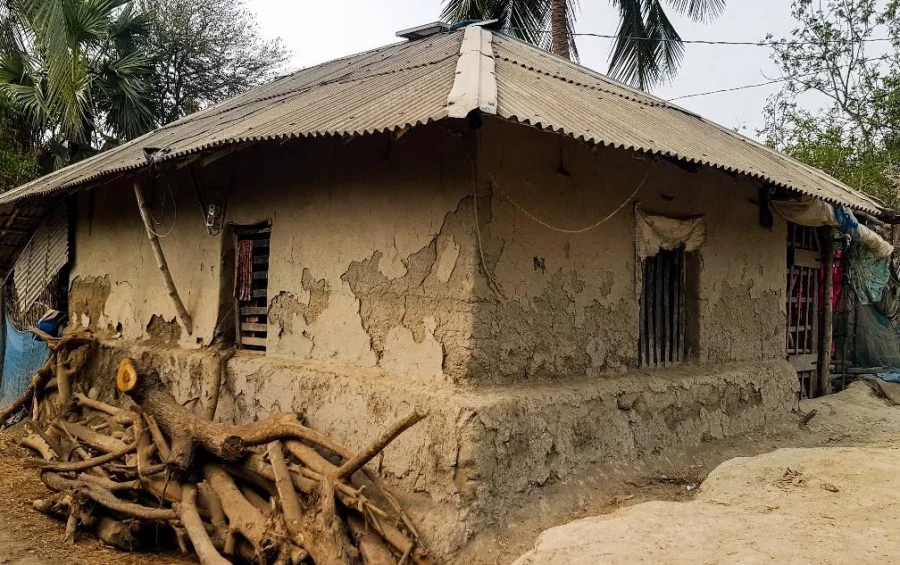
In Shyamnagar, Satkhira, a district known for its proximity to climatic threats, houses are mostly self-built, usually constructed on an earthen plinth using natural materials such as earth, bamboo and wood and a growing use of iron sheets (CGI) for the roofs nowadays.
They are often built over a multi-step earthen plinth with an earthen floor. The roof may be thatch or CGI sheets supported by a bamboo or wooden roof frame. Mud wall is built by mixing earth with water and straw, jute or rice-husk additives to provide strength during drying and shrinkage. The surfaces of earthen walls are plastered with earth mixed with cow dung.
In response to the climate, hazards and cultural needs, different local building cultures have developed and they offer a whole variety of context-specific solutions.
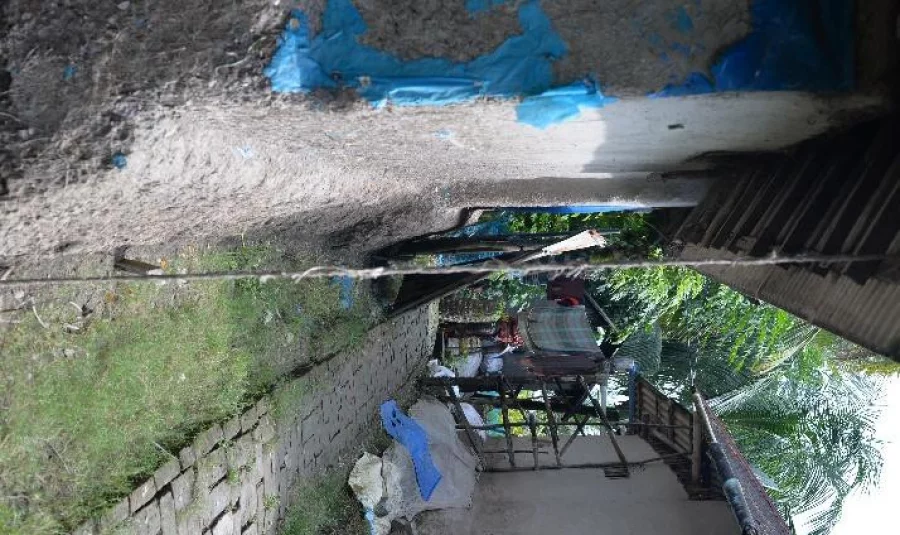
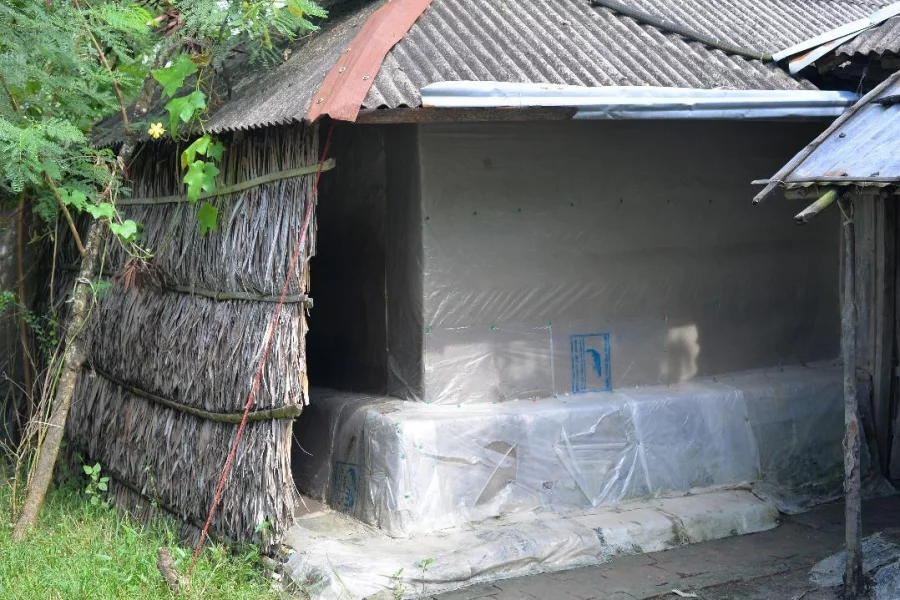
While strolling around the earthen pathways in the villages of Shyamnagar, it is common to see the floor level of the mud houses elevated up to around 5-6ft high in order to avoid submergences due to rainwater and to protect the structure from tidal surges. Extreme care and attention is usually given to construction of the raised floor or plinth, which is often the only remaining trace of a build-form after a cyclone or flood.
Gol pata is another natural commodity interwoven with the identity of the Sundarbans. In the locality nearby, panels of woven leaves gol pata with a bamboo structure are placed on the sides of the houses that are more exposed to rainwater and prevailing winds. The panels protect the earthen walls from erosion and degradation due to direct exposure to rain and strong winds, thereby increasing the lifespan of the mud wall. When needed, these panels can be easily replaced using freely available materials. The gap between the wall and the panels allow for an airflow thus avoiding moisture. The raised plinth is often wrapped with plastic sheets to minimize the erosion of the mud bottom with rainwater. However, buying rolls of plastic sheets often becomes a very luxurious solution for the marginal households.
To protect the roofs from being blown away, the locals have come up with the method of using taana, an extra rope attachment to keep the roofs firmly anchored to the ground.
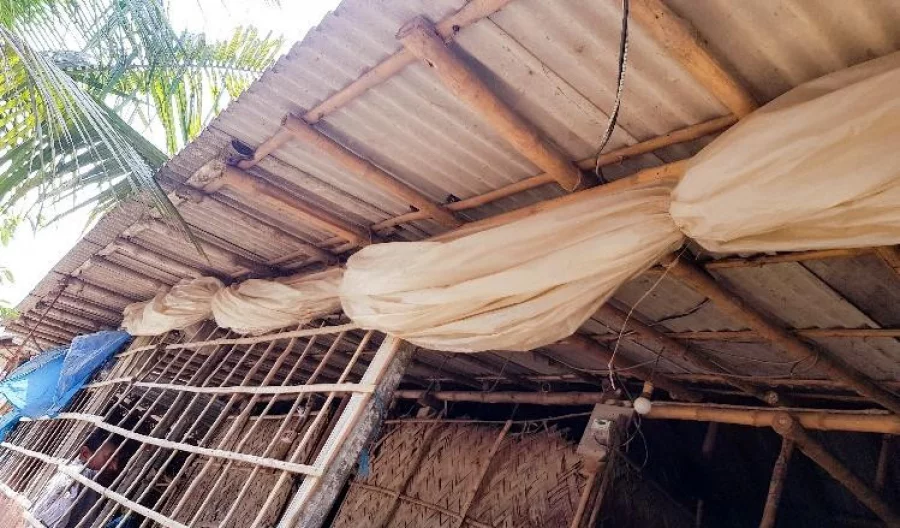
Another common feature to find around is rolled up plastic sheets around the outer balcony. Whenever there is an incident of torrential and monsoon rain, residents pull off the plastic from the roll and try to save the inner space from the splashes of rain.
Trees planted all around the house cut down wind speed, as do all other kinds of vegetation. However, high and rigid trees are located far enough from the houses to avoid danger in case of fall. Other advantages brought by vegetation are the regulation of temperature and humidity around the house as well as the provision of fruits, vegetables and livelihood for families. All these practices had developed over the years in the face of adverse climatic impacts, which kept on coming back to the lives of the people of coastal areas on a daily basis like an unwanted guest.
Despite the precautionary measures, some characteristic shortcomings of the non-engineered earthen structures remain. The most prominent weakness of the earthen construction is that they are not resistant to moisture. The main causes of damp, humid wall and consequent mould
attack are due to absorption of moisture of the rains and constant humidity during the rainy season.
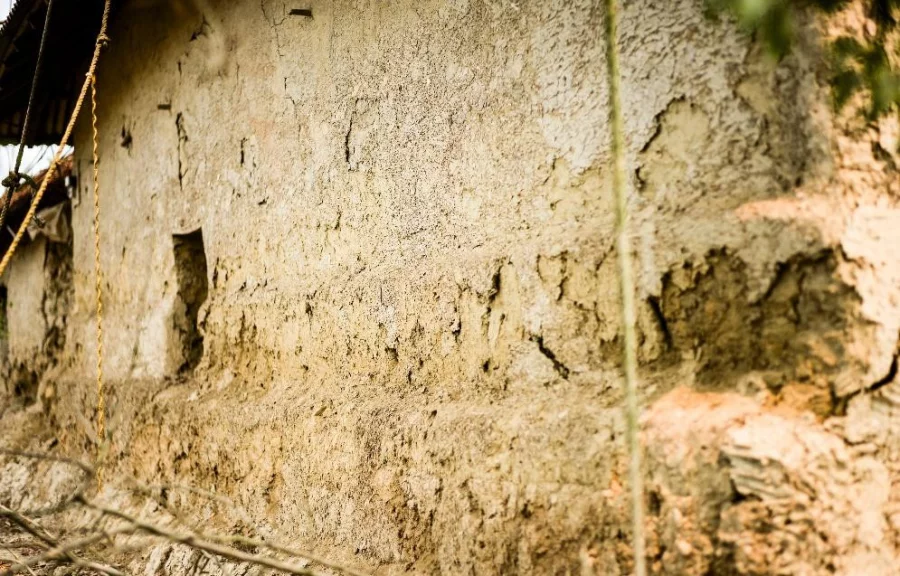
Moreover, Shyamnagar being a saline prone region, the problems associated with salt damage of structures also remain vigorously present in this region. The intrusion of saline water causes blistering and cracking of the mud floor, walls as well as the road surfaces. This phenomenon known as salt decay also affects other porous building materials such as limestone, sandstone, mud, concrete, and brick. This effect occurs when salt crystallizes inside of a building material’s pores and generates enough force to cause it to break or crumble. The effects of salt decay are very visible as one looks around the villages of Shyamnagar.
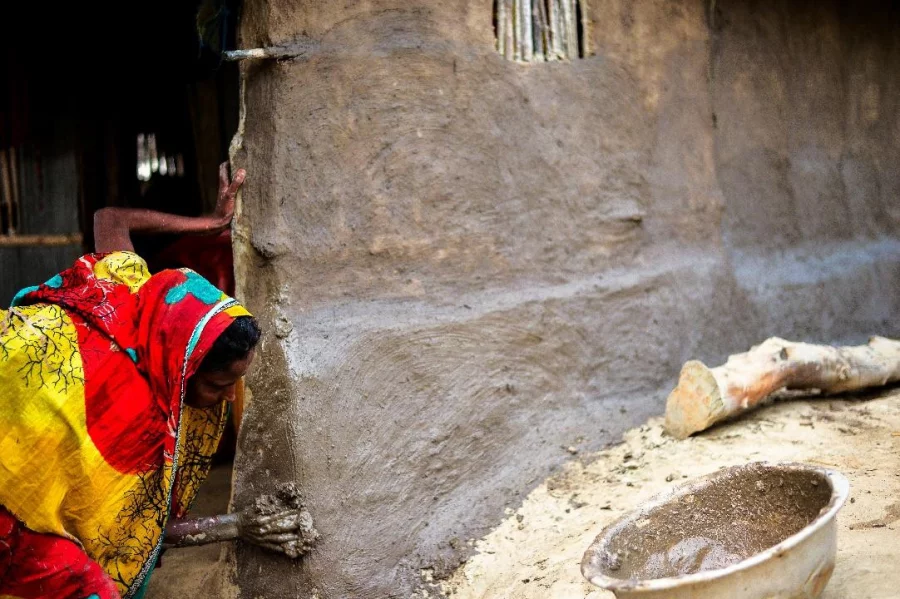
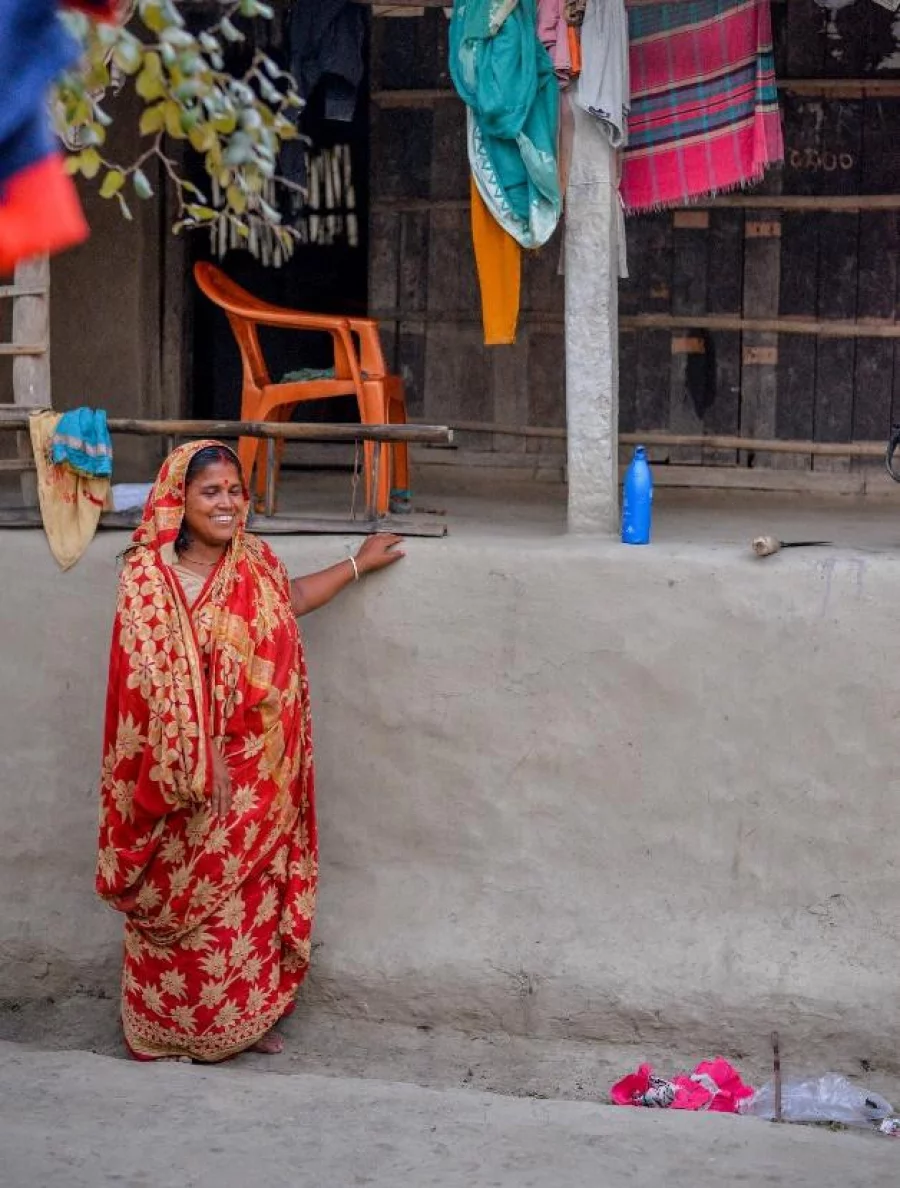
The effects of rain, flood, absorption of the salt and even daily wear and tear all result in a continual erosion of structure. Traditionally, the women of the houses shoulder the responsibility of maintaining the mud shelter over their heads. Their role in keeping building exterior crack free by polishing the walls and plinth with a mud paste is very important in reducing the penetrations of rain and insects. Generally, they render the top or the outer wall on every 7-14 day period an additional house chore for them. However, the frequency of this maintenance is increased due to the salinity in the area.
However, despite all attempts at a personal and community level, when a calamity strikes, the collective local solutions fall short to stand against nature. Many houses were repaired or rebuilt four to five times in recent times as frequent cyclones and storm surges ended up swallowing their shelters.
Families needed to live temporarily on shelters for months, even on embankments or boats to save up money for rebuilding their houses. It is a major setback, hindering economic development, impeding improvements of living conditions and adaptive measures of disaster affected families and communities fighting to survive in one of the world’s largest mangrove forests.
These communities living along the fringes of Sundarbans hope that they will receive effective advice, training and financial assistance for climate resilient local building practices which will take into consideration the factor of local knowledge and coping mechanisms in order to build back better and leverage people’s capacities for self-recovery.
Sumaiya Binte Anwar is a Civil Engineer, a climate enthusiast and an aspiring photographer. She can be reached at [email protected].
