




When you encounter a flooded area while driving your sedan, it's crucial to prioritize safety above everything. Given Dhaka’s drainage condition and the experiences the citizens had in recent weeks, I think it's always best to go out prepared.
Flooding can be extremely hazardous, and it's important to know how to navigate through such conditions without putting yourself, your passengers, or your vehicle at risk. Here are some essential tips for driving your sedan in a flooded area:
Assess the water depth
Before attempting to drive through any flooded area, assess the water depth. If the water reaches the bottom of your car's doors, it's best to avoid driving through it. Attempting to traverse water that is too deep can lead to engine damage and loss of control.
If you are unsure about the water's depth or are uncomfortable driving through it, it's safer to turn around and find an alternate route. Remember the adage: "Turn around, don't drown."
Drive slowly
If you decide to proceed through shallow water, drive at a slow, steady speed. Avoid sudden accelerations or abrupt braking to maintain control over your vehicle.
Make sure to keep your sedan moving in a straight line, and avoid changing lanes or swerving. Water can cause loss of traction, so sudden manoeuvres can be dangerous.
Use your low beams
Turn on your low-beam headlights to improve visibility and make your car more visible to others on the road. Do not use high beams, as they can reflect off the water and reduce your vision.
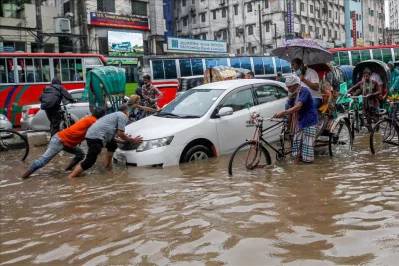
Watch for stalled vehicles
Be cautious of vehicles that may have stalled in the water. They can be difficult to see, so keep an eye out for obstructions in your path.
Hydroplaning occurs when your tires lose contact with the road due to water, causing you to lose all control of your vehicle. To prevent hydroplaning, reduce your speed and avoid sudden turns or braking.
Listen to your vehicle
If you notice unusual noises or feel your car behaving differently, such as sputtering or losing power, pull over to a safe location and turn off the engine. Driving further can cause significant damage which could end up becoming an expensive fix or even worse cause irreversible damage.
Carry emergency supplies
It's a good practice to have emergency supplies, such as a flashlight, a first aid kit, and non-perishable snacks, in your vehicle in case you get stuck in a flooded area. Speaking from my own personal experience, you think you don’t need these until you do.
Always pay attention to weather alerts and road conditions through local news, social media, or traffic services. Avoid driving in flooded areas whenever possible. I know you’re not safe no matter which area of Dhaka you live in during a few hours of heavy rain, so it's always better to stay indoors unless it's an emergency.
Remember, safety should be your top priority when driving through flooded areas in your sedan. If you have any doubts about the conditions, it's always better to err on the side of caution and find an alternative route to ensure your safety and the well-being of your car.
