




 Dr Zafrullah Chowdhury, a pro-BNP intellectual, said: “I think there was nothing wrong in Khaleda Zia’s decision to boycott the January 5 election held under Awami League chief Prime Minister Sheikh Hasina.
“I warned Khaleda of such a one-sided election in November [in 2013] and advised her to take to the streets.”
There would have been a wave in BNP’s movement all over the country had she taken to the streets way ahead of the polls, he observed, adding that there might have been some bloodshed, but the party would have gathered momentum.
“But they had waged a movement in late December, when the government confined Khaleda to her Gulshan office so that she could come out.”
The founder of the Gonoshasthaya Kendra also said that by confining the BNP chief, the government had actually provided BNP men an opportunity to take to the streets and try to assess their strength, but they failed to grasp it.
“BNP men could not wage a strong movement, and their central leaders did not even convey any message or instruction to leaders and activists at the grassroots level.”
Dr Zafrullah Chowdhury, a pro-BNP intellectual, said: “I think there was nothing wrong in Khaleda Zia’s decision to boycott the January 5 election held under Awami League chief Prime Minister Sheikh Hasina.
“I warned Khaleda of such a one-sided election in November [in 2013] and advised her to take to the streets.”
There would have been a wave in BNP’s movement all over the country had she taken to the streets way ahead of the polls, he observed, adding that there might have been some bloodshed, but the party would have gathered momentum.
“But they had waged a movement in late December, when the government confined Khaleda to her Gulshan office so that she could come out.”
The founder of the Gonoshasthaya Kendra also said that by confining the BNP chief, the government had actually provided BNP men an opportunity to take to the streets and try to assess their strength, but they failed to grasp it.
“BNP men could not wage a strong movement, and their central leaders did not even convey any message or instruction to leaders and activists at the grassroots level.”Though the country’s political arena has been relatively peaceful compared to the frightful years of 2013, 2014 and 2015, there are fears that we may once again enter a period of instability as the 11th general elections approach.
The election was held on this day in 2014 amid widespread violence and a boycott by opposition parties including the BNP.
Since then, the Awami League celebrates the day as “Victory Day for Democracy” while the BNP observes it as “Democracy Killing Day” by bringing out black-flag processions.
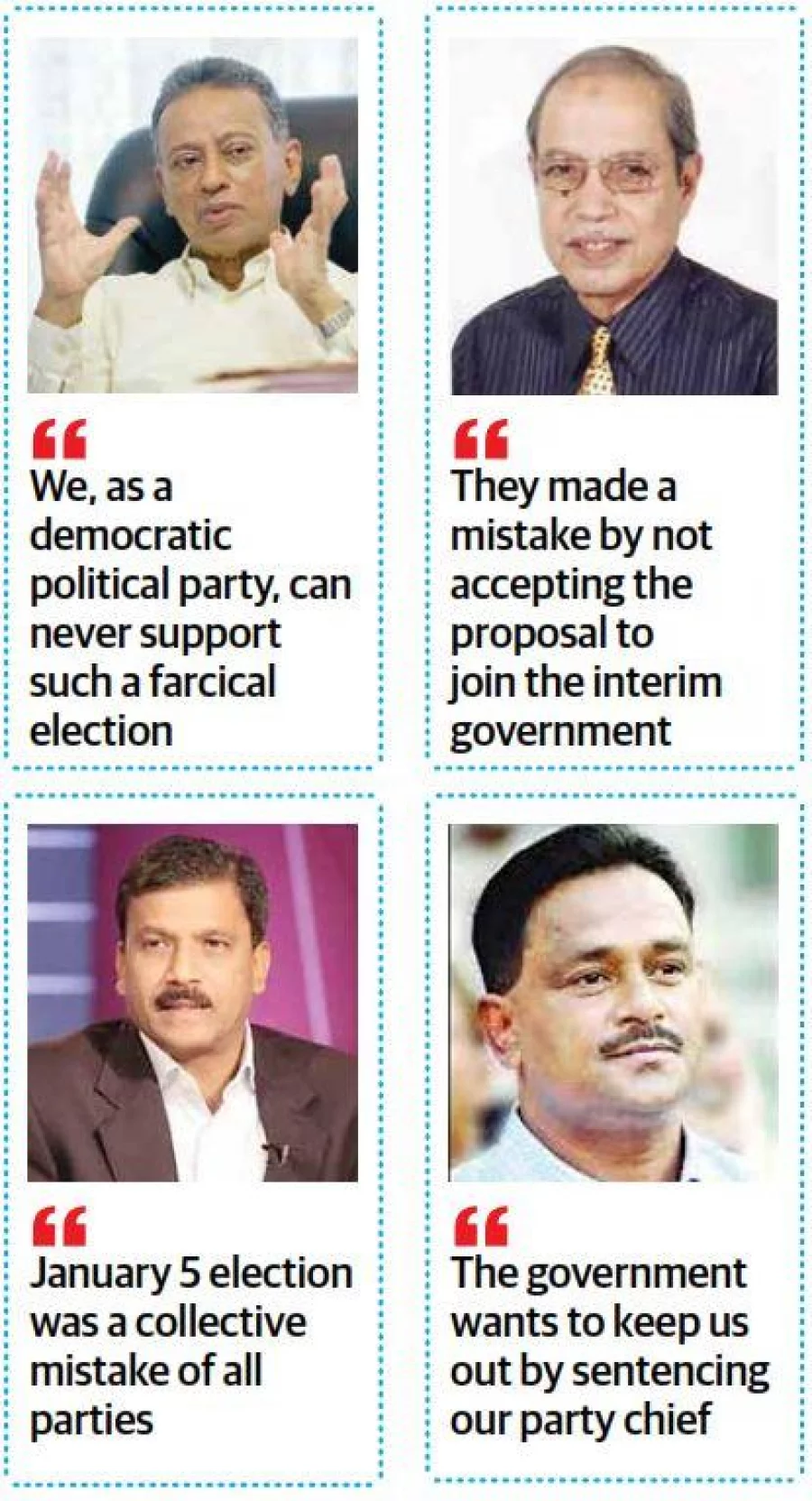
While Awami League, sections of civil society and even BNP leaders in private say that BNP made a blunder by boycotting the election, party leaders continue to assert in public that their decision to sit out the vote was correct, even though they failed to make their movement against the government a success.
Talking to the Dhaka Tribune, Awami League Join General Secretary Abdur Rahman said that by boycotting the election, BNP made a big mistake which left them out of the political arena.
However, several BNP leaders said their party chief Khaleda Zia’s decision to stay away from the 10th parliamentary election was ‘100%’ correct. Dr Zafrullah Chowdhury, a pro-BNP intellectual, said: “I think there was nothing wrong in Khaleda Zia’s decision to boycott the January 5 election held under Awami League chief Prime Minister Sheikh Hasina.
“I warned Khaleda of such a one-sided election in November [in 2013] and advised her to take to the streets.”
There would have been a wave in BNP’s movement all over the country had she taken to the streets way ahead of the polls, he observed, adding that there might have been some bloodshed, but the party would have gathered momentum.
“But they had waged a movement in late December, when the government confined Khaleda to her Gulshan office so that she could come out.”
The founder of the Gonoshasthaya Kendra also said that by confining the BNP chief, the government had actually provided BNP men an opportunity to take to the streets and try to assess their strength, but they failed to grasp it.
“BNP men could not wage a strong movement, and their central leaders did not even convey any message or instruction to leaders and activists at the grassroots level.”
Dr Zafrullah Chowdhury, a pro-BNP intellectual, said: “I think there was nothing wrong in Khaleda Zia’s decision to boycott the January 5 election held under Awami League chief Prime Minister Sheikh Hasina.
“I warned Khaleda of such a one-sided election in November [in 2013] and advised her to take to the streets.”
There would have been a wave in BNP’s movement all over the country had she taken to the streets way ahead of the polls, he observed, adding that there might have been some bloodshed, but the party would have gathered momentum.
“But they had waged a movement in late December, when the government confined Khaleda to her Gulshan office so that she could come out.”
The founder of the Gonoshasthaya Kendra also said that by confining the BNP chief, the government had actually provided BNP men an opportunity to take to the streets and try to assess their strength, but they failed to grasp it.
“BNP men could not wage a strong movement, and their central leaders did not even convey any message or instruction to leaders and activists at the grassroots level.”
Dr Zafrullah Chowdhury, a pro-BNP intellectual, said: “I think there was nothing wrong in Khaleda Zia’s decision to boycott the January 5 election held under Awami League chief Prime Minister Sheikh Hasina.
“I warned Khaleda of such a one-sided election in November [in 2013] and advised her to take to the streets.”
There would have been a wave in BNP’s movement all over the country had she taken to the streets way ahead of the polls, he observed, adding that there might have been some bloodshed, but the party would have gathered momentum.
“But they had waged a movement in late December, when the government confined Khaleda to her Gulshan office so that she could come out.”
The founder of the Gonoshasthaya Kendra also said that by confining the BNP chief, the government had actually provided BNP men an opportunity to take to the streets and try to assess their strength, but they failed to grasp it.
“BNP men could not wage a strong movement, and their central leaders did not even convey any message or instruction to leaders and activists at the grassroots level.”