Caesarean section, or C-section as it is more prominently known, was a technique invented to minimise birth complications. But its widespread, bordering on excessive, usage in Bangladesh raises questions – is C-section a last resort or imperative for every birth?
The World Health Organisation (WHO), citing the international healthcare community, puts the recommended level of C-sections in a country at 10-15%. Bangladesh has a worrisome 23%, according to a 2014 report by Bangladesh Demographic Health Survey. The United Nations Population Fund (UNFPA) recorded the rate at 2.7% in 2001.
There is a greater proclivity among private medical facilities to carry out C-sections, a whopping 80% in comparison to the 38% in public medical facilities, according to the joint report by the WHO and UNFPA.
Why do medicals prefer C-section?
1. Lack of training with normal birth delivery
2. Opportunity to teach interns
3. Less hassle for medical staff
4. More money from C-section surgery
Why do mothers opt for C-section?
1. Reflect economic and education status
2. Minimise labour pain
3. Doctor’s recommendation
The number of unnecessary C-section surgery is rising in Bangladesh because of exploitative hospitals and lack of public awareness.
Shayeera Hamid wanted the full experience of motherhood through natural childbirth. As she looked forward to the culmination of her nine-month-long pregnancy, her doctor strongly recommended C-section. Shayeera was astonished. She had visited the doctor for regular check-ups, not once did the doctor tell her she was unfit to undergo the natural process.
According to UNFPA, in Bangladesh approximately 5,200 women still die every year, or 15 women every day, due to pregnancy or birth-related causes
The reason itself, that she had blood pressure problem, roused her suspicions, but she went ahead with the C-section. Shayeera had been charged Tk10,000 for the surgery.
After the delivery, she consulted another gynaecologist who said she could have had a normal delivery.
Safely delivering babies, a pledge or a business?
Mohammad Sharif, director (Mch-service) and line director (MC-RAH) of the Department of Family Planning told the Dhaka Tribune that there is a lack of training regimen and a shortage of properly trained staff in health complexes nationwide who are capable of delivering a child via natural means.
“We need a minimum of one year of training for our staff. The current training programme is only six months long. At the same time, there are numerous private clinics which advocate C-sections like a commercial service.”
Sharif said there are many private hospitals in the districts where the surgeon visits once every week. The surgeons, he alleged, have a culture of queuing up several deliveries on the same day to just do C-sections all day long.
“The core problem is that we do not have proper and trained manpower. Considering all of the facts, the government is taking up initiative to reduce unnecessary caesareans in country. We are expecting to reduce the number within few years,” he added.
Private hospitals and clinics charge between Tk8,000-Tk50,000 for C-section based on facilities offered by hospitals. A normal delivery costs around Tk4,000-Tk5,000 in comparison.
C-section is perceived as being a better option because of its emergence as a life-saving intervention and the high cost. However, this perception is exploited by many private hospitals which are encouraging C-section deliveries en masse.
Many hospitals appoint brokers to have expecting women admit to hospitals for C-section surgery. This baby-brokers earn around Tk2,000-Tk3,000 for every mother they get admitted to the hospital.
According to a 2012 study, doctors are often under pressure from patients and relatives for a C-section delivery.
Prof Parveen Fatima, chair of the Department of Obstetrics and Gynaecology at Bangabandhu Sheikh Mujib Medical University (BSMMU) told the Dhaka Tribune that a majority of expecting mothers are admitted to the hospital at the very last stage.
“Doctors often do not have any recourse other than opting for a C-section to minimise the risk to the mother and child,” she said.
She continued: “But if anyone is in touch with a specialist from the beginning of her pregnancy, then 60%-70% of the risk can be avoided.”
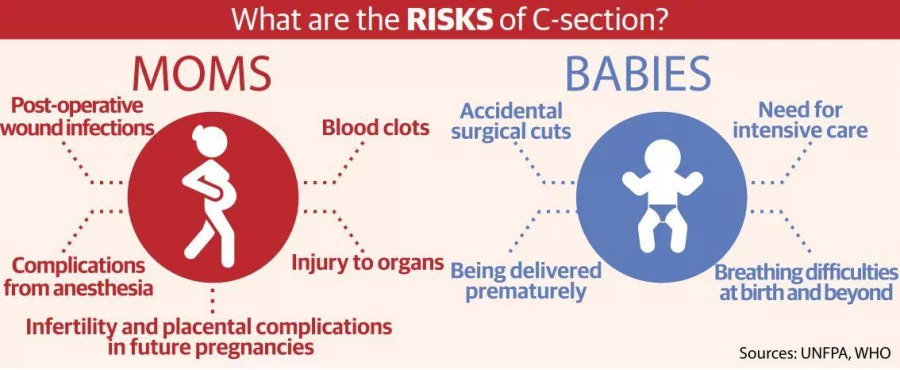
Still, there is the argument that maternal death is plummeting because of C-sections.
Halima Akter, a mother of three and a patient of diabetes who is a doctor at a public hospital said, said: “I was prepared for normal delivery but I had to go for a C-section. A month before my delivery, I felt uncomfortable and felt like my baby is not moving in my womb. I consulted with our staff doctors. They advised me to go for C-section as soon as possible. I called my regular doctor and he concurred with them.”
“I might not have been alive without the C-section as it was my third pregnancy at the age of 39 with physical complications,” she added.
According to UNFPA, in Bangladesh approximately 5,200 women still die every year, or 15 women every day, due to pregnancy or birth-related causes. 23 out of 1000 newborns do not survive where two-thirds of these deaths would be preventable.
Midwives matter
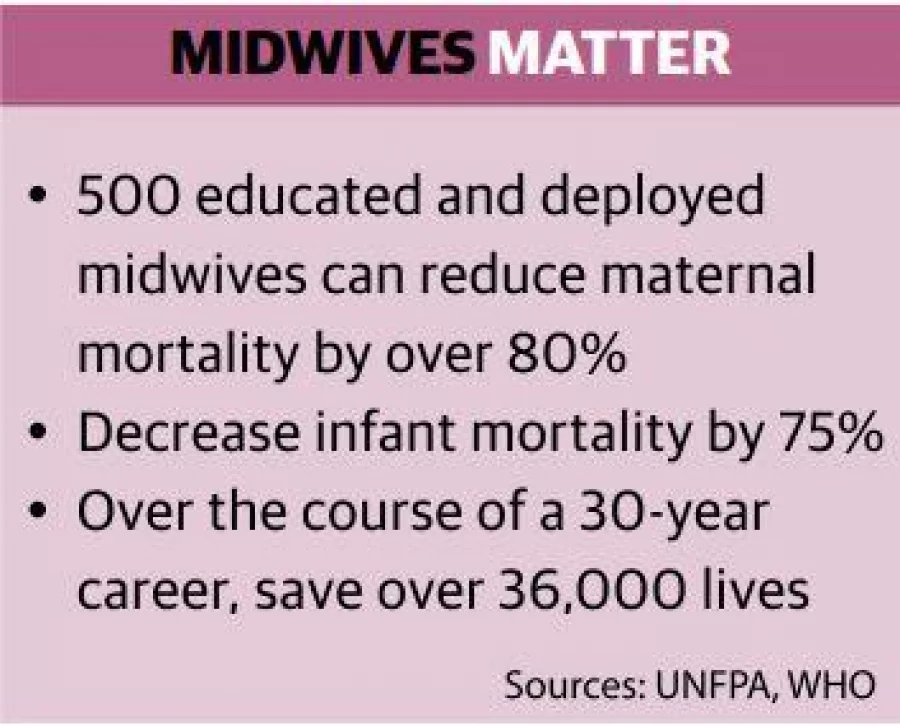
The UNFPA report also states that in Bangladesh, 500 educated and deployed midwives can reduce maternal mortality rate by over 80%, decrease infant mortality by 75%, and over the course of a 30-year career can save over 36,000 lives, as 87% of the essential care for women and newborns can be performed by an educated midwife.
The report also stated that investing in midwives frees doctors, nurses and other health cadres to focus on other health needs, and contributes to achieving a grand convergence - reducing infections, ending preventable maternal mortality, and newborn deaths.
The government has approved 3,000 posts for midwives in fulfilling its pledge to the “Every Woman Every Child” strategy of the United Nations.
The need for awareness
Syed Abu Hasan, technical officer (Family Planning) at UNFPA Bangladesh said there is a misplaced belief among people that C-section surgeries are relatively painless when compared to normal deliveries.
He suggested the government to make strong regulation in all hospitals and health centres to reduce unnecessary caesareans in country.
“The Ministry of Health should instruct every hospital to strictly follow regulations in the case of C-sections. If they fail to meet the requirement for a C-section, the hospitals should not be allowed to perform the surgery.”
“We need public awareness-based campaigns to ensure midwifery-led maternal service,” he concluded.
Midwives can not only help off-set the increased dependency on C-sections, they can also help combat unemployment and incorporate a revered practice in rural areas into a greater, national healthcare structure.




 According to a 2012 study, doctors are often under pressure from patients and relatives for a C-section delivery.
Prof Parveen Fatima, chair of the Department of Obstetrics and Gynaecology at Bangabandhu Sheikh Mujib Medical University (BSMMU) told the Dhaka Tribune that a majority of expecting mothers are admitted to the hospital at the very last stage.
“Doctors often do not have any recourse other than opting for a C-section to minimise the risk to the mother and child,” she said.
She continued: “But if anyone is in touch with a specialist from the beginning of her pregnancy, then 60%-70% of the risk can be avoided.”
Still, there is the argument that maternal death is plummeting because of C-sections.
Halima Akter, a mother of three and a patient of diabetes who is a doctor at a public hospital said, said: “I was prepared for normal delivery but I had to go for a C-section. A month before my delivery, I felt uncomfortable and felt like my baby is not moving in my womb. I consulted with our staff doctors. They advised me to go for C-section as soon as possible. I called my regular doctor and he concurred with them.”
According to a 2012 study, doctors are often under pressure from patients and relatives for a C-section delivery.
Prof Parveen Fatima, chair of the Department of Obstetrics and Gynaecology at Bangabandhu Sheikh Mujib Medical University (BSMMU) told the Dhaka Tribune that a majority of expecting mothers are admitted to the hospital at the very last stage.
“Doctors often do not have any recourse other than opting for a C-section to minimise the risk to the mother and child,” she said.
She continued: “But if anyone is in touch with a specialist from the beginning of her pregnancy, then 60%-70% of the risk can be avoided.”
Still, there is the argument that maternal death is plummeting because of C-sections.
Halima Akter, a mother of three and a patient of diabetes who is a doctor at a public hospital said, said: “I was prepared for normal delivery but I had to go for a C-section. A month before my delivery, I felt uncomfortable and felt like my baby is not moving in my womb. I consulted with our staff doctors. They advised me to go for C-section as soon as possible. I called my regular doctor and he concurred with them.” “I might not have been alive without the C-section as it was my third pregnancy at the age of 39 with physical complications,” she added.
According to UNFPA, in Bangladesh approximately 5,200 women still die every year, or 15 women every day, due to pregnancy or birth-related causes. 23 out of 1000 newborns do not survive where two-thirds of these deaths would be preventable.
“I might not have been alive without the C-section as it was my third pregnancy at the age of 39 with physical complications,” she added.
According to UNFPA, in Bangladesh approximately 5,200 women still die every year, or 15 women every day, due to pregnancy or birth-related causes. 23 out of 1000 newborns do not survive where two-thirds of these deaths would be preventable.