



The election campaign formally began across Bangladesh on Thursday, marking the start of the first national parliamentary polls since the August 5, 2024 political changeover—an election widely seen as a defining test of the country’s political reset.
Major political parties, including the Bangladesh Nationalist Party (BNP), Bangladesh Jamaat-e-Islami (Jamaat), Jatiya Party, the newly formed National Citizen Party (NCP), as well as other Islamic and left-wing parties, are contesting the upcoming polls scheduled for February 12.
However, the Awami League and its allies are not participating. The party has been barred from the election after the Election Commission suspended its registration in May.
According to the Election Commission, a total of 1,981 candidates will contest the 13th national parliamentary election in 298 constituencies across the country, alongside a referendum also scheduled for February 12.
Director (Public Relations) and Information Officer of the Election Commission Secretariat Md Ruhul Amin Mallick said that 1,732 candidates have been nominated by 51 registered political parties, while 249 are contesting as independents.
On Thursday, candidates rolled out rallies, street campaigns, and door-to-door outreach in the capital and across districts, with party leaders framing the vote as a referendum on governance, accountability, and the future direction of the state after months of political upheaval.
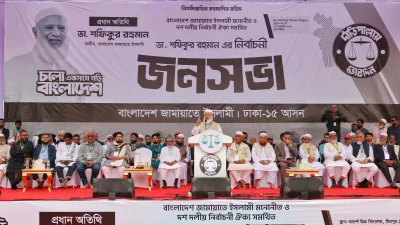
BNP Chairman Tarique Rahman began his election campaign in Sylhet, while the Jamaat ameer launched his electoral rally in Mirpur in the capital. The NCP kicked off its campaign by visiting the graves of three national leaders—Huseyn Suhrawardy, Khwaja Nazimuddin, and Sher-e-Bangla AK Fazlul Huq.
The Election Commission said all candidates must strictly adhere to the code of conduct, warning that any violations would be dealt with “without fear or favour.”
Law enforcement agencies have been placed on heightened alert nationwide amid concerns over potential political violence and disruption during the campaign period.
Opposition parties, many of which were sidelined during the previous election cycle, expressed cautious optimism about the level playing field, while urging authorities to ensure the neutrality of the administration and security forces.
The interim government, led by Nobel laureate Prof Muhammad Yunus, has pledged to facilitate a free, fair, and inclusive election. Officials have repeatedly assured voters and the international community that polling day will be conducted transparently.
Political analysts say voter turnout, campaign freedom, and the role of state institutions will be closely scrutinised both domestically and internationally, as Bangladesh navigates its first major democratic exercise since Sheikh Hasina’s removal from power.
Analysts also believe the main electoral contest will be between two long-time allies—BNP and Jamaat—who marched together during the Sheikh Hasina regime but are now competing separately, each fielding its own candidates and alliances with smaller parties.
