



Air travel in Bangladesh is growing rapidly, with more than 10.31 million passengers using the country's eight airports in the first six months of 2026, according to the Civil Aviation Authority of Bangladesh (CAAB).
Passenger traffic increased by 5.41% in 2025 compared to the previous year, while the latest figures indicate continued growth in both domestic and international travel.
CAAB spokesperson and Assistant Director Muhammad Kawsar Mahmud said airlines operating international flights are being encouraged to use Shah Amanat and Osmani international airports to ease pressure on Dhaka's Hazrat Shahjalal International Airport.
He said both airports have adequate facilities for international operations. CAAB is also working to distribute flight schedules more evenly throughout the day to prevent congestion during peak hours.
According to CAAB data, the country's airports handled 16.67 million passengers in 2024, rising to 17.57 million in 2025. The increase amounted to around 901,000 passengers in a year.
Of the 10.31 million passengers recorded in January-June this year, 7.94 million travelled internationally and 2.37 million domestically.
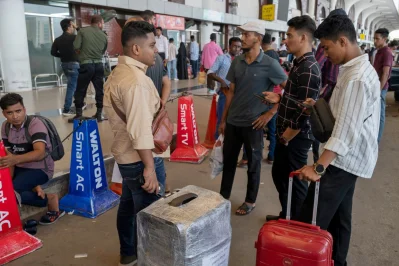
Heavy reliance on Dhaka airport
Hazrat Shahjalal International Airport handled 8.52 million passengers during the first six months of 2026, accounting for around 82.7% of the country's total air traffic.
The figure is already higher than the airport's stated annual passenger-handling capacity of around eight million.
Of the passengers using Shahjalal during the period, 7.34 million were international travellers and 1.18 million domestic passengers.
The airport handled 13.12 million passengers in 2024, rising to 13.86 million in 2025, a year-on-year increase of 5.64%.
The growing passenger volume is putting pressure on immigration, security checks, boarding, baggage handling, aircraft parking and ground services, often causing delays and inconvenience.
The pressure is not limited to passengers, as large numbers of visitors also gather at airports to receive or see off travellers, adding to congestion in terminal areas.
Regional airports see growth
Passenger traffic is also increasing at regional airports, particularly in Sylhet and Cox's Bazar.
Osmani International Airport handled 748,039 passengers in 2024 and 887,385 in 2025, recording 18.63% growth. It served 479,608 passengers in the first six months of 2026.
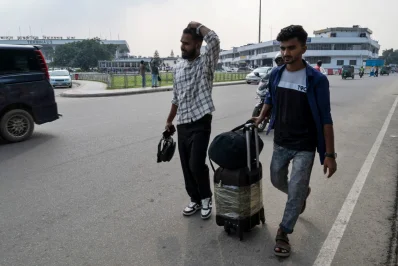
Cox's Bazar Airport recorded an 18.36% increase in passenger traffic in 2025, rising from 558,704 in 2024 to 661,283. It handled 364,920 passengers during January-June this year.
During the same six-month period, Shah Amanat International Airport in Chittagong handled 716,897 passengers, while Saidpur recorded 152,257, Rajshahi 43,593, Jessore 24,197 and Barisal 6,366.
Infrastructure needs attention
Former CAAB chairman Air Vice Marshal (retd) M Mofidur Rahman said passenger numbers had been rising since 2019, but infrastructure and operational capacity had not expanded at the same pace.
He said several projects had been undertaken to expand airports in Dhaka, Chittagong, Sylhet and Cox's Bazar, but progress had not been sufficient.
The government has taken various initiatives, he said, adding that effective implementation and improved management would be essential to address the growing pressure.
He also stressed the need for the Ministry of Civil Aviation and Tourism to give greater attention to upgrading existing infrastructure and operational capacity.
Kamrul Islam, general manager of public relations at private airline US-Bangla Airlines, said rising passenger numbers were encouraging for the aviation industry.
However, he said authorities needed to address existing challenges to ensure the sector's further development.
Industry experts say sustained growth in passenger traffic could strengthen domestic airlines, but inadequate airport infrastructure and services may undermine the sector's ability to accommodate rising demand.
