




Clean energy activist and advanced material designer Mahbub Sumon made the headlines a couple of years ago by introducing "Bonkagoj," a special paper made from waste with 11 different types of seeds embedded in it.
Sumon, the managing director of Shalbrikkho, a Narayanganj-based start-up, now produces elegant business cards, invitation cards, calendars, and notebooks using abandoned paper—a measure that compensates for the felling of trees to make paper and other items. His wife, Ekramunnesa Champa, is the chairman of Shalbrikkho.
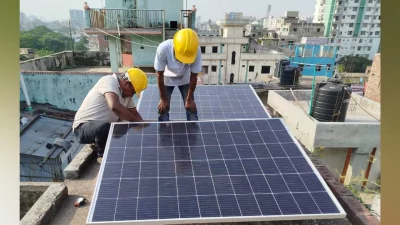
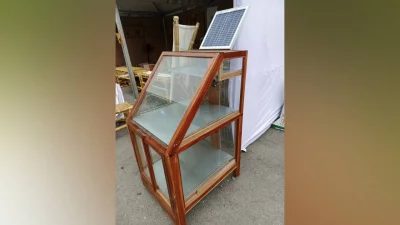
Sumon and his team aim to develop and promote sustainable, eco-friendly projects to reduce deforestation and control pollution. They have developed "Pyrolysis," a machine that produces diesel from waste plastic, "Matal," a compost machine, "Jolbayu," a dryer, and multifunction racks.
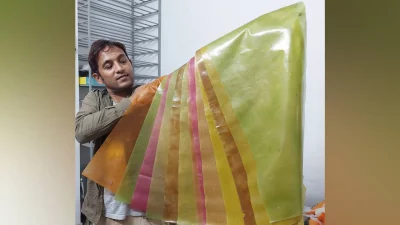
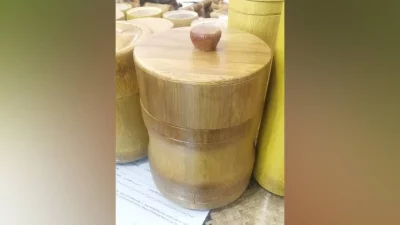
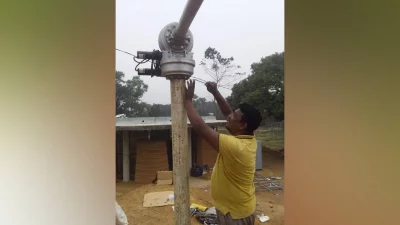
They are currently running renewable energy projects to generate electricity, and they are also making “Bonkagoj,” Polka Flex, up-cycled tote bags, bamboo furniture and pots, and eco-friendly lifestyle products.
At the recently concluded SME Fair, Shalbrikkho participated with its products and got a huge response from consumers, industry stakeholders, and activists who are concerned about the environment and climate change.
Moreover, some research is underway to develop low-cost technologies to deal with the climate crisis and disseminate information among the masses to raise awareness. Shalbrikkho is also running a project named Climate Friendly Technology Education and Entrepreneurship (CTEE) to engage school students but intends to expand it to the corporate sector, NGOs, and university students.
Anyone can directly start an independent life as an entrepreneur by joining this project. However, Sumon clarified that the initiative must address environmental issues and climate change.
Up-cycled tote bags
Recently, Sumon embarked on making tote bags by using saris, a traditional women’s dress, in collaboration with consumers who support the cause. The bags were displayed at the SME Fair and elicited a huge response in the first phase of production.
“The whole thing is going on as a campaign to reduce the use of polythene bags. Every extra sari is a cannon or fighter plane against plastic,” Sumon told Dhaka Tribune.
 Tangail sari: Bangladesh hires Indian legal firm for GI battle
“Bengali women's passion for saris is infinite. Every sari has a memory or story. Honouring their emotions, we urged them to donate any extra saris they had in their closet. We'll give you two of the ten bags made from one sari. We use the remaining five bags for material management and sell three to generate revenue," he continued.
Sumon began this venture in May by asking his Facebook friends to donate their extra saris. Now, it has become a popular trend. Sumon’s team made over 500 bags with the saris they received from people. And now they are getting export orders from France and the UAE, where the importers will launch awareness campaigns against plastic pollution.

The sari bag is part of a follow-up project under a campaign called March Against Plastic (MAP). “Previously, we conducted community awareness activities on plastics. This time, people will go to the markets with these upcycled bags and encourage others to use non-plastic bags. This will help change the habit of using plastic bags.
“These bags help the environment in two ways. On one hand, more than 16,000 litres of water and a lot of dyes are used to make a sari. This pollution can be reduced when the sari is reused. On the other hand, these bags can bring back the habit of carrying fabric-made bags by our ancestors. There will be a community conversation about this. It is a win-win situation.”
The Polka Flex
“Polka” is a biodegradable bioplastic raw material made using potatoes or potato starch to diversify applications such as shopping bags. Moving further, the company later developed the Polka Flex banner as an alternative to the PVC Flex banner and the Polka Jute.
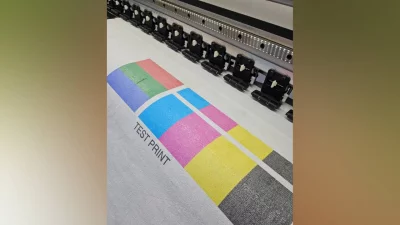
“These low-cost bags decompose within 180 days and will reduce pollution significantly if made available widely,” Sumon said.
Recently, Polka Flex was awarded the best idea in the Special Pitches Category of Smart Bangladesh Accelerator: Residential Bootcamp 2024.
The bioplastic packaging is made from Polka Film and Polka Paper, and is a bit expensive, Sumon explained. “So, I have taken up two policies for public adaptation: Shalbrikkho will take back the Polka Flex banners sold in the country and upcycle them as shopping bags. As a result, the customer will get an alternative to a plastic bag at a lower price. In the meantime, we are working with the government, so that it declares incentives for such eco-friendly products to combat plastic pollution.
“Also, Shalbrikkho will scale up production and bring down prices. Together, we will be able to offer biodegradable packaging to the people of Bangladesh at a lower price,” he added.
