





The Maldives is looking to transform its relationship with Bangladesh from one centred largely on migrant labour into a broader economic partnership, while seeking more skilled Bangladeshi professionals to support the island nation’s expanding healthcare, tourism and infrastructure sectors.
Speaking during a visit to the Dhaka Tribune and Bangla Tribune offices on Tuesday, Maldives High Commissioner Shiuneen Rasheed said around 100,000 Bangladeshis currently live and work in the Maldives, making them one of the country’s largest expatriate communities, and that the government is now working to both regularize undocumented workers and attract a more skilled workforce.
“We have traditionally employed many Bangladeshis in construction and hospitality,” she said.
“But as our economy grows, demand is increasing for skilled professionals, including nurses, accountants and other specialists.”
The shift comes as the Maldives pursues ambitious infrastructure and tourism expansion while reforming its labour market through a nationwide registration program aimed at documenting foreign workers and improving labour governance.
With a population of about half a million, Bangladeshi workers account for nearly one-fifth of the Maldives’ residents, underscoring the importance of migration to bilateral relations.
However, Rasheed said the partnership should no longer be viewed solely through the lens of overseas employment.
She said both countries have significant opportunities to expand cooperation in trade, tourism, investment, renewable energy, maritime connectivity and climate diplomacy.
The High Commissioner noted that recent high-level exchanges have created fresh momentum in bilateral relations.
Maldivian President Mohamed Muizzu visited Dhaka earlier this year to attend the swearing-in ceremony of Prime Minister Tarique Rahman, while Bangladesh Foreign Minister Dr Khalilur Rahman is scheduled to visit the Maldives next week to attend the country’s Independence Day celebrations.
According to the envoy, sustained political engagement is expected to accelerate cooperation across multiple sectors.
One area under active discussion is the introduction of a direct shipping route between Bangladesh and the Maldives.
At present, cargo moves through Singapore, India, Sri Lanka or the United Arab Emirates, increasing transport costs and often causing delays, particularly because of congestion at Sri Lankan ports.
A direct maritime link, she said, could significantly improve trade and supply chains between the two countries.
The Maldives has also revised its investment framework by easing restrictions on foreign investors, creating new opportunities in tourism, hospitality, renewable energy and infrastructure.
Although bilateral trade remains modest, Bangladesh exports products including mangoes, frozen vegetables and processed food to the Maldives, while tuna remains the island nation’s principal export.
Tourism is another rapidly expanding area of cooperation.
Rasheed said Bangladesh has become an increasingly important source market for the Maldives, with direct flights between the two countries operating at high occupancy.
Beyond economic cooperation, the High Commissioner highlighted the shared climate vulnerabilities of the two low-lying countries.
She said Bangladesh and the Maldives continue to work together in international forums to advocate for stronger global climate action and increased climate financing.
The Maldives is also accelerating its transition towards renewable energy, with solar power identified as its primary long-term energy source.
Welcoming the delegation, Dhaka Tribune Editor Reaz Ahmad said journalism increasingly transcends national boundaries as readers seek greater understanding of developments across South Asia.
He expressed hope for stronger collaboration between Bangladeshi and Maldivian media to promote tourism, cultural exchange and regional understanding.
Reaz Ahmad also said that Bangladesh and the Maldives face many common challenges, particularly climate change, making closer regional cooperation increasingly important.
Bangla Tribune Executive Editor Udisa Islam said the contribution of nearly 100,000 Bangladeshi workers to the Maldivian economy makes people-to-people ties one of the strongest foundations of bilateral relations.
She said closer media cooperation could help bring greater attention to migrant workers’ contributions and challenges while promoting broader economic and cultural engagement between the two countries.
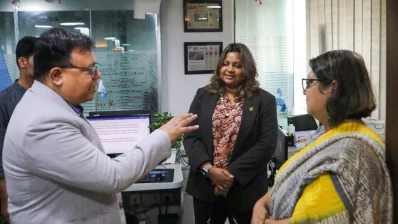
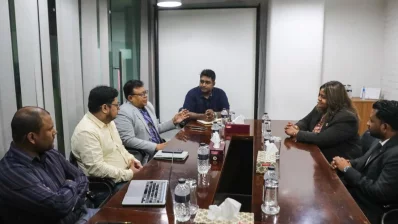
During the visit, the Maldivian delegation toured the newsrooms of Dhaka Tribune and Bangla Tribune, where editors demonstrated the organisations’ print and digital news operations and discussed opportunities for future media collaboration.
