



Bangladesh Garment Manufacturers and Exporters Association (BGMEA) President Mahmud Hasan Khan said most victims of the Rana Plaza collapse received financial support through a combination of national and international initiatives, though views differ on whether the compensation was adequate.
He said that while compensation under Bangladesh’s labour law remains “very minimal,” additional assistance was provided in the case of Rana Plaza from multiple sources, including international buyers.
“Families of the deceased and injured workers have, to our knowledge, received financial support beyond the legal minimum,” he told Dhaka Tribune in an interview.
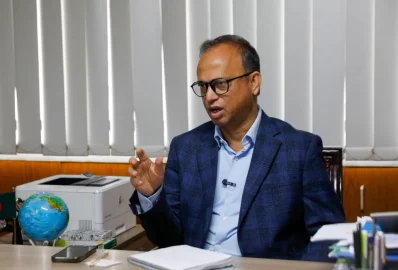
However, the question of what constitutes “proper” compensation remains contested.
Labour groups have long argued that payouts should be based on a worker’s lifetime earnings.
Mahmud Hasan Khan said such calculations, while theoretically valid, may not reflect industry realities.
“Garment workers typically do not remain in the sector until the age of 60. Most leave between 35 and 40, with women often exiting even earlier,” he said, citing practical limitations in applying such benchmarks.
Responding to concerns that some victims may have been excluded, he described compensation distribution in the aftermath of a large-scale disaster as complex and challenging.
At the same time, he said there is scope to review unresolved cases.
“If anyone believes they were left out, they can come forward with proof of employment in the building. We are willing to examine such claims and take necessary steps,” he added.
While acknowledging that gaps may have existed, the BGMEA president said efforts were made over time to reach affected workers and their families, with support provided “based on the circumstances and mechanisms available at the time.”
