




Liza Akter from Patuakhali lost her parents at an early age. After her husband left her, she decided to go to Saudi Arabia two years ago to support her two children.
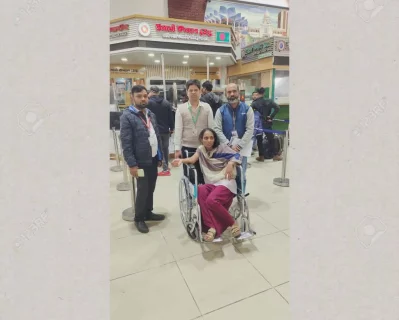
But instead of finding stability, she became a victim of repeated abuse. She was reportedly transferred between four employers and subjected to inhumane treatment and sexual abuse. Six months pregnant, she returned to Bangladesh on February 9.
Rizia Begum from Barlekha upazila in Moulvibazar went to Saudi Arabia six years ago to work as a domestic worker. She faced excessive workloads, insufficient food and regular abuse.
After falling ill, she lost contact with her family, who believed she had died. In February this year, she was finally found at Dhaka airport in a mentally unstable condition.
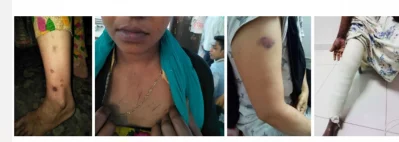
Stories like Liza’s and Rizia’s are becoming increasingly common. Over the past decade, the number of Bangladeshi female migrant workers has risen sharply, yet many return home reporting abuse, exploitation and severe hardship.
According to the Bureau of Manpower, Employment and Training (BMET), more than one million Bangladeshi women are currently working abroad, though there is no precise data on how many have returned.
Data from Brac’s migration program shows that at least 70,000 women have returned to Bangladesh over the past seven years, most of them alleging various forms of abuse.
In addition, the bodies of at least 800 women have been repatriated during this period.
Meanwhile, according to the Ministry of Home Affairs, more than 6,000 women fell victim to human trafficking between 2012 and 2025.

Concerns raised in letters from Saudi embassy
Several official communications from the Saudi embassy have also highlighted cases of excessive workloads and physical and mental abuse faced by domestic workers.
In a letter to the Ministry of Expatriates' Welfare and Overseas Employment, a former Bangladeshi ambassador to Saudi Arabia reported that at least 55 domestic workers had fled their employers’ homes and sought shelter at the embassy due to overwork, mistreatment or abuse.
On average, three to four workers reportedly seek refuge at the embassy every day.
Another letter mentioned that 56 workers were repatriated with the embassy’s assistance, while 55 others were sent home with the help of two companies in Riyadh.
Many of the returning workers reportedly lacked both physical and psychological readiness for overseas employment. The ambassador also suggested introducing proper training programs, including self-defence training, for female migrant workers.
Women recount abuse
Brac says it has supported at least 121 women who returned home with severe mental health issues, while many others came back with traumatic experiences of abuse.
Several returning workers told Dhaka Tribune that some women flee abusive employers and take shelter in embassy safe houses; others are abandoned on the streets after being abused.
Most returnees report physical, mental and sexual abuse, lack of proper food, unpaid wages, and being forced to work beyond agreed hours.
Sufia Begum from Faridpur, who returned from Saudi Arabia, said some workers resort to self-harm or even suicide to escape abuse.
“Many cannot bear the torture. I once tried to cut my own throat with a knife,” she said.
A woman from Kurigram said she became pregnant after being raped by her employer in Saudi Arabia. She later fled and took shelter at the Bangladeshi embassy in Riyadh before returning home two months later.
Another woman from Rangpur said she went to Saudi Arabia on June 25, 2015, after her husband died and her family fell into financial hardship. At her workplace, she faced severe physical abuse, including attacks by visiting men. When she protested, she was reportedly set on fire.
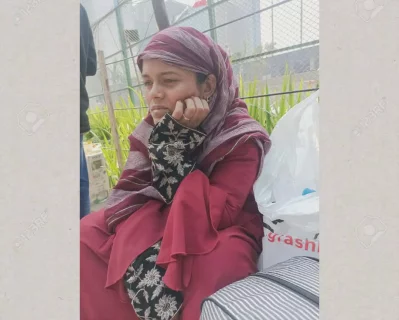
Dilruba Akter was trafficked to the United Arab Emirates after being promised a domestic job. Instead, she was detained in a club and forced into prostitution. She endured physical and mental abuse for eight months without receiving any salary before eventually escaping. However, she was later handed over to the police based on false accusations.
800 women returned home in coffins
According to the Wage Earners’ Welfare Board under the Ministry of Expatriates’ Welfare, the bodies of 799 female migrant workers were brought back to Bangladesh in coffins over the past eight years. Most death certificates list suicide as the cause.
For instance, Begum went to Saudi Arabia through a recruiting agency in April 2019. How she later ended up in Egypt remains unclear. The Bangladeshi embassy in Egypt reported that she died after falling from the fifth floor of a building on May 29 of the same year.
Her husband, Abdul Aziz, said he initially ignored the news when he heard through a local union parishad chairman that a woman named Begum had died in Egypt, assuming it could not be his wife since she was working in Saudi Arabia. Only after receiving a call from Egypt did he realize the deceased was his wife.
Similarly, Abirun Begum went to Saudi Arabia in July 2017 and later died at her employer’s house. Her family learned of her death 51 days later. The death certificate mentioned homicide. Her relatives claim she was tortured to death by her employer and had not received any salary during her two years of work. The incident has not yet been brought to justice.
Calls for stronger protection
Human rights activists say stronger protection measures and accountability for perpetrators are urgently needed.
Dr Fawzia Moslem, president of Bangladesh Mahila Parishad, told Dhaka Tribune that many female domestic workers in Middle Eastern countries face severe abuse and some even commit suicide due to unbearable conditions.
“Policies exist to protect them, but those are not being implemented effectively. This is a grave example of inhumanity,” she said, adding that migration laws should be strengthened.
She noted that more than 80% of Bangladeshi female migrant workers go to countries such as Saudi Arabia, the UAE, Lebanon and Jordan as domestic workers, and most of them are either unskilled or semi-skilled.
Shariful Hasan, associate director of Brac’s Migration Program and Youth Platform, said it is difficult to determine the exact number of women who face abuse abroad because many victims remain silent due to fear and social stigma.
He added that many women are sent back to Bangladesh using travel passes without their complaints being properly documented.
“Before issuing a travel pass, embassies should listen to the victims and record written complaints. Authorities should investigate the incidents so that perpetrators can be brought to justice,” he said.
Shariful also pointed out that although around 800 women’s bodies have been returned over the past eight years and many deaths are recorded as suicides, families often report signs of physical abuse on the bodies.
He suggested that instead of sending women abroad primarily as domestic workers, they should receive training for safer and better-protected jobs. If domestic work migration continues, proper screening and training must be ensured before deployment.
