




The workers who form the backbone of Bangladesh's economy through their labour are also its most neglected.
One-third of factories are reluctant to implement the new wage structure in the ready-made garment (RMG) sector, and workers in 22 industries still earn below the poverty line.
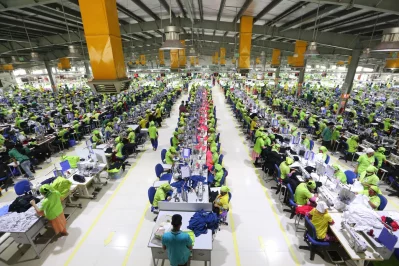
Not just in RMG—workers in agriculture, construction, hotels, bus services, and many other sectors earn so little that even a basic standard of living is difficult to maintain.
The National Wage Commission is yet to be formed, and several sectors haven’t seen a wage revision in over four decades. As a result, the rising prices of essentials, rent, education, and healthcare are pushing workers into a daily struggle for survival.
Researchers warn that without state commitment and structural reforms, it is impossible to ensure workers' rightful entitlements.
They emphasize that just as the country's economy has been built on the sweat of workers, the state must now ensure their fair rights.
Offering flowers and delivering speeches on May Day won’t improve workers’ living standards—what’s needed are effective policies and practical initiatives, they added.
One-third of garment factories still ignore minimum wage
Although the government announced a wage hike for RMG workers in December 2023, nearly one-third of factories have not yet implemented it.
This information was revealed in a recent research report jointly conducted by the international consortium Sustainable Textile Initiative: Together for Change (STITCH) and Brac University between September and December last year.
The study surveyed 385 garment factories and 1,113 workers.
It found that 32% of factories have not enforced the new wage scale. All these non-compliant factories are located outside the country’s Export Processing Zones (EPZ).
In contrast, all EPZ factories have fully implemented the new wage scale.
According to the new structure, the minimum wage is Tk12,500 for workers outside EPZs and Tk12,800 for those inside.
The report notes that full wage implementation occurred mostly in large factories with trade unions or participation committees and among members of major industry associations.
However, some workers still report not receiving the actual minimum wage. Many are confused due to a lack of clarity about their job titles or grade levels, compounded by insufficient information and poor communication regarding the wage structure.
The report adds that implementing the new wage structure has significantly increased factory costs, yet expected support from buyers has been inadequate.
While some major buyers offered marginal adjustments, these are largely insufficient—especially for smaller factories.
A few European and North American brands were relatively more supportive, but the overall situation remains bleak.
Additionally, the rising costs of daily essentials, rent, education, and healthcare are eroding workers' real purchasing power. Most workers are also being forced to work long hours.
The report expresses concern over wage disparities between male and female workers—women are often restricted to low-wage, repetitive jobs, while men hold better-paying technical or supervisory positions.
Researchers stress that without proper planning, worker representation, and coordination between factories and buyers, workers will not truly benefit from wage hikes.
Without urgent structural reforms and coordinated action, the situation could deteriorate further, they said.
State commitment crucial
Dr AB Mirza Azizul Islam, former adviser to the caretaker government and economist, said: “Although the literacy rate has increased in the country, the quality of education has not. Educated unemployment is rising. Without job creation, the working class could become a burden in the future.”
He added that investments and skill development at the national level are necessary to increase workers’ incomes.
Workers in 22 sectors earn below poverty line
Workers in 22 industries in Bangladesh earn wages below the international poverty line. In at least 18 of these sectors, wages haven’t been revised since 1983.
This alarming data comes from the latest labour Reform Commission report, submitted to Chief Advisor Dr Muhammad Yunus on April 21.
Commission chair and executive director of the Bangladesh Institute of Labour Studies, Syed Sultan Uddin Ahmmed, explained that according to the World Bank, anyone earning less than $2.15 per day (around Tk7,869 monthly) lives below the poverty line.
This threshold is based on 2017 purchasing power parity (PPP).
Many Bangladeshi workers still earn less than this, reflecting a failure to meet basic needs and deepening social inequality.
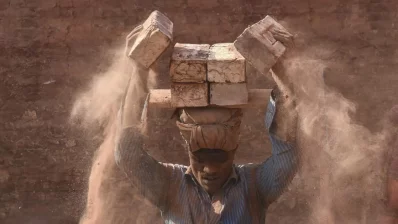
The commission’s review shows that minimum wages have been revised in 39 sectors, but in more than half of them, wages remain below the poverty line.
According to the report, workers in a total of 22 sectors receive wages below this threshold, including type foundries (Tk521), petrol pumps (Tk792), private industrial enterprises (Tk3,000), hotels and restaurants (Tk3,710), iron casting and workshops (Tk4,240), Ayurvedic factories (Tk4,350), match factories (Tk4,560), jute presses (Tk4,850), tailoring factories (Tk4,850), cotton textiles (Tk5,710), and bakeries and biscuit factories (Tk5,940).
No wage revision in four decades
The report notes that the last wage revision for the type foundry sector was in 1983, for petrol pumps in 1987, ayurvedic in 2009, iron casting in 2010, salt factories in 2011, match industry in 2013, and hotels/restaurants in 2016.
Although the law mandates a wage revision every five years, this has not been followed in practice.
Anwar Hossain, general secretary of the Bangladesh Hotel-Restaurant-Sweetmeat Federation, said: “We work 12-13 hours a day, but it’s impossible to survive on Tk3,000–4,000 per month. Covering children’s education and medical expenses is out of the question.”
He demands that the minimum wage be fixed between Tk25,000 and Tk30,000 to truly improve workers' living standards.
Proposal for a national minimum wage
The labour Reform Commission has proposed a national minimum wage that would apply to all sectors—public and private, local and foreign organizations, and self-employed individuals.
It also recommended that wage revisions be conducted every three years and that sector-specific wages never fall below the national minimum.
Workers’ four key demands
According to the Bangladesh Trade Union Centre, workers have four major demands from the interim government for improving their quality of life:
- Implementation of the labour Reform Commission’s recommendations
- Setting a minimum wage of Tk30,000
- Reforming labour laws per ILO conventions
- Introducing a universal rationing system
In this context, economist and former Jahangirnagar University professor Anu Muhammad said: “Setting wages below the poverty line is deeply inhumane. Wages must be calculated based on the actual income required to support a family.
“At the very least, the minimum wage should be Tk20,000.”
Cheap labour dominates key sectors
Bangladesh's three economic lifelines—agriculture, garments, and remittances—are all driven by cheap labour.
Yet the workers who sustain these sectors remain the most neglected. Their earnings are increasingly misaligned with real-life expenses.
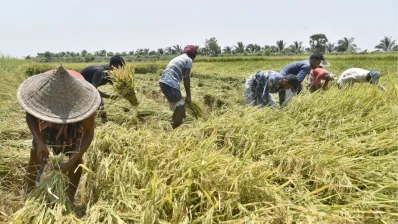
Economists say that an economy dependent on cheap labour cannot yield sustainable growth alone—workers must also benefit from this growth. This shift must begin in the national budget.
Statistics reveal that 84 sectors, representing around 60% of all sectors and sub-sectors, still lack a minimum wage. Meanwhile, rising prices continue to strain workers struggling to meet their cost of living.
Low wages, uncertain lives
In Bangladesh, it is difficult for a family to survive a month on the average income of a worker.
Among 142 sectors and sub-sectors, only 58 have a minimum wage structure. The rest lack any policy or government directive.
Not only that—there is no guarantee of minimum wages, no medical or pension security. Workplace safety is also weak for workers.
According to data from the Bangladesh Bureau of Statistics (BBS), nearly half the population is considered part of the labour force.
Every year, 2.2 million new people enter the job market. However, adequate employment is lacking.
On one hand, unemployment is increasing; on the other, those who do have jobs are losing purchasing power.
A World Bank report notes that by 2025, the number of ultra-poor in Bangladesh may rise to 15.8 million. The main reasons: declining real income and a fragile labour market.
Rubina Akter, a worker at a printing factory in Tejgaon, said: “I work 12 hours a day, yet I still have to borrow money by the end of the month. I can’t properly pay for my children’s school fees.”
Abdul Karim, a garment worker in Mirpur, said: “With rent, groceries, and medicine expenses, survival is tough. Without overtime, the month just doesn’t work out.”
May 1st—International labour Day is a symbol of the long-standing struggle for the rightful demands of workers around the world.
It is not just an annual formality, but a powerful testimony to the history of dignity, rights, and justice in labour.
This year’s May Day theme is: “Workers and employers together, let’s rebuild the nation.”
What is the way forward?
According to economists, labour leaders, and budget analysts, the way forward includes:
- A labour-friendly budget with specific allocations for employment and social security.
- A universal social protection program to be introduced for workers in the informal sector.
- Strict monitoring to ensure implementation of labour laws, especially in the private sector, along with greater accountability from employers.
- Pressure to be placed on international buyers to ensure fair wages for workers and adherence to social standards.
