




Bangladesh’s prison population experienced a significant drop of over 30% in one year, between 2023 and 2024, bringing much relief to the overcrowded jails.
In recent years, inmates in Bangladeshi prisons often endured subhuman conditions in severely overcrowded facilities with poor access to basic amenities.
Jail overcrowding has been a serious national issue, affecting not only prison management but also the overall functioning of the criminal justice system.
The imprisonment of excessive political detainees, prolonged detention of pretrial inmates, and a lengthy justice delivery system exacerbated the situation in the country's 68 prisons.
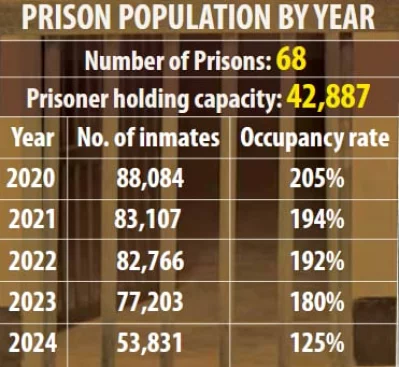
According to official data, the prison population fell from 77,203 in 2023 to 53,831 in 2024.
As a result, the country’s severely overcrowded jail system has received much-needed relief, with the occupancy rate dropping from over 180% in 2023 to 125% in 2024.
The World Prison Brief (WPB), an online database maintained by the Institute for Crime and Justice Policy Research at Birkbeck College, University of London, credited Bangladesh’s national prison administration for reporting the latest inmate statistics of 53,831 in 2024.
Bangladesh’s 55 district prisons and 13 central prisons had a total capacity to hold 42,887 prisoners as of late 2024.
The Sheikh Hasina-led Awami League government had informed Bangladesh’s now-defunct parliament that the country’s prison population was 77,203 in 2023, far exceeding the jails’ optimal capacity.
According to WPB, Bangladesh’s prison population was even higher in previous years, reaching 88,084 in 2020, 83,107 in 2021, and 82,766 in 2022.
In 2020, with an occupancy rate of 205%, two prisoners had to share one seat in the country’s prisons. This situation saw slight improvement in subsequent years, with the occupancy rate dropping to 194% in 2021 and 192% in 2022.
What causes prison overpopulation
The then home minister presented statistics on the high number of prisoners in Parliament in September 2023. According to BNP records, as of October 2023, over 140,000 cases had been filed against nearly 50,000 of the party’s leaders and workers at the behest of the AL government.
Apart from opposition activists, thousands of people — including travelers and bystanders — fell prey to widespread crackdowns, enduring days behind bars during various political programs over the past few years.
In 2021, WPB’s jail statistics showed that eight out of every ten prisoners in Bangladesh were either pre-trial detainees or on remand, making Bangladesh one of the top three countries in the world with the highest proportion of detainees.
Up to that period, only two countries had a higher proportion of their total prison population in pre-trial or remand imprisonment than Bangladesh — Libya (90%) and San Marino (83%).
As reported by the WPB in 2021, over 71,000 people in Bangladesh were in pre-trial or remand imprisonment, constituting 81.3% of the total prison population. In neighboring India, pre-trial detainees accounted for 69% of the total number of imprisoned people. The rate was 62% in Pakistan and 55% in Nepal.
Lawyers and experts attribute the high number of pre-trial detainees in Bangladesh to lengthy legal procedures, an insufficient number of courts and judges, and law enforcement’s broad authority to detain individuals.
