




With Eid-ul-Azha approaching on Monday in Bangladesh, tanners in Savar aim to collect rawhides of over 10 million sacrificial animals.
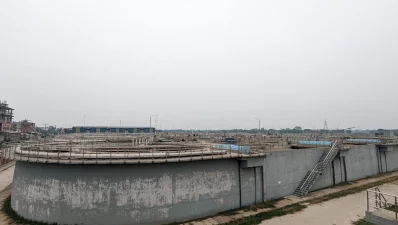
To handle the extra pressure, people at the Bscic Tannery Industrial Estate in Tetuljhora union, Savar, are working on preparations, and authorities told Dhaka Tribune on Saturday that the central effluent treatment plant (CETP) was ready and ponds had already been dug for solid waste storage.
Moreover, the tanneries had also prepared their warehouses for storing new leather, they added.
According to the livestock ministry, around 12.7 million animals are ready for sacrifice this year. Of them, an estimated 1.1 to 1.2 million animals are expected to be sacrificed in Dhaka and its surrounding areas.
With this occasion in mind, tanneries have set a target to collect around 11 million rawhides.
Gearing up
A visit to the estate revealed that warehouses were being emptied to make space for incoming rawhides. Cleaning operations were underway and salt was being brought in to preserve rawhides. In front of the factories, garbage was being removed and the drains were being cleaned.
Additionally, for waste management, parts of the CETP were being repaired. A plant for separating chromium from wastewater has been activated.
A pond has been dug to keep solid waste, and another pond is currently being excavated.
Shakawat Ullah, general secretary of the Bangladesh Tanners Association (BTA), said: "This year, we aim to collect 10 to 11 million rawhides, including from cattle, goats and buffaloes. The price of salt is also relatively stable this year.
“However, the concern this year is the heat. As Eid-ul-Azha takes place during a hot period and the temperatures are higher this year, those collecting rawhides across the country should preserve them properly to ensure they get a fair price.”
 Eid animal waste clean-up: DNCC targets 6hrs, DSCC aims for 24hrs
 Eid-ul-Azha tips: How to keep your home, surroundings spotless after animal sacrifice
 Eid animal waste clean-up: DNCC targets 6hrs, DSCC aims for 24hrs
 Eid-ul-Azha tips: How to keep your home, surroundings spotless after animal sacrifice
He added that the condition of the CETP was better than ever before.
Steps taken by authorities
The Bscic authorities said that this year, to collect rawhides at the grassroots level, local offices of Bscic, district administrations, the fisheries and livestock administration, and upazila councils, along with all other relevant government departments, would work together.
Md Mahfujur Rahman Rijwan, executive engineer at the tannery estate, said a team comprising over 50 volunteers had been formed to ensure the smooth entry of rawhides into the estate.
“There is an adequate stock of salt in the country, and the authorities have reported that the prices are within reach,” he added.
"This year, a record amount of salt has been produced in Bangladesh. So far we have not received any news of a salt shortage, and we hope there will be no salt crisis during Eid-ul-Azha."
Rijwan said a meeting had been held with the Bangladesh Rural Electrification Board in order to ensure uninterrupted power supply to the estate for the next three months. “They assured us that 12MW of electricity will be supplied to us without interruption."
Waste management
Golam Shahnewaz, managing director of Dhaka Tannery Industrial Estate Waste Treatment Plant Company Ltd, said the common chrome recovery unit was only half operational, adding that the results would be even better once it was fully operational within the next month.
“We have done some rectification work. A while ago, only four blowers were running, but now around 16-17 blowers are operational. This has increased bacterial growth. As bacterial growth increases, the BOD (biochemical oxygen demand) levels will decrease."

"Additionally, among the fine screens, almost three to four were damaged. We have re-installed them, and two more will be installed before Eid,” he said.
Meanwhile, the Department of Environment said there were no pre-treatment facilities in any tannery at the estate. “There has also been no progress in the chrome recovery units in the tanneries here," DoE Deputy Director (Dhaka district) Zahirul Islam Talukder added.
Awareness, aid
Dhaka Deputy Commissioner and District Magistrate Anisur Rahman said: “In coordination with Bscic, the district administration has set up stalls and distributed leaflets [to raise awareness] at 20 cattle markets in the two city corporations of Dhaka. Additionally, volunteers are educating people on how to properly remove rawhides and apply salt. This awareness campaign is also being carried out outside of Dhaka.
“Specialists have been brought in to train madrasa teachers. Furthermore, Tk30-35 lakh in financial assistance has been provided to the Qawmi and Alia madrasas."
Measures had been taken to ensure that vehicles transporting rawhides were not intercepted on roads, Anisur said.
“Leather and leather products represent the country's second-largest export sector. However, in the 2022-23 fiscal year, exports in this category reached $1.22 billion, reflecting a nearly 2% decrease from the previous year. Moreover, during the first seven months (July-January) of the 2023-24 fiscal year, exports of leather and leather products fell by 14%."
