



As the first rays of the sun illuminated the lush green field of Ramna, indicating the golden presence of a new day, the welcoming ceremony of the Bangla New Year 1430 began on Friday.
The country's leading cultural organization Chhayanaut commenced the traditional event at Ramna Batamul at 6:15am.
The event started with an eight-minute rendition of the Ahir Bhairav melody on the sarangi.
The enchanting music played by Chhayanaut's artists instantly mesmerized the audience at Ramna Batamul.
Soon after, the musical performances began. First, a group of artists presented songs together, followed by individual performances that explored themes of nature, love for humanity, patriotism and self-realization.
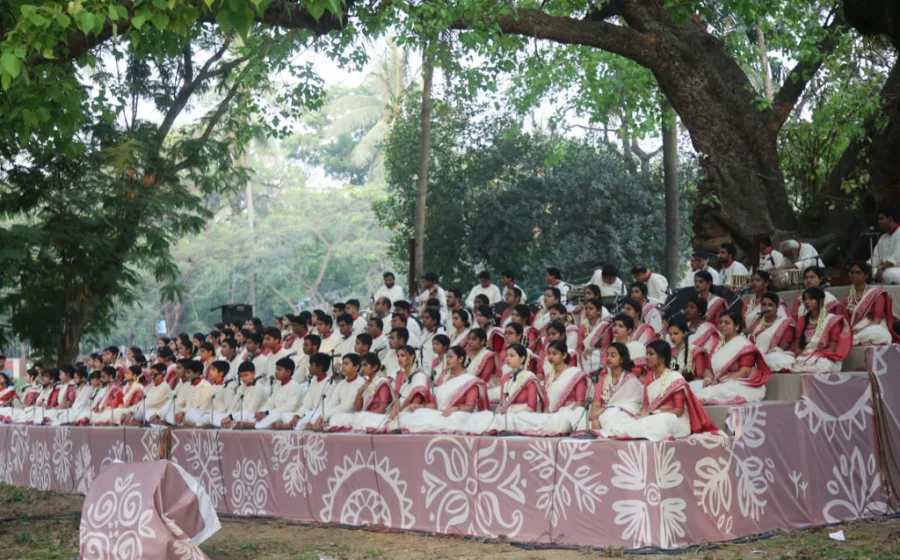 Mehedi Hasan/Dhaka Tribune
Poetic recitations also found their place in this special event.
Like every year, strict security measures were put in place for Pohela Boishakh celebrations.
Bangladesh Television and Bangladesh Betar were broadcasting the colourful event live. Chhayanaut's YouTube channel was also streaming the event at https://www.youtube.com/@ChhayanautDigitalPlatform.
Crowds of people passionate about culture gathered around the tree at Ramna Batamul well before the event began.
Men, women and children of all ages flocked from every corner of the capital to join the celebrations, welcoming the Bangla year 1430 with melodious tunes.
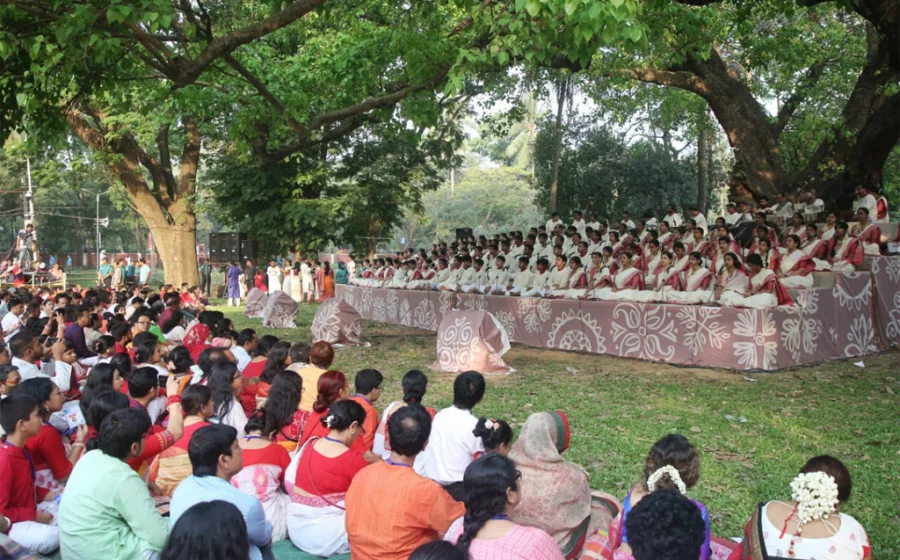 Mehedi Hasan/Dhaka Tribune
Chhayanaut's journey began in 1961, centred on Rabindranath Tagore's birth centenary, in a hostile environment under the Pakistani regime.
The primary goal of this cultural organization was to awaken Bangalis to their own identity, to claim their rights and to establish confidence in their own culture.
In 1967, an inclusive, non-sectarian consciousness-raising event was initiated at Ramna Batamul to welcome the Bangla year, transcending religions and castes, and soon earned global fame for organizing the traditional, extravagant cultural festivity of Pohela Boishakh at Ramna Park every year.
The only exception was in 1971, during the Liberation War of Bangladesh, and then in 2020-2021 due to the Covid-19 pandemic.
