The history of currencies is intertwined with the history of human development.
Currencies have evolved like everything else. Remember coins of one paisa, five paisa and 10 paisa? They were common three decades ago until inflation and changing times drove them to extinction.
At Bangladesh Bank Training Academy in Dhaka's Mirpur, the Taka Museum displays these currencies along with those from the Indian sub-continent, defunct countries, commemorative coins of Bangladesh, bond and bank notes of different countries.
The museum boasts a collection of 8,000 coins and bank notes. One of the major attractions of the first-of-its-kind museum in Bangladesh, is its tree of coins – an artificial tree that has coins for leaves.
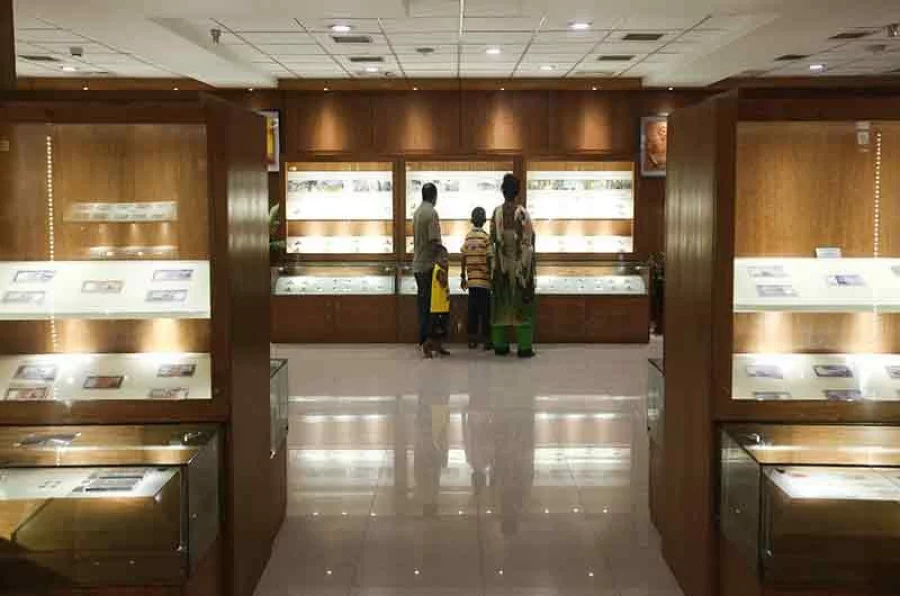
Taka Museum attracts about 200 visitors every day.
Rajib Dhar/Dhaka TribuneOther coins and currencies are showcased in glassed cabinets with their history.
The oldest coins in circulation in Bengal, during the Mauryan period (4th century BC to 2nd century AD), are displayed near the gallery entrance. These silver coins, with various symbols on them, were found at Wari-Bateshwar and Mahasthangarh.
Bent shaped punch-marked coins from the Gandhara period, commonly known as “bent bar” coins, are also showcased at the museum.
Silver and copper coins from the Mughal era, copper coins from Kushana, and Harikela, are also on display. The Harikela coins mark the reappearance of silver coins in Bengal after the later-Gupta period.
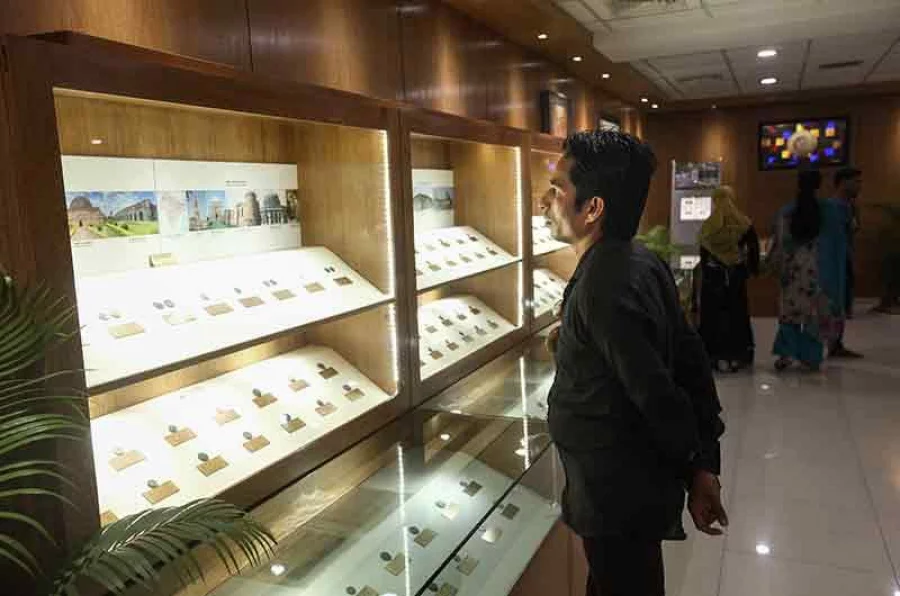
The museum showcases currencies and bank notes from various countries.
Rajib Dhar/Dhaka TribuneNext to them sit cowrie shells that were once used as currency in Bengal. The shells were imported from the Maldives.
Apart from bank notes of 120 countries, the museum also showcases gold coins from 1st century BC.
The Taka Museum also displays master dices used to produce coins. These were received as gifts from Japan and Germany.
On average, the museum attracts about 200 visitors daily.
Kabir, 9, was excited on his first visit. “This is amazing,” he said. “I really liked the money tree.”
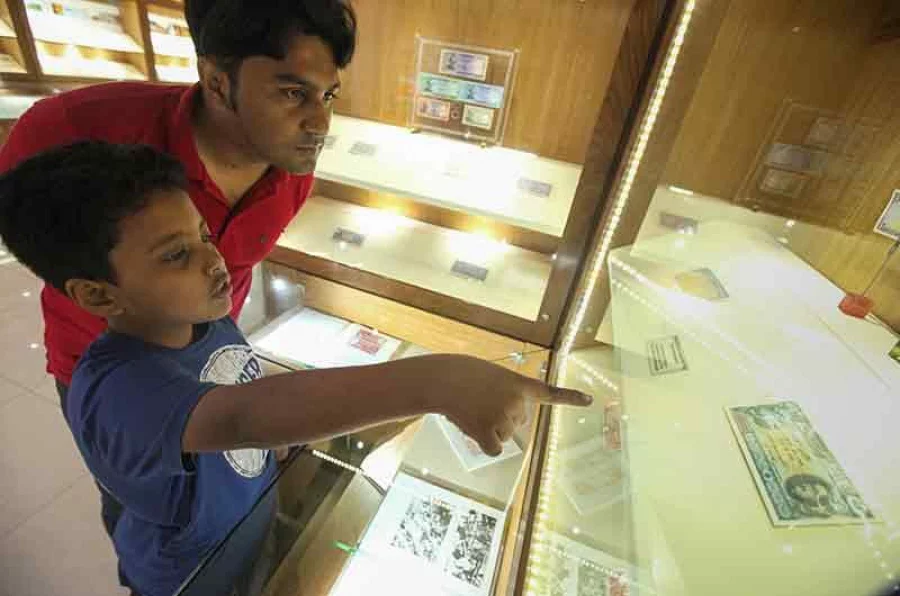
The museum opened in 2013 in Dhaka's Mirpur.
Rajib Dhar/Dhaka TribunePhoto kiosk, sitting at the end of the museum, is another popular attraction. People can have their photos printed on commemorative notes of Tk1 lakh.
Museum Keeper Achia Khanom Likhon said they were looking to enrich the collection. “Anyone can donate their collections or exchange them,” she said.
Achia said the museum's special collection is put on display on special occasions.
Commemorative notes and coins can be bought from the museum's souvenir shop.
The museum, set up in 2013, is open for all and does not charge any entry fee. It is open six days a week, except on Thursdays, from 11am to 5pm. On Fridays, it opens at 4pm and closes at 7pm.




 Taka Museum attracts about 200 visitors every day. Rajib Dhar/Dhaka TribuneOther coins and currencies are showcased in glassed cabinets with their history.
The oldest coins in circulation in Bengal, during the Mauryan period (4th century BC to 2nd century AD), are displayed near the gallery entrance. These silver coins, with various symbols on them, were found at Wari-Bateshwar and Mahasthangarh.
Bent shaped punch-marked coins from the Gandhara period, commonly known as “bent bar” coins, are also showcased at the museum.
Silver and copper coins from the Mughal era, copper coins from Kushana, and Harikela, are also on display. The Harikela coins mark the reappearance of silver coins in Bengal after the later-Gupta period.
Taka Museum attracts about 200 visitors every day. Rajib Dhar/Dhaka TribuneOther coins and currencies are showcased in glassed cabinets with their history.
The oldest coins in circulation in Bengal, during the Mauryan period (4th century BC to 2nd century AD), are displayed near the gallery entrance. These silver coins, with various symbols on them, were found at Wari-Bateshwar and Mahasthangarh.
Bent shaped punch-marked coins from the Gandhara period, commonly known as “bent bar” coins, are also showcased at the museum.
Silver and copper coins from the Mughal era, copper coins from Kushana, and Harikela, are also on display. The Harikela coins mark the reappearance of silver coins in Bengal after the later-Gupta period. The museum showcases currencies and bank notes from various countries. Rajib Dhar/Dhaka TribuneNext to them sit cowrie shells that were once used as currency in Bengal. The shells were imported from the Maldives.
Apart from bank notes of 120 countries, the museum also showcases gold coins from 1st century BC.
The Taka Museum also displays master dices used to produce coins. These were received as gifts from Japan and Germany.
On average, the museum attracts about 200 visitors daily.
Kabir, 9, was excited on his first visit. “This is amazing,” he said. “I really liked the money tree.”
The museum showcases currencies and bank notes from various countries. Rajib Dhar/Dhaka TribuneNext to them sit cowrie shells that were once used as currency in Bengal. The shells were imported from the Maldives.
Apart from bank notes of 120 countries, the museum also showcases gold coins from 1st century BC.
The Taka Museum also displays master dices used to produce coins. These were received as gifts from Japan and Germany.
On average, the museum attracts about 200 visitors daily.
Kabir, 9, was excited on his first visit. “This is amazing,” he said. “I really liked the money tree.” The museum opened in 2013 in Dhaka's Mirpur. Rajib Dhar/Dhaka TribunePhoto kiosk, sitting at the end of the museum, is another popular attraction. People can have their photos printed on commemorative notes of Tk1 lakh.
Museum Keeper Achia Khanom Likhon said they were looking to enrich the collection. “Anyone can donate their collections or exchange them,” she said.
Achia said the museum's special collection is put on display on special occasions.
Commemorative notes and coins can be bought from the museum's souvenir shop.The museum, set up in 2013, is open for all and does not charge any entry fee. It is open six days a week, except on Thursdays, from 11am to 5pm. On Fridays, it opens at 4pm and closes at 7pm.
The museum opened in 2013 in Dhaka's Mirpur. Rajib Dhar/Dhaka TribunePhoto kiosk, sitting at the end of the museum, is another popular attraction. People can have their photos printed on commemorative notes of Tk1 lakh.
Museum Keeper Achia Khanom Likhon said they were looking to enrich the collection. “Anyone can donate their collections or exchange them,” she said.
Achia said the museum's special collection is put on display on special occasions.
Commemorative notes and coins can be bought from the museum's souvenir shop.The museum, set up in 2013, is open for all and does not charge any entry fee. It is open six days a week, except on Thursdays, from 11am to 5pm. On Fridays, it opens at 4pm and closes at 7pm.