




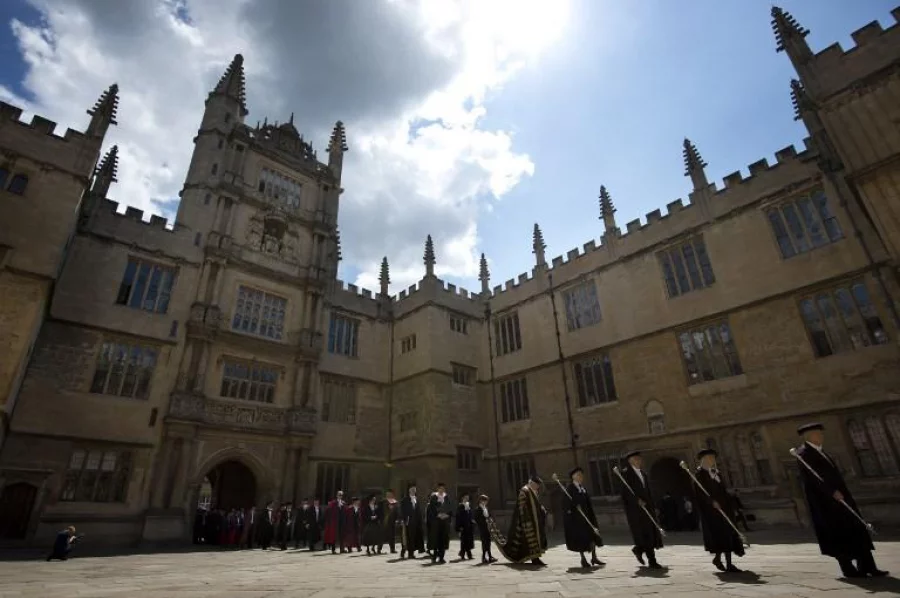
 Oxford University in Oxford, northwest of London, on June 20, 2012. Suu Kyi was awarded an honorary doctorate by Oxford University on June 20, 2017 AFP The initial challenge is to light a spark and convince the children that Oxford is a goal that can be achieved.
Another student, Tanzina, 14, from Highcrest Academy, High Wycombe, agreed that the outing had been “really fun. We’ve been looking at different kinds of subjects that we don’t normally get to study in school. This has given me a better idea about going to university, and I think it’s something I would like to do.”
Last year, among UK-based undergraduate applicants of known ethnicity, Oxford made offers to 20 students of Bangladeshi background, of whom 13 took up their places, and 28 offers to students of Pakistani background, of whom 23 took up their places. All of these figures were the highest since comparable data began being recorded in 2007.It is also a substantial increase on 2015, when Oxford made offers to six students of Bangladeshi background, of whom all six took up their places, and 16 offers to students of Pakistani background, of whom 13 took up their places.
Oxford cannot relax the top A level grades – invariably A or A* – it requires for entry. But more pupils get the top grades than there are places at Oxford. Individuals dons, who usually have autonomy over who is let in, can make a conscious decision to let in some Pakistanis and Bangladeshis who can then go on to act as role models.
Sarah Gosling, the deputy head of sixth form at Baylis Court School in Slough, said: “‘It’s really important for our students to have opportunities like this. Many of them will be the first in their family to attend university, and often don’t have the confidence to apply to universities like Oxford. It is fantastic that they have been given the chance to visit Oxford and learn more about university. I hope that this event has sown the seeds that will motivate them from now until they apply to university in a few years’ time.”
Oxford University in Oxford, northwest of London, on June 20, 2012. Suu Kyi was awarded an honorary doctorate by Oxford University on June 20, 2017 AFP The initial challenge is to light a spark and convince the children that Oxford is a goal that can be achieved.
Another student, Tanzina, 14, from Highcrest Academy, High Wycombe, agreed that the outing had been “really fun. We’ve been looking at different kinds of subjects that we don’t normally get to study in school. This has given me a better idea about going to university, and I think it’s something I would like to do.”
Last year, among UK-based undergraduate applicants of known ethnicity, Oxford made offers to 20 students of Bangladeshi background, of whom 13 took up their places, and 28 offers to students of Pakistani background, of whom 23 took up their places. All of these figures were the highest since comparable data began being recorded in 2007.It is also a substantial increase on 2015, when Oxford made offers to six students of Bangladeshi background, of whom all six took up their places, and 16 offers to students of Pakistani background, of whom 13 took up their places.
Oxford cannot relax the top A level grades – invariably A or A* – it requires for entry. But more pupils get the top grades than there are places at Oxford. Individuals dons, who usually have autonomy over who is let in, can make a conscious decision to let in some Pakistanis and Bangladeshis who can then go on to act as role models.
Sarah Gosling, the deputy head of sixth form at Baylis Court School in Slough, said: “‘It’s really important for our students to have opportunities like this. Many of them will be the first in their family to attend university, and often don’t have the confidence to apply to universities like Oxford. It is fantastic that they have been given the chance to visit Oxford and learn more about university. I hope that this event has sown the seeds that will motivate them from now until they apply to university in a few years’ time.”Oxford University, the oldest university in the English-speaking world, has undertaken an initiative to encourage more students from Bangladesh to increase their representation at the university.
In the past, mostly the financially affluent and politically powerful families from the Indian sub-continent would to get into Oxford as a "birthright."
But British-born Bangladeshis, who are mostly the grandchildren of first generation immigrants who came to work in the mills or as factory workers, are “under-represented” at Oxford.
Oxford authorities have been trying to reduce the gap among the students from different social backgrounds. As a part of this initiative, some 90 children, mostly from Pakistani and Bangladeshi backgrounds, were invited to spend a day at Oxford University earlier this month, reports the Eastern Eye.
Dr Samina Khan, director of Undergraduate Admissions and Outreach at Oxford University, explained: “Oxford wants to attract the most able students from all backgrounds. That’s why we run such a wide range of activities to encourage and support talented young people from backgrounds who are under-represented in higher education in general, and at Oxford in particular.”
“British students from Pakistani and Bangladeshi backgrounds are among the groups under-represented at Oxford, so events like this are really important in showing the students the range of courses on offer and demonstrating that if they have the academic ability, there’s no reason why they shouldn’t be aiming for a university like Oxford,” she added. Oxford University in Oxford, northwest of London, on June 20, 2012. Suu Kyi was awarded an honorary doctorate by Oxford University on June 20, 2017 AFP The initial challenge is to light a spark and convince the children that Oxford is a goal that can be achieved.
Another student, Tanzina, 14, from Highcrest Academy, High Wycombe, agreed that the outing had been “really fun. We’ve been looking at different kinds of subjects that we don’t normally get to study in school. This has given me a better idea about going to university, and I think it’s something I would like to do.”
Last year, among UK-based undergraduate applicants of known ethnicity, Oxford made offers to 20 students of Bangladeshi background, of whom 13 took up their places, and 28 offers to students of Pakistani background, of whom 23 took up their places. All of these figures were the highest since comparable data began being recorded in 2007.It is also a substantial increase on 2015, when Oxford made offers to six students of Bangladeshi background, of whom all six took up their places, and 16 offers to students of Pakistani background, of whom 13 took up their places.
Oxford cannot relax the top A level grades – invariably A or A* – it requires for entry. But more pupils get the top grades than there are places at Oxford. Individuals dons, who usually have autonomy over who is let in, can make a conscious decision to let in some Pakistanis and Bangladeshis who can then go on to act as role models.
Sarah Gosling, the deputy head of sixth form at Baylis Court School in Slough, said: “‘It’s really important for our students to have opportunities like this. Many of them will be the first in their family to attend university, and often don’t have the confidence to apply to universities like Oxford. It is fantastic that they have been given the chance to visit Oxford and learn more about university. I hope that this event has sown the seeds that will motivate them from now until they apply to university in a few years’ time.”
Oxford University in Oxford, northwest of London, on June 20, 2012. Suu Kyi was awarded an honorary doctorate by Oxford University on June 20, 2017 AFP The initial challenge is to light a spark and convince the children that Oxford is a goal that can be achieved.
Another student, Tanzina, 14, from Highcrest Academy, High Wycombe, agreed that the outing had been “really fun. We’ve been looking at different kinds of subjects that we don’t normally get to study in school. This has given me a better idea about going to university, and I think it’s something I would like to do.”
Last year, among UK-based undergraduate applicants of known ethnicity, Oxford made offers to 20 students of Bangladeshi background, of whom 13 took up their places, and 28 offers to students of Pakistani background, of whom 23 took up their places. All of these figures were the highest since comparable data began being recorded in 2007.It is also a substantial increase on 2015, when Oxford made offers to six students of Bangladeshi background, of whom all six took up their places, and 16 offers to students of Pakistani background, of whom 13 took up their places.
Oxford cannot relax the top A level grades – invariably A or A* – it requires for entry. But more pupils get the top grades than there are places at Oxford. Individuals dons, who usually have autonomy over who is let in, can make a conscious decision to let in some Pakistanis and Bangladeshis who can then go on to act as role models.
Sarah Gosling, the deputy head of sixth form at Baylis Court School in Slough, said: “‘It’s really important for our students to have opportunities like this. Many of them will be the first in their family to attend university, and often don’t have the confidence to apply to universities like Oxford. It is fantastic that they have been given the chance to visit Oxford and learn more about university. I hope that this event has sown the seeds that will motivate them from now until they apply to university in a few years’ time.”
Oxford University in Oxford, northwest of London, on June 20, 2012. Suu Kyi was awarded an honorary doctorate by Oxford University on June 20, 2017 AFP The initial challenge is to light a spark and convince the children that Oxford is a goal that can be achieved.
Another student, Tanzina, 14, from Highcrest Academy, High Wycombe, agreed that the outing had been “really fun. We’ve been looking at different kinds of subjects that we don’t normally get to study in school. This has given me a better idea about going to university, and I think it’s something I would like to do.”
Last year, among UK-based undergraduate applicants of known ethnicity, Oxford made offers to 20 students of Bangladeshi background, of whom 13 took up their places, and 28 offers to students of Pakistani background, of whom 23 took up their places. All of these figures were the highest since comparable data began being recorded in 2007.It is also a substantial increase on 2015, when Oxford made offers to six students of Bangladeshi background, of whom all six took up their places, and 16 offers to students of Pakistani background, of whom 13 took up their places.
Oxford cannot relax the top A level grades – invariably A or A* – it requires for entry. But more pupils get the top grades than there are places at Oxford. Individuals dons, who usually have autonomy over who is let in, can make a conscious decision to let in some Pakistanis and Bangladeshis who can then go on to act as role models.
Sarah Gosling, the deputy head of sixth form at Baylis Court School in Slough, said: “‘It’s really important for our students to have opportunities like this. Many of them will be the first in their family to attend university, and often don’t have the confidence to apply to universities like Oxford. It is fantastic that they have been given the chance to visit Oxford and learn more about university. I hope that this event has sown the seeds that will motivate them from now until they apply to university in a few years’ time.”