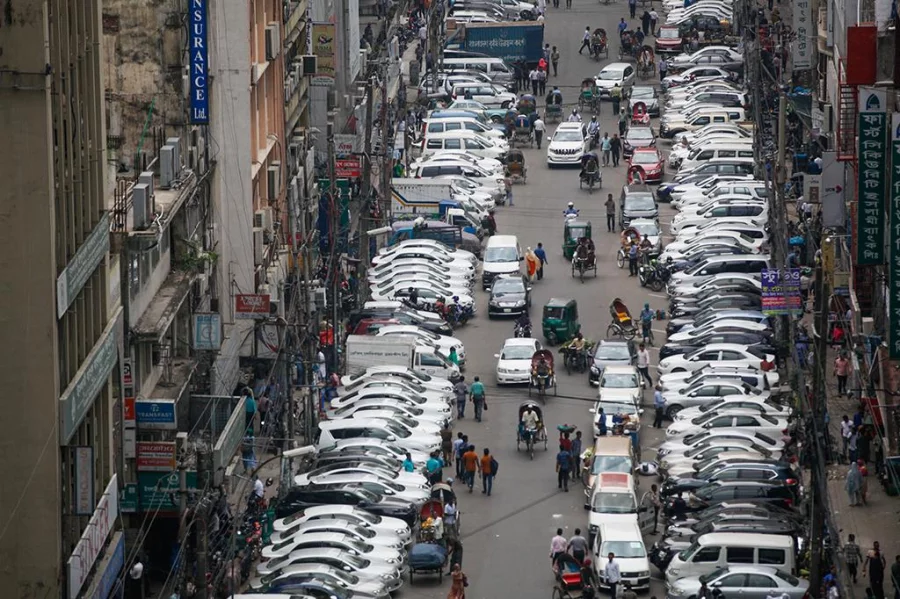
42 points on the city streets have been selected for on-street parking | Mehedi Hassan/Dhaka tribuneCentre for Urban Studies Chairman Prof Nazrul Islam said there was no discipline in the city's parking system. “Rajuk failed to properly implement its plans for the city through its slack monitoring in building construction. A large number of the city's establishments have already been constructed without adequate parking space due to lack of proper planning and monitoring,” he said. DMP’s ordinance prohibits parking on the street or public places and imposes a Tk100 fine. Kalabagan resident Rakib Hasan appreciated the on-street parking initiative. “We faced difficulties in parking our vehicles in most places in the city before,” he said. A private car driver at Dilkhusha in Motijheel said the initiative would help save the people from police harassment and fines.
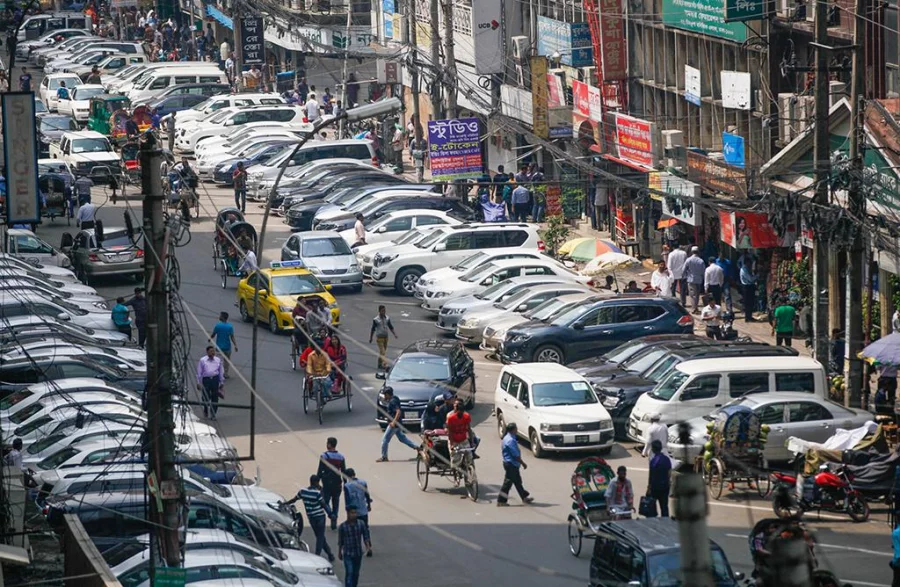
DSCC"s Chied Town planner thinks the decision will discipline city streets| Mehedi Hassan/Dhaka tribuneIn February, DSCC's Chief Town Planner Md Sirajul Islam said: “The decision to legalise on-street parking aims at curbing disorganised street parking, evident almost everywhere in the city. This would discipline the city streets.” He said the government was also considering introducing the automated parking system (APS), which aims to maximise parking spaces while minimising land usage, much like Tokyo's paid parking system. Sirajul said introducing APS and increasing on-street parking spots were solutions to Dhaka's worsening traffic situation. Reasat E Noor, a civil engineer graduate from Buet who researched on capacity loss of the city roads, said Dhaka's streets cover just 9% of its total size. In developed cities across the world the percentage is 25. “We are even failing to utilise the mere 9% roadways available, owing to multiple issues including poor maintenance and management,” he said. “If on-street parking is legalised, the capacity loss would rise significantly. Such a move will worsen the traffic congestion drastically,” Reasat added.