



 The force, that trains about five hours a day at the camp, was patched together by former Mosul governor and Sunni politician Atheel al-Nujaifi in 2014, not long after Islamic State swept through northern Iraq, virtually unopposed by an army riddled with corruption.
Nujaifi purchased used weapons for the fighters in markets, according to his commanders.
After the camp came under heavy Islamic State rocket fire, Turkish trainers positioned six tanks along the edge of the compound in May 2015.
While the men have benefited from the training, Shi’ite Prime Minister Haider al-Abadi warned Turkey’s military presence in Iraq could spark a regional war.
Last week, Turkey’s parliament voted to extend its military presence in Iraq for a further year to take on what it called “terrorist organisations”.
Abu Mahmoud, part of a 2,500-man predominantly Sunni Arab force pulled together to launch an offensive against Islamic State in the Iraqi city of Mosul, has heard from relatives the group has been threatening to behead anyone who speaks of “liberation”.
That threat has not discouraged him but he is worried about a lack of support from the Shi’ite-led central government.
“The most important thing we need is weapons and government support,” said Abu Mahmoud, 42, who like others interviewed at a training camp in Bashiqa in northern Iraq, declined to give his full name for fear of reprisals.
Abu Mahmoud, who covers his face so that Islamic State militants don’t target his family, hopes he and other men in the National Mobilisation force will capture Mosul and rescue its residents in an operation expected to start within weeks.
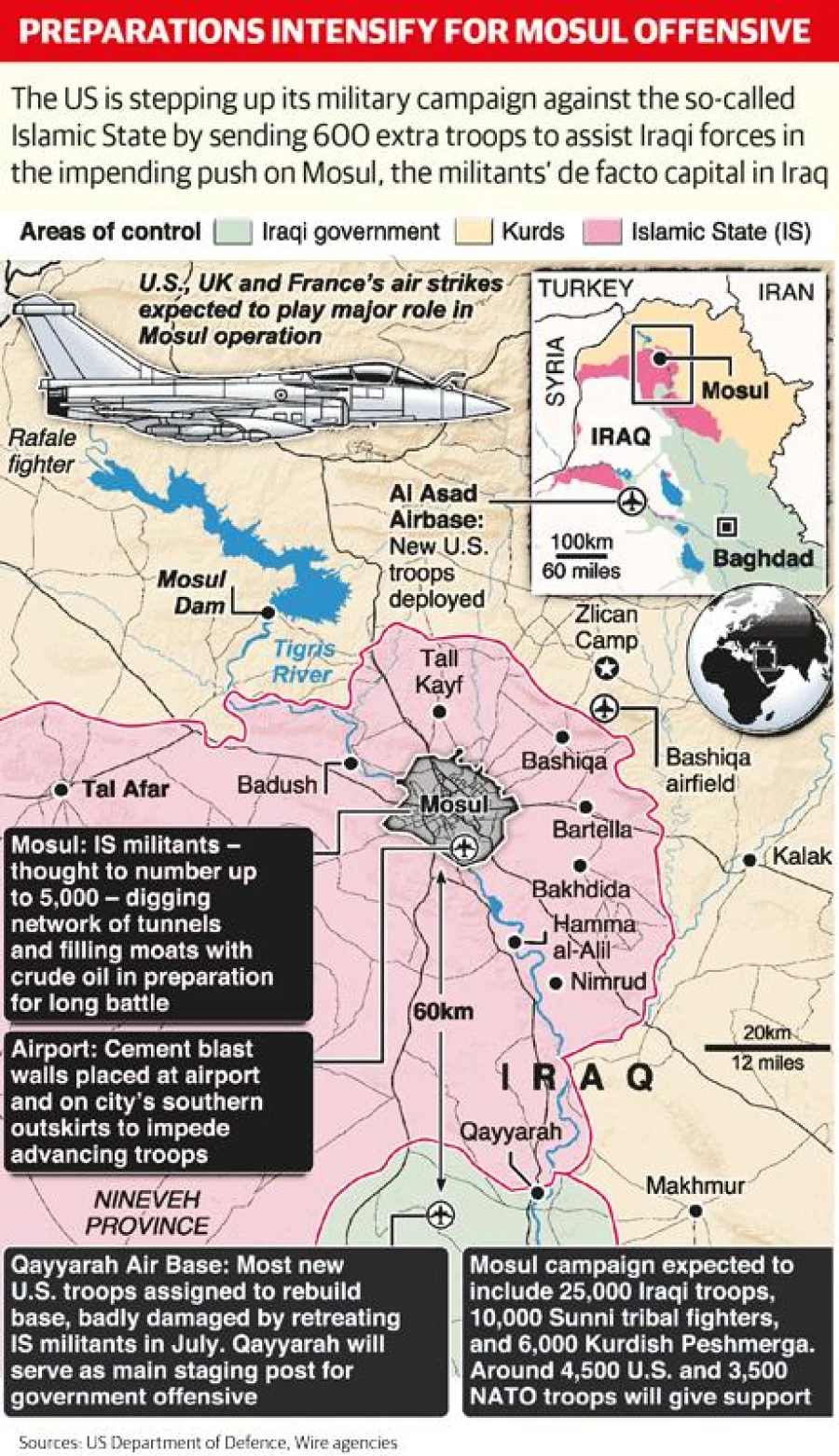
The Iraqi army, along with Kurdish peshmerga fighters, will take the lead in one of Iraq’s most important offensives in years, with the aim of clearing Islamic State from its last major stronghold and promoting long-term stability.
But complaints from fighters and commanders in the National Mobilisation force about lack of weapons from the Baghdad government highlights sectarian faultlines that could undermine the offensive and chances for sectarian and ethnic harmony.
Iraq has descended into civil war, mainly between Shia’s and Sunnis, since a US-led invasion toppled Saddam Hussein in 2003. The force, that trains about five hours a day at the camp, was patched together by former Mosul governor and Sunni politician Atheel al-Nujaifi in 2014, not long after Islamic State swept through northern Iraq, virtually unopposed by an army riddled with corruption.
Nujaifi purchased used weapons for the fighters in markets, according to his commanders.
After the camp came under heavy Islamic State rocket fire, Turkish trainers positioned six tanks along the edge of the compound in May 2015.
While the men have benefited from the training, Shi’ite Prime Minister Haider al-Abadi warned Turkey’s military presence in Iraq could spark a regional war.
Last week, Turkey’s parliament voted to extend its military presence in Iraq for a further year to take on what it called “terrorist organisations”.
The force, that trains about five hours a day at the camp, was patched together by former Mosul governor and Sunni politician Atheel al-Nujaifi in 2014, not long after Islamic State swept through northern Iraq, virtually unopposed by an army riddled with corruption.
Nujaifi purchased used weapons for the fighters in markets, according to his commanders.
After the camp came under heavy Islamic State rocket fire, Turkish trainers positioned six tanks along the edge of the compound in May 2015.
While the men have benefited from the training, Shi’ite Prime Minister Haider al-Abadi warned Turkey’s military presence in Iraq could spark a regional war.
Last week, Turkey’s parliament voted to extend its military presence in Iraq for a further year to take on what it called “terrorist organisations”.