The promise of an upgraded Dhallywood, brought about by relatively low-key yet talented filmamkers including the likes of Amitabh Reza Chowdhury and Tauquir Ahmed with films like “Aynabaji,” “Oggatonama” during the previous year, fizzled out quickly. Yet, Dipankar Dipon’s smashing hit “Dhaka Attack” emerged as the de rigueur and helped the hardly-breathing film scene survive.
On the one hand, many cinema halls are about to be shuttered because of the monetary strife faced by the owners due to the absence of crowd-cheering films. Many of the torch bearers of the industry, including a number of prominent actors, directors and producers were busy fighting to take control of the BFDC. In conclusion, considering the mostly discussed events of Dhallywood during 2017, it is safe to say that films, in most cases, got the slightest of attention from the people concerned.
Standing at the end of the eventful year, Dhaka Tribune’s Showtime looks back at some of the momentous events in the realm of Dhaka’i films.
Dhaka Attack: The film de rigeur
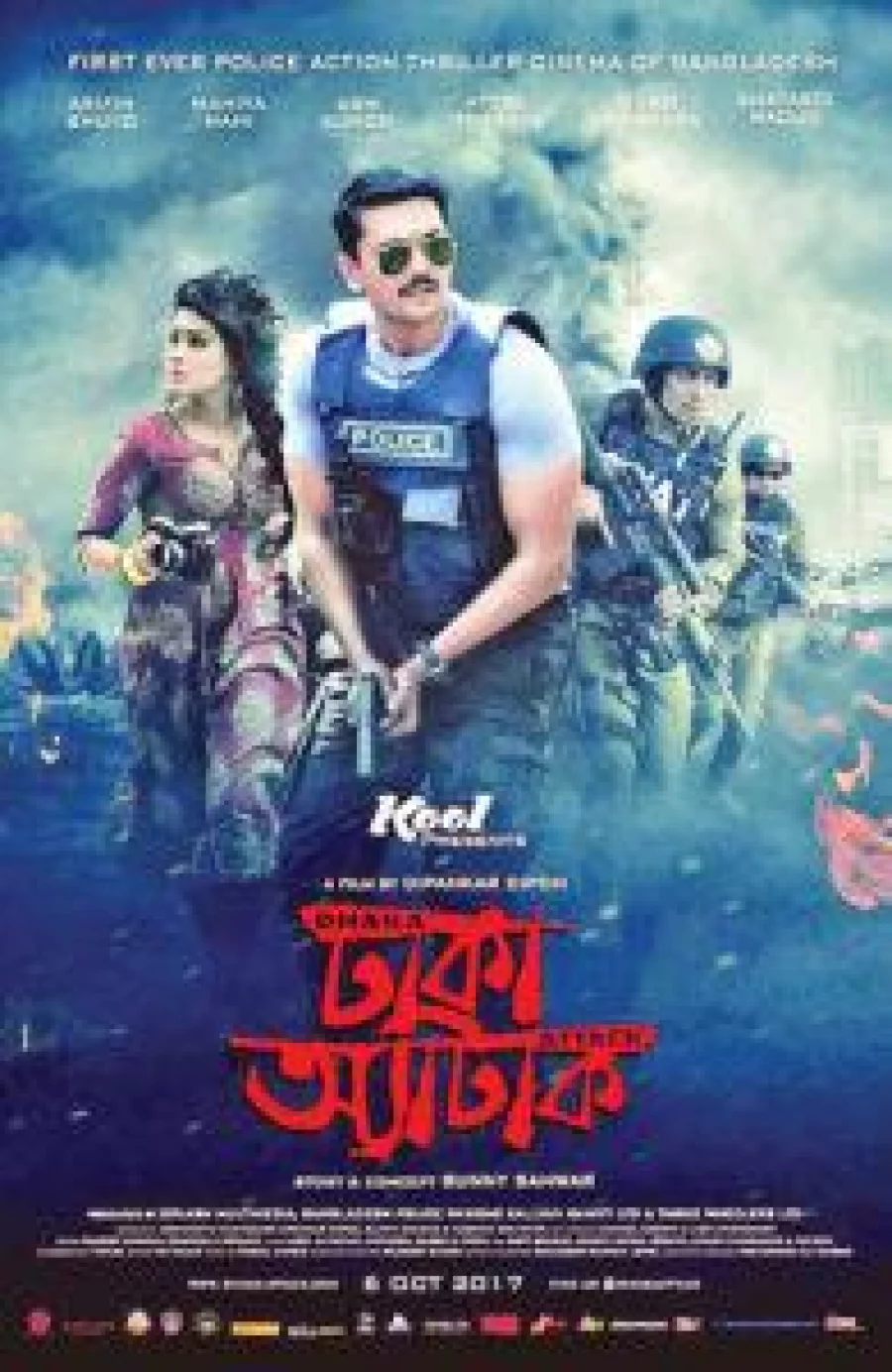
Reportedly the first cop-action thriller of Dhallywood, Dipankar Dipon’s debut feature reiterated the ‘Hands-up, police’ role of cops in Dhaka’i films in the most thrilling way. For the first time, a Dhaka’i film gave precedence to police investigations and operations in Bangladesh.
To make the adrenaline-pumping story more realistic to the audience, the film also features a number of real life cops. The creative team comprising of director Dipankar Dipon, and writer and real-life super-cop Sunny Sanwar jam-packed the film with explosions, racing cars, and a small homage to Alan Moore’s Watchmen with a smiley button.
It has indeed been the movie of the year for Dhallywood, as cinephiles were seen flocking to theatres to watch “Dhaka Attack” since its release on October 6.
Doob: Successful yet fading away into squabbles
Celebrated Director Mostofa Sarwar Farooki’s 6th feature “Doob: No Bed of Roses” has been making headlines since the last year. Whether it is about creating expectations, or controversy, this film has not fallen short on any occasion. Much credit also goes to Irrfan Khan, the male lead of the film. Unfortunately, soon after the announcement of the film, reports claimed that the film was based eminent wordsmith Humayun Ahmed’s life. Despite Farooki’s repeated denial of the claim, the film hit the first roadblock with the cancellation of the “No Objection Certificate” by the censor board of Bangladesh based on allegations brought up by late Humayun’s wife Meher Afroz Shaon. Shaon said that the content would be harmful for the late writer’s image.
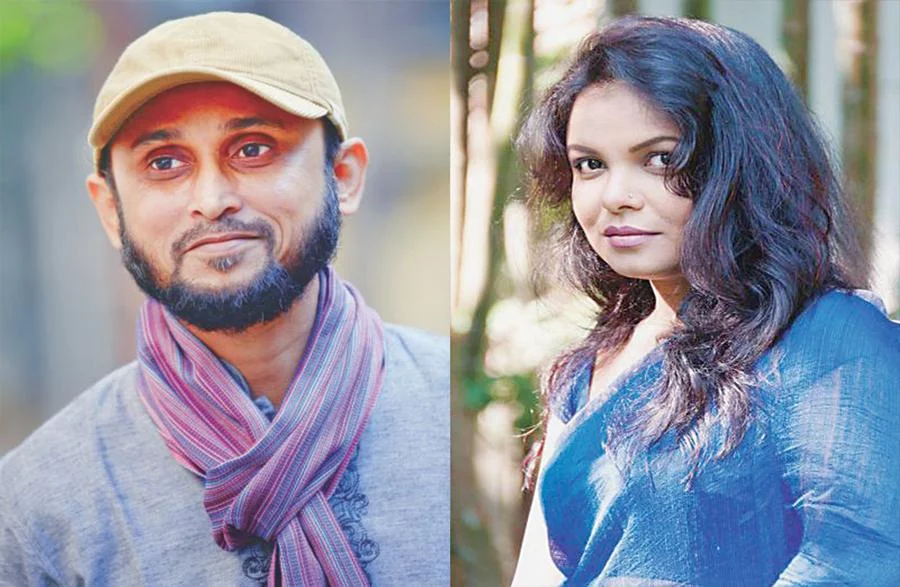
However, the film piqued the curiosity of Indian audience as well and was released in 39 theaters in Bangladesh, while securing an impressive release in a record number of 40 theatres outside the country. Despite of all the controversy and bickering surrounding the film, “Doob: No Bed of Roses” managed to gain noteworthy international recognitions through its participation in international festivals like Shanghai International Film Festival, Moscow International Film Festival, El Gouna Film Festival, Vancouver International Film Festival, Busan International Film festival and South Asian Film Festival. “Doob” won the Kommersant Jury Award at the 39th Moscow International Film Festival, while it was nominated for the Golden Gablet Awards in Shanghai International Film Festival.
On the business front, the film appeared to be making big strides, with significant theatre participation from the audiences, inciting further criticism that the film was famous for all the wrong reasons as Farooki’s artistic excellence was more or less overlooked due to the pre-release controversy surrounding the film.
The pandemonium in actor’s and director’s guild
It all started with the election of the film actors association, which was held in May. Misha and Zayed Khan panel was elected for the next two years. But discord emerged immediately after the election, splitting the industry into two, eventually leading to the evolution of two different organisations of film personalities: Chalachitra Paribar and Bangladesh Chalachitra Forum.
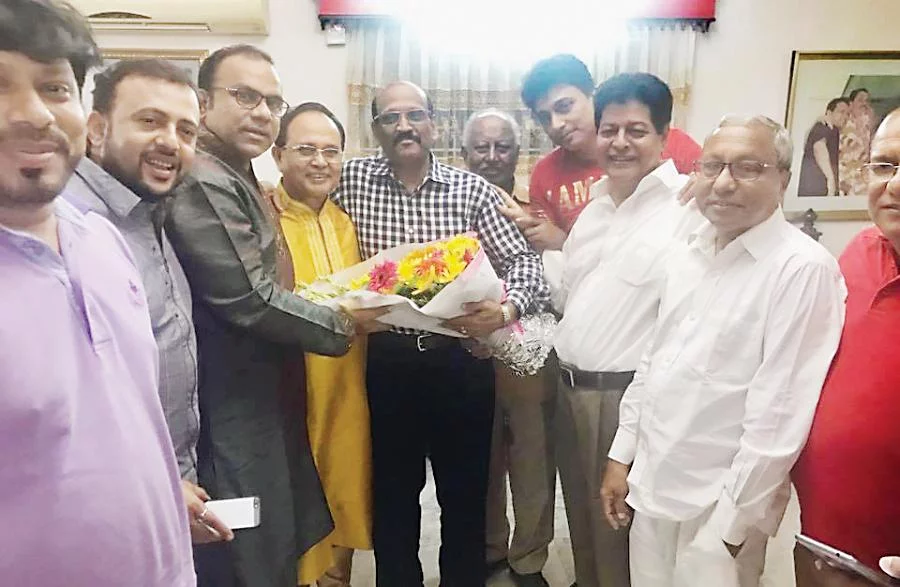
The protest against joint-venture films added fire to the flame as some of the industry leading artists, who protested the exchange of artists between Bangladesh and India, took the side of joint venture films. This resulted in a ban and counter ban game among different portions of the industry.
Citing “derogatory comments” made toward local film directors, Shakib Khan was banned indefinitely in June by Chalachitra Paribar and coincidentally, in July the Bangladesh Film Exhibitors’ Association decided to not exhibit any films of actor Riaz, Misha Sawdagar and producer Khorshed Alam Khosru, who has allegedly assaulted Iftekharuddin Naushad, the association’s president, during their protest against joint venture films.
At this point, all of the parties appeared to be in a truce. Boycotts were lifted and the tension between several artists, directors, producers and film exhibitors died down, with joint declarations of working together for the betterment of the industry. Intervention by senior artists, directors and the government had a part to play in the settlement.
The drama of Shakib Khan and Opu Biswas’ secret marriage, child and public divorce were also in the public’s eye, but that saga requires an entirely separate enquiry.




 Reportedly the first cop-action thriller of Dhallywood, Dipankar Dipon’s debut feature reiterated the ‘Hands-up, police’ role of cops in Dhaka’i films in the most thrilling way. For the first time, a Dhaka’i film gave precedence to police investigations and operations in Bangladesh.
To make the adrenaline-pumping story more realistic to the audience, the film also features a number of real life cops. The creative team comprising of director Dipankar Dipon, and writer and real-life super-cop Sunny Sanwar jam-packed the film with explosions, racing cars, and a small homage to Alan Moore’s Watchmen with a smiley button.
It has indeed been the movie of the year for Dhallywood, as cinephiles were seen flocking to theatres to watch “Dhaka Attack” since its release on October 6.
Reportedly the first cop-action thriller of Dhallywood, Dipankar Dipon’s debut feature reiterated the ‘Hands-up, police’ role of cops in Dhaka’i films in the most thrilling way. For the first time, a Dhaka’i film gave precedence to police investigations and operations in Bangladesh.
To make the adrenaline-pumping story more realistic to the audience, the film also features a number of real life cops. The creative team comprising of director Dipankar Dipon, and writer and real-life super-cop Sunny Sanwar jam-packed the film with explosions, racing cars, and a small homage to Alan Moore’s Watchmen with a smiley button.
It has indeed been the movie of the year for Dhallywood, as cinephiles were seen flocking to theatres to watch “Dhaka Attack” since its release on October 6.
 However, the film piqued the curiosity of Indian audience as well and was released in 39 theaters in Bangladesh, while securing an impressive release in a record number of 40 theatres outside the country. Despite of all the controversy and bickering surrounding the film, “Doob: No Bed of Roses” managed to gain noteworthy international recognitions through its participation in international festivals like Shanghai International Film Festival, Moscow International Film Festival, El Gouna Film Festival, Vancouver International Film Festival, Busan International Film festival and South Asian Film Festival. “Doob” won the Kommersant Jury Award at the 39th Moscow International Film Festival, while it was nominated for the Golden Gablet Awards in Shanghai International Film Festival.
On the business front, the film appeared to be making big strides, with significant theatre participation from the audiences, inciting further criticism that the film was famous for all the wrong reasons as Farooki’s artistic excellence was more or less overlooked due to the pre-release controversy surrounding the film.
However, the film piqued the curiosity of Indian audience as well and was released in 39 theaters in Bangladesh, while securing an impressive release in a record number of 40 theatres outside the country. Despite of all the controversy and bickering surrounding the film, “Doob: No Bed of Roses” managed to gain noteworthy international recognitions through its participation in international festivals like Shanghai International Film Festival, Moscow International Film Festival, El Gouna Film Festival, Vancouver International Film Festival, Busan International Film festival and South Asian Film Festival. “Doob” won the Kommersant Jury Award at the 39th Moscow International Film Festival, while it was nominated for the Golden Gablet Awards in Shanghai International Film Festival.
On the business front, the film appeared to be making big strides, with significant theatre participation from the audiences, inciting further criticism that the film was famous for all the wrong reasons as Farooki’s artistic excellence was more or less overlooked due to the pre-release controversy surrounding the film. The protest against joint-venture films added fire to the flame as some of the industry leading artists, who protested the exchange of artists between Bangladesh and India, took the side of joint venture films. This resulted in a ban and counter ban game among different portions of the industry.
Citing “derogatory comments” made toward local film directors, Shakib Khan was banned indefinitely in June by Chalachitra Paribar and coincidentally, in July the Bangladesh Film Exhibitors’ Association decided to not exhibit any films of actor Riaz, Misha Sawdagar and producer Khorshed Alam Khosru, who has allegedly assaulted Iftekharuddin Naushad, the association’s president, during their protest against joint venture films.
At this point, all of the parties appeared to be in a truce. Boycotts were lifted and the tension between several artists, directors, producers and film exhibitors died down, with joint declarations of working together for the betterment of the industry. Intervention by senior artists, directors and the government had a part to play in the settlement.
The drama of Shakib Khan and Opu Biswas’ secret marriage, child and public divorce were also in the public’s eye, but that saga requires an entirely separate enquiry.
The protest against joint-venture films added fire to the flame as some of the industry leading artists, who protested the exchange of artists between Bangladesh and India, took the side of joint venture films. This resulted in a ban and counter ban game among different portions of the industry.
Citing “derogatory comments” made toward local film directors, Shakib Khan was banned indefinitely in June by Chalachitra Paribar and coincidentally, in July the Bangladesh Film Exhibitors’ Association decided to not exhibit any films of actor Riaz, Misha Sawdagar and producer Khorshed Alam Khosru, who has allegedly assaulted Iftekharuddin Naushad, the association’s president, during their protest against joint venture films.
At this point, all of the parties appeared to be in a truce. Boycotts were lifted and the tension between several artists, directors, producers and film exhibitors died down, with joint declarations of working together for the betterment of the industry. Intervention by senior artists, directors and the government had a part to play in the settlement.
The drama of Shakib Khan and Opu Biswas’ secret marriage, child and public divorce were also in the public’s eye, but that saga requires an entirely separate enquiry.