Incessant rain under the influence of a low depression in the Bay of Bengal has caused sufferings to the commuters in Dhaka.
It started raining since Sunday night and continued till the filling of this report, reports UNB.
Meteorologist Ruhul Kuddus said the met office recorded 30mm of rain here in the last 24 hours till 6am on Monday.
Commuters, office-goers and students of schools and colleges have been facing severe problems in reaching their destinations for lack of transport.
Many roads got waterlogged due to the rain.
Besides, rickshaw pullers and CNG drivers were seen demanding extra fares from the passengers during the rain intensifying their woes.
In a special bulletin, the met office said the depression over North West Bay and adjoining North East Bay moved northeastwards and now lies over Bhola and adjoining area as a land depression at 6am.
It is likely to move in the North-Northeasterly direction further inland.
Meanwhile, maritime ports of Chittagong, Cox's Bazar, Mongla and Payra have been advised to keep hoisted local cautionary signal No 3, the bulletin added.
Downpour disrupts civic life in Ctg
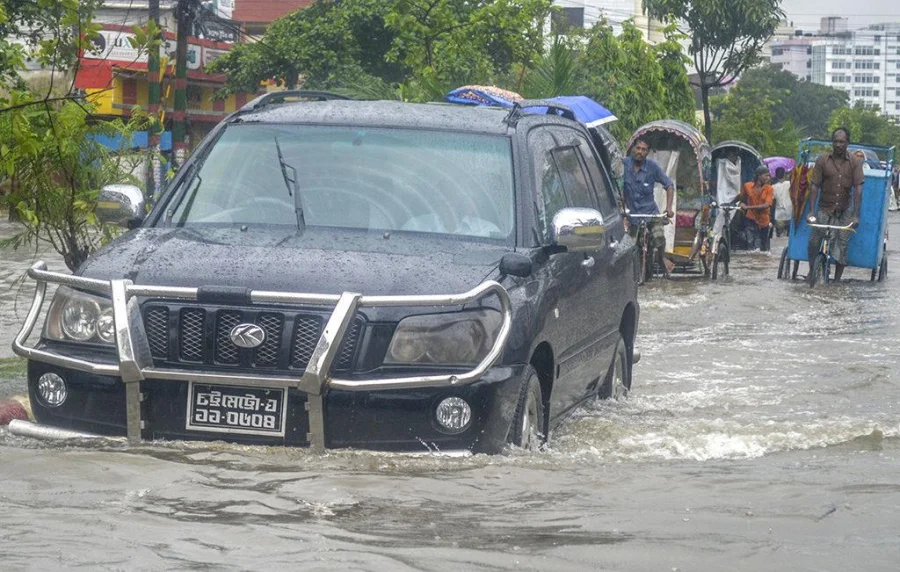
An SUV struggles against the rising floodwaters in Chittagong on June 12, 2017
Rabin Chowdhury/Dhaka TribuneUnder the influence of the seasonal depression formed in the Bay of Bengal, the low-lying parts of the premier port city were submerged in knee-deep to waist-deep water causing immense sufferings to the city dwellers.
Denizens of the port city of Chittagong have found parts of the city knee-deep or waist-deep in water.
About 177mm of rainfall was recorded in a 24-hour period till 12 noon Monday, according to Mahmudul Alam, assistant meteorologist of Patenga Met Office.
Many low-lying areas of the city including No. 2 Gate, Agrabad, Prabartak circle, Chawkbazar, Muradpur, Shulakbahar, Bahadderhat, Pahartali, Kalamia Bazar, Kalurghat, Chandgaon and Bakalia went under knee-deep to waist-deep water.
Mahmudul cautioned, saying the torrent may trigger landslides in the city.
Commuters including students and people bound for work equally suffered.
The water also seeped into buildings in low-lying areas, causing unfathomable distress to residents.
In many areas, cars stopped functioning when water flooded their engines.
The drainage system that doesn’t work
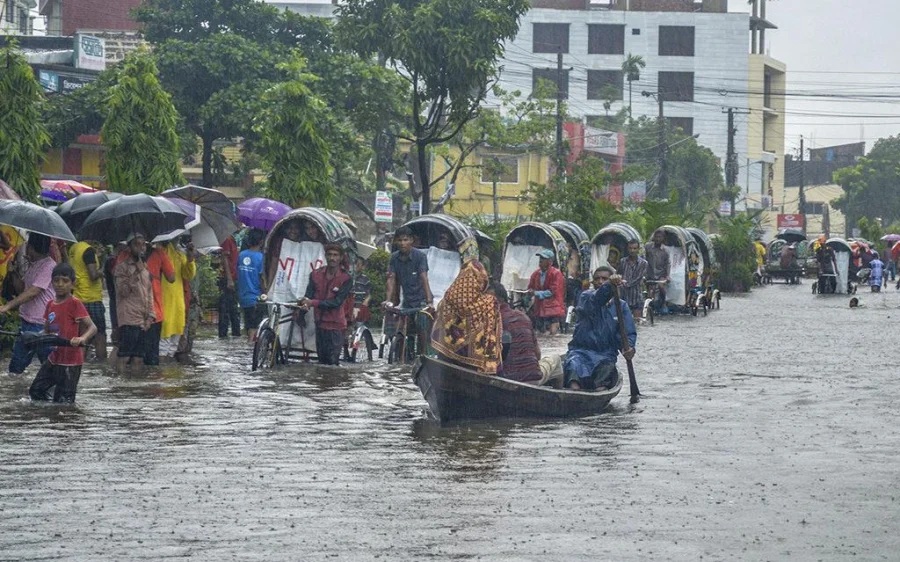
When rickshaws and cars struggle in the inundated city, boats are often the preferred mode of transportation
Rabin Chowdhury/Dhaka TribuneUnlike other cities in the country, Chittagong is gifted with a natural drainage system. It has a large network of canals to drain rainwater to rivers and the Bay of Bengal.
However, nearly a third of the city is flooded every monsoon while the southern areas are often swept by high tides even when there is no rainfall.
City planners blame unplanned urbanisation, illegal refilling and encroachment of canals and drains for obstructing the flow of water.
The situation is aggravated by dumping all sorts of solid waste in the drains, especially in the rainy season.
Furthermore, cutting hills cause soil to wash down and fill up drains and water bodies, in turn causing indiscriminate flooding.




 An SUV struggles against the rising floodwaters in Chittagong on June 12, 2017 Rabin Chowdhury/Dhaka TribuneUnder the influence of the seasonal depression formed in the Bay of Bengal, the low-lying parts of the premier port city were submerged in knee-deep to waist-deep water causing immense sufferings to the city dwellers.
Denizens of the port city of Chittagong have found parts of the city knee-deep or waist-deep in water.
About 177mm of rainfall was recorded in a 24-hour period till 12 noon Monday, according to Mahmudul Alam, assistant meteorologist of Patenga Met Office.
Many low-lying areas of the city including No. 2 Gate, Agrabad, Prabartak circle, Chawkbazar, Muradpur, Shulakbahar, Bahadderhat, Pahartali, Kalamia Bazar, Kalurghat, Chandgaon and Bakalia went under knee-deep to waist-deep water.
Mahmudul cautioned, saying the torrent may trigger landslides in the city.
Commuters including students and people bound for work equally suffered.
The water also seeped into buildings in low-lying areas, causing unfathomable distress to residents.
In many areas, cars stopped functioning when water flooded their engines.
 When rickshaws and cars struggle in the inundated city, boats are often the preferred mode of transportation Rabin Chowdhury/Dhaka TribuneUnlike other cities in the country, Chittagong is gifted with a natural drainage system. It has a large network of canals to drain rainwater to rivers and the Bay of Bengal.
However, nearly a third of the city is flooded every monsoon while the southern areas are often swept by high tides even when there is no rainfall.
City planners blame unplanned urbanisation, illegal refilling and encroachment of canals and drains for obstructing the flow of water.
The situation is aggravated by dumping all sorts of solid waste in the drains, especially in the rainy season.
Furthermore, cutting hills cause soil to wash down and fill up drains and water bodies, in turn causing indiscriminate flooding.
