




January 12 is the death anniversary of Masterda Surya Sen, the legendary revolutionary leader of our soil. We will solemnly observe the 90th anniversary of his brutal execution this year. His whole life, spanning 40 years, was dedicated to the freedom of his motherland from British colonial occupation.
He is an icon of revolutionary struggle. He was one of the historical inspirational figures whose heroism gave constant courage and enthusiasm to our muktijoddha during our great War of Liberation.
The first freedom struggle
British East India Company, which had a mandate from the British crown, of doing business of all sorts including slave trade and at the same time to maintain a private army, were the virtual colonial rulers of Indian subcontinent from 1757. The Company, by royal charter, maintained their army and law enforcers, collected revenue, administered judiciary functions, and could penalize subjects up to the limit of capital punishment.
This unlimited power, the European supremacy of armament over native Indian ones and the enormous wealth of the colonized Indian territories eluded the British company to thrust all their might in exploiting their Indian subjects economically and physically. The unbearable tyranny did not go unchallenged.
In 1857 the Indian sepoys of the Company revolted. Though freedom from colonial struggle was not the primary aim of the 1857 Sepoy mutiny, it spread like wildfire and swept the entire Indian population barring British boot lickers. Some enthusiastic rebels even persuaded the aging namesake Mughal ruler Bahadur Shah Zafar to claim sovereignty. The unable, old, and unwilling descendant of the once-mighty House of Mughals complied and consequently met a tragic end. Economist, philosopher, and thinker Karl Marx has termed this sepoy mutiny as the first freedom struggle of India.
One of the greatest Bengali Historians Prof RC Majumder, who taught and headed our prestigious Dhaka University, was firmly of the opinion that the real impetus to the Freedom Movement from British colonial rule was given by the youth revolutionaries who were disillusioned by the too-slow action of Indian politicians, which prompted them to take up arms to fight the colonizers.
After the sepoy mutiny, India saw the power of the Company replaced by the British crown. Political activities and resentment grew and so did boot lickers who were there to answer the masters. The revolutionary youth of the subcontinent were not happy with their mainstream politicians and they started forming their secret organizations, which they thought would be the answer to drive the oppressors away.
Examples: Alipore Bomb case(Khudiram and Prafulla Chaki), Kakori case(Ashfaqullah and Ramprasad Bismil), Udham Singh and so on and so forth. They thought their actions will activate the nation and ignite within them the flame of freedom and unite them to a fierce anti-colonial struggle - which will grow like waves to drown the British.
The events leading to liberation
These circumstances led to the great revolutionary action by the Chittagong youth led by legendary Masterda Surya Sen. This valiant action could keep Chittagong free of British occupation for four days from April 18 to April 22, 1930. In history, the heroic action goes by the name Chittagong Youth Revolution or Chittagong armoury Raid. It was a severe blow to the British powers and they dealt with the action as brutally as they could. By their terms, it was the looting of Chittagong armoury. Some Bengali writers and publishers also had made this historical mistake.
We consider the colonial powers, including the British, as exploiters and looters of our wealth. Even those arms taken possession of, by the revolutionary youth, were bought with our wealth. So, we consider that they bravely took our own wealth by force from the British. To us, the Bengalis and the people of the subcontinent, they were and will always remain heroes of the highest order.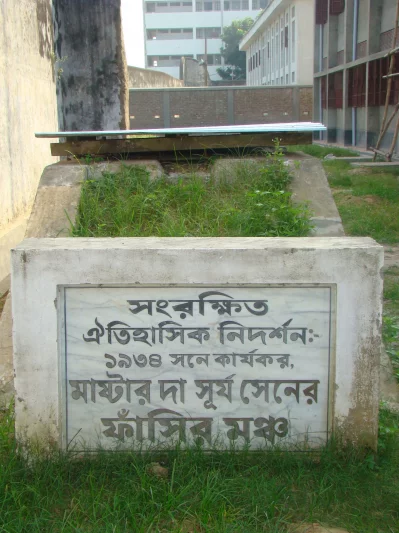
Our deepest respect to them will remain for all time to come. If not for their exemplary self-sacrificing, all out armed attacks, Netaji Subhas Chandra Bose's desperate attack with his Azad Hind Fauj, the British Indian Naval forces mutiny, and such other vital incidents, the independence of the subcontinent may not have happened.
We know what level of mass agitation swept the subcontinent when Netaji's comrades, the leading figures of Azad Hind Fauj, were put under trial for sedition against the British crown. The British rulers could read the public sentiment and called off all further proceedings as well as the few judgements pronounced by their war trial court which was set up in Delhi.
The rulers could not project the Delhi trials as Nuremberg or Tokyo. Rather, it backfired on them and they had to take a hurried decision of leaving the subcontinent as soon as possible. Thus, the freedom at midnight of August 14, 1947 came quicker. In fact, it was pre-poned because the British colonists preferred to leave early to avoid further embarrassment. But before they left, they successfully implemented their divide and rule policy to leave their former colony divided and weak and consequently a fertile ground for their further neo-colonial exploitation.
The 1930 Chittagong Youth Revolution
During WW1, the British proposed to the Indian political leaders that if the Indians support and fight for the Allied forces, Indian demand for self-rule will be met. Accordingly, the mainstream Indian political leaders persuaded their people to join the British Indian Army. The semi-sovereign Indian kingdoms and nawab/sultan-ruled entities called princely states also fought for the Allied forces.
But as soon as the war was won, all promises were forgotten. The Indian leaders were left with an empty bowl. The Muslims were particularly frustrated at the dissolution of the Ottoman caliphate. In the early 20s of the 20th century, simultaneously the non-cooperation movement by Gandhiji and the Khilafat movement started in tandem. Though the movements did get popular support, they were not enough. The movements slowly started losing steam and slowed down. This infuriated the young guards of freedom and revolution.
The-then secretary of Chittagong district Indian Congress, Surya Sen alias Masterda (he actually was an innocent-looking mathematics teacher in a school) chalked out his own program. He had innumerable young supporters who were ready to sacrifice their own life. They only waited for orders from their leader. They were imbibed with patriotism, had physical training and some of them also got trained in handling explosives and small firearms.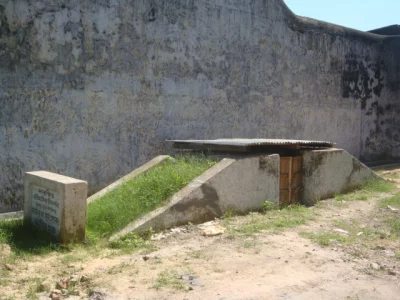
Masterda fixed April 18, 1930 as the day of action. He chalked out a meticulous plan. In his plan we find deep influence of Irish Sinn Fein revolutionaries. Ireland too was fighting against the British crown around that time. A group of 64 selected youth were divided into several groups.
By evening of that day the railway link between Chittagong and the rest of British India was severed near Feni. Telephone exchange was attacked and the communication with rest of the country was snapped. The armoury of the Auxiliary forces was taken over. The main target, the Police line armoury was attacked.
The British defenders fled and the armoury and the police HQ was taken over. Masterda was given a full guard of honour as the provisional head of the Indian Republican Army government of Chittagong. The district was declared free. Masterda knew that they could not hold this Independence for long as the whole of India was not prepared. He wanted to create an example, to kindle the fire of revolution.
He withdrew his forces to the Jalalabad Hills where a battle was fought between a handful of revolutionary youth and a huge contingent of British soldiers. 12 young freedom fighters embraced martyrdom whereas reportedly 80 of the enemies were killed. The British contingent left in the evening while Masterda offered a 21 gun salute to the fallen heroes and decided to withdraw to the villages for the next session of protracted guerilla warfare. It was already the early hours of April 22, 1930.
The next phase continued for more than three years. Gradually but finally, all the top leaders, including Masterda, were apprehended and the great Chittagong Youth Revolution died down in action, but not in spirit. Their heroism is still acclaimed.
An unforgotten legacy
As we know, Masterda Surya Sen and his second-in-command, Tarakeswar Dastidar were tried summarily and received the death penalty. Only a few days were allowed to hear the appeal at the High court. It was a mockery of a trial. Before hanging, they were beaten and tortured beyond limits and when they were formally hanged, they were almost dead bodies already. The British powers were so afraid of his popularity that the dead bodies were not handed over to the friends and relatives for last rites. They carried the sacred bodies deep into the Bay of Bengal and sank the bodies with heavy weights.
The spirits of Masterda Surya Sen and his second in command Tarakeswar Dastidar are still alive in the hearts of millions of their successors. Chittagong Youth Revolution will remain as a beacon to all revolutionaries all over the world for all time to come. While fighting against Pakistani domination and exploitation and more so during our great War of Liberation, our Bengali nation derived inspiration from the revolutionary actions of Masterda.
We have residential halls in universities named after Masterda. There are some other not very significant organizations carrying his name. Unfortunately, we do not have any major street, road, or square in any of our metropolitan cities bearing his name. Our government and city authorities should consider the matter seriously and come up with a positive decision.
The gallows where Masterda and Dastidar were hanged have been preserved with solemn dignity inside Chittagong jail. We expect that some special arrangements will be made to visit the site and show due respect to the visionary revolutionary leader.
Long live Masterda Surya Sen!
Pradip Kumar Dutta is currently engaged in the campaign for a global recognition of the 1971 genocide.
