



With more than 60% of the world's population, the Asian continent has long been a hotbed of political and economic activity. The rise of countries like China, India, and Japan has led to a shift in the balance of power in the region. In the grand tapestry of global geopolitics, certain nations are frequently propelled into the limelight, their influence growing and their importance undeniable.
Among the many countries shaping the course of events in Asia, one has been quietly but steadily asserting its presence on the international stage: Bangladesh. Bangladesh has emerged as an increasingly influential player in Asia's geopolitical landscape, with its rapidly growing economy, strategic location, and commitment to regional stability.
Since independence, Bangladesh has turned into a democracy with a rapidly growing economy and its economic transformation over the past few decades has been remarkable. From being labeled as a "basket case" in the 1970s, Bangladesh has become one of Asia's fastest-growing economies.
Recently, the US Congress proposed a resolution that praises Bangladesh's socioeconomic growth. President Joe Biden also spoke about how remarkable Bangladesh’s success has been. Not only does the US frequently admire Bangladesh, but it has also been trying to get Bangladesh to join its grand strategic move, the Indo-Pacific Strategy.
Bangladesh's praiseworthy transformation, its geostrategic location, and its future potential are the primary reasons behind the importance it is garnering right now. It is the reason behind the shift in the global narrative regarding Bangladesh. Bangladesh, once neglected, is now gradually becoming an important regional player for global powers. The latest rhetoric from different states suggests that it is now finding itself in a race for persuasion among the great powers.
Economic growth
Bangladesh's growing influence can be attributed to several factors. The country’s tremendous progress in economic development over the last decade, where Bangladesh's economy grew at an average rate of over 6%, makes it one of the fastest-growing economies in the world.
The country's textile and garments industry in particular has played a pivotal role in driving this growth, making it a global hub for manufacturing. Bangladesh now ranks as the world's second-largest exporter of ready-made garments.
Bangladesh boasts a Gross Domestic Product (GDP) of $460.75 billion, ranking it as the 41st largest economy globally. As the 8th most populous country in the world with more than 171 million people, Bangladesh presents a lucrative market for large-scale producers and investors.
These impressive economic achievements have lifted millions from poverty and garnered attention from major international players seeking economic partnerships. And this economic progress has given Bangladesh more leverage and bargaining power in the region.
Regional relations
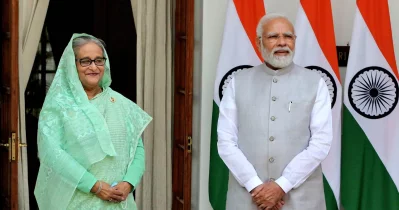
The country's economy has grown at an impressive pace, earning Bangladesh a designation as a member of the “Frontier-Five” economies. This economic growth has translated into political power, as Bangladesh is becoming a more significant regional player.
The government has been trying to improve relations with neighbouring countries like India, China, and Myanmar. Bangladesh also plays a vital role in regional institutions such as the South Asian Association for Regional Cooperation (SAARC) and the Bay of Bengal Initiative for Multi-Sectoral Technical and Economic Cooperation (BIMSTEC).
The country's strategic location at the crossroads of South Asia and Southeast Asia has also made it an important player in regional security and stability. Bangladesh has been working to combat terrorism, human trafficking, and drug trafficking in the region and has established itself as a leading partner in tackling these threats.
Furthermore, Bangladesh has played an active role in promoting regional peace and security. The country has been actively involved in peacekeeping missions around the world, with its armed forces contributing to UN peacekeeping operations in countries like Sudan, Haiti, and the Central African Republic. Bangladesh has also taken steps to address the Rohingya crisis, providing shelter to hundreds of thousands of refugees who have fled from neighbouring Myanmar.
One of the more significant examples of Bangladesh's growing influence is its relationship with India. The two countries have traditionally had a complex relationship, with issues like water sharing, border disputes, and trade imbalances causing tensions between them. However, in recent years, the relationship has improved significantly.
Bangladesh has become an important partner for India's “Act East” policy, which aims to strengthen ties with Southeast Asia. The two countries have also worked together on initiatives like the BBIN (Bangladesh, Bhutan, India, and Nepal) Motor Vehicles Agreement, which aims to facilitate regional connectivity.
Another example of Bangladesh's growing influence is its relationship with China. China has been investing heavily in Bangladesh in recent years, with projects like the Payra Sea Port contributing to the country's economic growth. Bangladesh is also a key partner in China's Belt and Road Initiative (BRI), with the two countries signing a Memorandum of Understanding on the initiative in 2016. This partnership has helped to boost Bangladesh's connectivity with other countries in the region, as well as increase its trade and investment opportunities.
Japan and Bangladesh have had close ties since Tokyo recognized the People's Republic of Bangladesh on February 10, 1972. Although Japan has been one of its closest development partners of Bangladesh since its birth, it has recently been outsmarted by China, especially after the launch of the BRI, which Bangladesh has signed on to. Still, Tokyo remains involved in many projects in the country, including the Matarbari Port.
Meanwhile, Pakistan maintains a long standing diplomatic ties with China, Sri Lanka has gone bankrupt, while Nepal's economy is also undergoing a period of decline. Afghanistan is now war-torn, and Bhutan has limited involvement in global political affairs.
Challenges remain
While Bangladesh's growing influence in Asia is undeniable, it is not without its challenges. One of the biggest challenges that Bangladesh faces in its quest for greater influence is its relationship with China.
China is Bangladesh's largest trading partner and has invested heavily in the country's infrastructure projects. However, Bangladesh's growing ties with China have raised concerns among some, particularly India, who see China as a rival in the region. Bangladesh has sought to maintain a balanced relationship with both China and India, recognizing the importance of both nations for its own development.
Effectively managing a rapidly growing population, addressing pressing environmental issues, and ensuring political stability are imperative responsibilities for the nation of Bangladesh. The Rohingya refugee crisis has significantly strained the country, highlighting its multifaceted challenges as a regional player.
However, with challenges come opportunities, and Bangladesh's Honourable Prime Minister Sheikh Hasina has shown resilience and adaptability in navigating the turbulent waters of geopolitics. The nation's commitment to democratic principles and its aspiration to be a responsible regional actor bode well for its continued growth in influence.
Despite these challenges, Bangladesh's growing influence in the region has significant prospects. The country's economic growth is expected to continue, with projections suggesting that it will be the 28th largest economy in the world by 2030.
Presently, Bangladesh possesses significant military and economic capabilities and has refrained from aligning with any particular faction. Bangladesh is a significant participant in geopolitical considerations and enduring collaboration, rendering it an attractive prospect for major global players.
The balanced and neutral policy of Bangladesh, coupled with its occasional hedging strategy, generates greater expectations among various global powers. This growth will translate into increased political power and influence, enabling Bangladesh to play a more significant role in shaping the future of Asia.
Md Ashikur Rahman and Anupom Sarker are freelance contributors and postgraduate students in Public Administration and Governance Studies at Jatiya Kabi Kazi Nazrul Islam University.
