




Foreign Minister AK Abdul Momen’s recent assessment was certainly not wide of the mark. Neither was he wrong in taking a swipe at foreign governments which have been lecturing Bangladesh on human rights even as they have given comfortable residence to Bangabandhu’s assassins. As far as we are aware, one of those assassins has been in the US for years. Similar is the instance of another who has found safe refuge in Canada.
Let us be blunt here. The circumstances which have been taking shape in Bangladesh around the forthcoming general election worry us all. Everyone who has remembered recent history and who holds fealty to the Bangladesh ethos as it shaped up during the War for Liberation wonders whether the kind of conditions which led to the violent overthrow of Bangabandhu’s government in August 1975 are once again upon us, this time to compel Sheikh Hasina’s government to succumb to the numerous pressures it is under.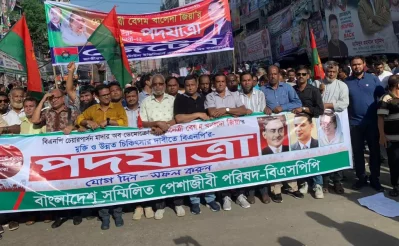
No one will take issue with the truth that things have not been perfect in these 14 years Awami League has been in power. Governance and the rule of law, or the lack of them, have consistently come into question. Corruption has relentlessly been talked about, with all those bank scams and money laundering that have cast a shadow on the state. That institutions have not functioned the way they ought to have is a reality one cannot look away from. No, it has not been a golden age for the country.
And yet there is that powerful sentiment among people that the Awami League, or more specifically Sheikh Hasina, has provided firm and focused leadership to the country. Hers has been a proper Bengali nationalist government in the mould of the 1971 Mujibnagar government and the 1972-1975 administration of Bangabandhu Sheikh Mujibur Rahman. The government has dealt with the collaborators of 1971, has had the assassins of 1975 march to the gallows. It has presided over a growing economy. It has made its presence felt on the global stage. And the prime minister has been speaking for Bangladesh at the Brics summit in Johannesburg.
That said, there is of course the matter of the elections ahead. Every citizen would like to have a proper, free, and transparent exercise of the vote. But given the flurry of activities by some foreign diplomats and the series of visits by American officials to Dhaka, along with the US government’s warning of an imposition of visa restrictions should the election come under question, one wonders if the aim here is a good election or an engineering of conditions that will ensure the Awami League does not return to power in 2024.
There is the 2001 precedent to fall back on, though foreigners were not too many around that election. The Awami League lost to the Bangladesh Nationalist Party in a vote which saw all eight Dhaka parliamentary seats slip out of its control. It was an election Sheikh Hasina and her party were expected to win. So what intricate, carefully crafted methods went into the party being made to go back into opposition?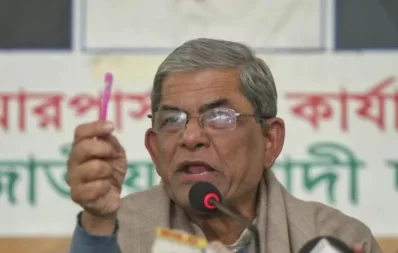
And while we mull that question, observe the tone in which the BNP and its allies have been speaking in recent weeks. They ask for credible elections but in the very next breath they demand the removal of Sheikh Hasina from office through agitation on the streets. Nothing in their statements suggests that they are ready for a peaceful political transition, should the opportunity for such a transition arise. The BNP would like to reform the state at a time when the state has already been restored more or less to its original form by the party which spearheaded the movement for national freedom. The issue for the BNP ought to have been one of reforming itself in terms of policy, in terms of going for new leadership in the party.
Therein lies the danger, this reluctance of the BNP to go for introspection. Recall the individuals and communities and homes coming under attack by BNP activists within minutes of the BNP’s return to power in October 2001. The victims of that organized assault are today assailed by fears of a repeat of the atrocities visited on Awami League supporters and the Hindu community should the BNP’s friends at home and abroad succeed in bringing it back to power. The BNP leadership has never felt contrite about the doings of its activists in 2001, has never apologised to the nation for the violence resorted to by its followers.
Only the other day, the secretary general of the party, referring to the tragedy of August 21, 2004, went for a fresh denial of history when he accused the Awami League of indulging in shajano natok, or stage-managed drama, about a carnage which took the lives of 24 people and left scores of others wounded. That adds to the insensitive comment by then prime minister Khaleda Zia that Sheikh Hasina might herself have carried a grenade in her handbag on the day. That all signs point to the involvement of the BNP-Jamaat government in the making of the tragedy is clear as spring water. That the grenade explosions were aimed at a wipe-out of the entire Awami League leadership is beyond question. The BNP has never condemned the incident.
Against such a historical background of dark proportions, the question arises as to whether those who back the opposition today, within the country and beyond it, are ready for an election which will vote the Awami League back to power. It is said that both Washington and Delhi would like the Awami League to dissociate itself from undemocratic and communal elements, which is fine. The Awami League, for its part, requires to reassure people that it will abjure any appeasement of communal forces and will reassert a democratic and secular political program as part of the policy it means to have in place once it is re-elected as the party of government.
But none of this neutralizes the threats which confront us today. There is little reassurance that a fair election is the goal of the opposition. There are the many hints that on the issue of a caretaker government the opposition and its friends would like to see the back of the Awami League administration. In the event Sheikh Hasina is resolute about not restoring the caretaker system, vigilance will be of the essence, given that the goal of Sheikh Hasina’s adversaries looks to be one of preventing her party from winning the next election.
These months before the election will be difficult for the ruling party. For the country, it is essential that stability be maintained. The worries expressed by Foreign Minister Momen certainly resonate with citizens. August 1975 led us all down the road to disaster, for local and overseas forces were involved in the intrigue against Bangabandhu’s government. A similar alignment of forces determined to force the government from office is at work today. Such machinations must not succeed, for if they do, this country will not only pass into the hands of destabilizing forces but will also, in the global community, dwindle into a banana republic.
We need a good election. But we are little inclined to return to an era when anti-history seized hold of the country. The ages of darkness -- in 1975-1996 and 2001-2006 -- must not come over the People’s Republic of Bangladesh again.
Syed Badrul Ahsan is Consultant Editor, Dhaka Tribune.
