For an unusually overpopulated country with a very limited range of habitats, Bangladesh is teeming with wildlife diversity – with about 53 species of amphibian, 19 species of marine reptiles, 139 species of reptile, 380 species of birds, 116 species of mammals and five species of marine mammals. But with the staggering rate of development, biodiversity has never been in greater danger.
Who’s in trouble?
Deforestation leading to a loss of habitat and poaching are two of the major causes of various species being threatened in the region. Thirteen species of animals have already become extinct from Bangladesh, while many others are on the verge of extinction.
The 2004 IUCN Red List of Threatened Animals included the Asian Elephant, Banteng, Blue Whale, Capped Langur, Fin Whale, Ganges River Dolphin, Hispid Hare, Hoolock Gibbon, Parti-coloured Flying Squirrel and lastly our emblematic Royal Bengal Tiger in the “endangered” category, and marked 18 others as “vulnerable”, including the Gaur, Asiatic Black Bear, and the Dhole. This points towards a bleak future, one where future generations may only know of these animals from photographs. However, all hope is not lost yet, at least, as long as there are youngsters like Shahriar Ceasar Rahman, co-founder and CEO of Creative Conservation Alliance (CCA).
A silver lining?
“I choose to be optimistic because conditions have definitely improved from what it was 15 years ago. If you would ask people to save pythons or turtles back then,they would laugh. What importance does a turtle have to a person who is struggling to eat?” Shahriar asks.
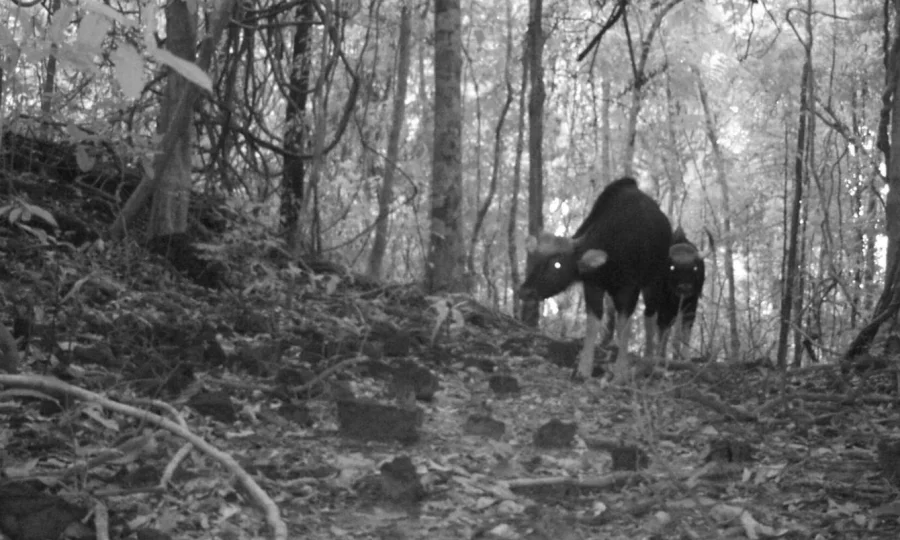
Shahriar and his team have been working closely with local communities in the Sangu-Matamuhuri Reserve Forest. With the local community's help, they organised a wildlife survey that employed camera traps to corroborate the local belief that there were tigers, sun bears, gaurs, dholes and clouded leopards in the forest. The rumours were proven true when the conservationist team surveying the remote Chittagong Hills Tract region captured the country’s first ever photos of a sun bear and gaur. Afterwards, they discovered a 13-centimetre pugmark of a feline, which experts believe is a tiger.
CCA's discoveries have presented a remarkable conservation opportunity for Bangladesh, but threats are always mounting. Despite the united efforts of many conservationist organisations along with government bodies, it is still a bumpy road to wildlife conservation in Bangladesh. The lives of wild animals are highly dependent on the economy and geo-politics of the area. Additionally, poachers crossing over from Myanmar to strip the forest of its wildlife pose another serious threat to the natural world.
“If you want to save wildlife, you’ll have to save their habitats first, and in this case, the government is the helming body. With the ongoing pressure of huge development efforts and changing modes of production, the government can barely serve the interests of nature. But if they don't pay enough attention to wildlife conservation and save the habitats, we'll see many other species go extinct within the next 30 years,” added Shahriar.

What can be done
When asked about a feasible solution, Shahriar said that awareness alone isn’t enough. “Consider the ongoing Rohingya issue, it is obviously a humanitarian call to save the Rohingyas but the place where we’ve placed them is a natural habitat of elephants. Now, to build houses for the refugees, we've cut down the hill, so we’ll be targeting the forest in near future. I understand that there’s political pressure in this regard and we can't undo the damages we've already done to the habitat, but we should at least save some other areas for the wildlife to survive. It's their right.”
CCA also conducts species-specific research utilising the Lawachara National Park in northeast Bangladesh as an experimental platform. Shahriar and the team study globally-threatened Burmese pythons, Chinese pangolins and elongated tortoises using radio-telemetry equipment in this mixed-evergreen forest surrounded by the famous Sylhet tea gardens. Lawachara also serves as their base of operations for their annual Tropical Field Biology Course, previously known as the Bangladesh Python Project Workshop.
The young conservationist dreams of an unstirred natural habitat for the wildlife in Bangladesh. “We’ve collected a wide range of data about pythons living in our area, but that doesn't mean that we’ve saved all the pythons by doing that. What we did is mostly groundwork. We have to work on the long term in order to make an impact. Then we can say that we’ve been able to secure a safe habitat for them. It’s a continuous process.”
“Besides, it's impossible to ensure the protection of wildlife and their habitat without improving the livelihoods of people. We need to be creative and find ways to reduce their dependency on the forest. We need to empower local communities,” he added.
As an organisation, CCA considers public outreach as the cornerstone of every successful conservation mission. “Before you can address issues concerning wildlife, you must first address human elements. In line with this perspective, our organisation educates, engages, and assists communities across Bangladesh—from diverse ethnic communities in the southeast to private university students in Dhaka.”
They are also training local community members - with little to no formal education - to carry out basic scientific tasks such as collecting morphometric data, GPS logging, and telemetry work. These indigenous parabiologists, who are also referred as citizen scientists, act as role models for their communities and serve as local conservation ambassadors for the region.



 The 2004 IUCN Red List of Threatened Animals included the Asian Elephant, Banteng, Blue Whale, Capped Langur, Fin Whale, Ganges River Dolphin, Hispid Hare, Hoolock Gibbon, Parti-coloured Flying Squirrel and lastly our emblematic Royal Bengal Tiger in the “endangered” category, and marked 18 others as “vulnerable”, including the Gaur, Asiatic Black Bear, and the Dhole. This points towards a bleak future, one where future generations may only know of these animals from photographs. However, all hope is not lost yet, at least, as long as there are youngsters like Shahriar Ceasar Rahman, co-founder and CEO of Creative Conservation Alliance (CCA).
