



The international community must not expect Bangladesh to shoulder the Rohingya refugee crisis indefinitely or alone, and has a moral responsibility to pursue lasting political solutions rather than relying solely on humanitarian assistance, UN human rights expert Kelley E Currie has said.
Currie, the UN Special Rapporteur on the situation of human rights in Myanmar, said the international community had a “100% moral obligation” to help Bangladesh, which continues to host more than a million Rohingya refugees amid declining humanitarian funding and deteriorating security conditions across the border.
Concluding her 8-day visit to Bangladesh, Currie spoke to Dhaka Tribune Chief Reporter Ali Asif Shawon about prospects for Rohingya repatriation, abuses by Myanmar’s military and the Arakan Army, accountability mechanisms, and the need for a political settlement that would allow refugees to return home with full rights.
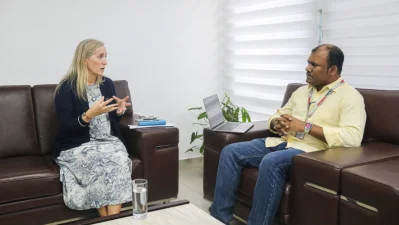
Dhaka Tribune: Is safe, voluntary and dignified Rohingya repatriation realistic amid the ongoing conflict in Rakhine State?
Kelley E Currie: The situation is extremely difficult. Fighting between Myanmar’s military and the Arakan Army remains intense, particularly in northern Rakhine, where most Rohingya originate.
The Arakan Army has imposed severe restrictions on Rohingya communities. They are also caught between the Arakan Army and Rohingya armed groups aligned with the military regime. Both sides are forcibly recruiting people, and neither is particularly favourable towards the Rohingya.
However, I believe Myanmar could eventually become a federal democratic state that respects everyone’s rights. Some resistance organisations have expressed openness to Rohingya returning with full citizenship, land ownership, education and equal participation in society.
Ultimately, there is no military solution. A political settlement and a change of hearts and minds are essential. Some dialogue is already taking place, which gives me hope.
But progress will remain extremely difficult while the military regime continues exploiting hostility towards the Rohingya.
How can the international community ensure accountability for abuses by Myanmar’s military and the Arakan Army?
Several accountability processes are underway, including cases before the International Court of Justice, International Criminal Court, courts in Argentina and other national jurisdictions.
The UN’s Independent Investigative Mechanism for Myanmar is collecting extensive evidence, including documentation of the 2017 atrocities and violations committed by non-state actors. This evidence is essential for future prosecutions.
However, accountability also requires transitional justice, which cannot succeed without a political settlement.
My goal is to see Myanmar itself prosecute perpetrators and deliver justice to victims. That would be the best form of accountability, although we remain some distance from achieving it.
Does the international community have a responsibility to help Bangladesh beyond humanitarian assistance?
The international community has a 100% moral obligation.
Many countries have provided substantial humanitarian assistance, but they must think more seriously about durable solutions.
There should be no expectation that Bangladesh will bear this burden indefinitely or alone.
Bangladesh faces immense challenges of its own, including economic setbacks and political difficulties. The international community must ensure the country has at least a fighting chance.
That responsibility goes beyond humanitarian funding. It requires sustained political engagement, greater emphasis on human rights and dialogue, and the inclusion of marginalised voices in discussions about Myanmar’s future.
The international community must make that political effort rather than relying on armed solutions or humanitarian assistance alone.
Myanmar has denied you entry. How can you investigate abuses and pursue accountability without access?
Myanmar’s military authorities have said they are not ready to allow my visit. But the regime does not control the entire country and is not recognised by the UN as its legitimate government.
We are exploring alternative approaches, although some discussions are too sensitive to disclose.
I intend to request access again in January and engage neighbouring countries that may have influence.
Meanwhile, Myanmar’s civil society organisations are doing remarkable work documenting abuses despite security threats, restricted internet access and other obstacles.
Their evidence-gathering efforts remain crucial to accountability.
With humanitarian funding declining, what will you recommend to the UN and international donors?
I am developing recommendations for Bangladesh, the UN system and international donors.
One priority is to strengthen social cohesion and create opportunities for both Rohingya refugees and host communities in Cox’s Bazar.
Rather than operating isolated programs, assistance should strengthen existing systems and benefit everyone.
Refugees should have greater opportunities for education, skills development and constructive community activities.
For example, they could receive training to organise fire brigades or repair water infrastructure. These skills would also help them rebuild their lives after returning home.
At the same time, investments must deliver lasting benefits to host communities. The water system developed through cooperation between the World Bank and Bangladesh is a good example.
We need more coordinated interventions that strengthen entire communities rather than treating refugees and local residents separately.
