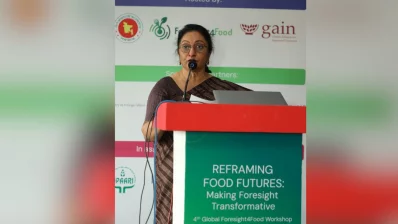
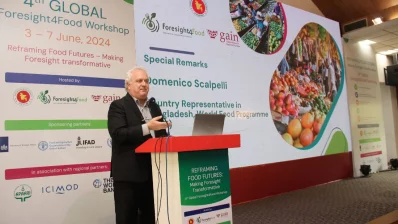
In the beautiful setting of BCDM Savar, Dhaka, more than a hundred foresight practitioners, researchers, and stakeholders from Asia, Africa, and Europe gathered from June 3 to 7 for the 4th Global Foresight4Food Workshop with the theme of “Reframing Food Futures: Making Foresight Transformative.” The workshop, organized by the Foresight4Food initiative and the Global Alliance for Improved Nutrition (GAIN), led by the Government of Bangladesh with support from the Bangladesh Ministry of Food, focused on the challenges, opportunities, and solutions for making the global food system resilient and transformative.
The workshop explored opportunities, challenges, and future plans for food system transformations across different countries. It spanned over five days, starting with a masterclass on foresight methodologies. Subsequent days included interactive sessions, panel discussions, breakouts, case presentations, and field visits to six locations: cattle breeding and mushroom farms, a wholesale market, a garment factory emphasizing workforce nutrition, the poultry sector, and a fortified rice plant.
Apart from the organizing partners, the workshop was supported by the International Fund for Agricultural Development (IFAD), the World Food Programme, the Government of Netherlands, the Food and Agriculture Organization (FAO) as well as some regional partners like the International Center for Integrated Mountain Development (ICIMOD) and Asia - Pacific Association of Agricultural Research Institutions (APARI).
The event’s highlights included two strategic sessions: “National Knowledge Platforms to Underpin Transformative Foresight” and “Financing and Foresight for Food Systems Transformation.” Participants engaged in sharing insights, contributions, and field knowledge. The workshop involved deep dives into foresight methodologies, hands-on practice with participatory tools, cross-country and cross-disciplinary case studies, and dialogues aimed at strengthening the global community of food systems and foresight practitioners.
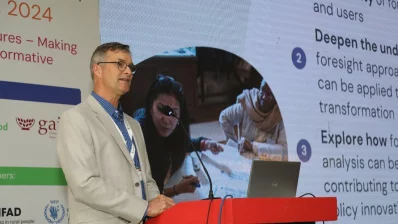
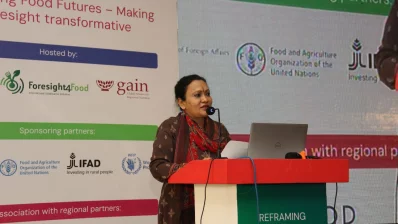
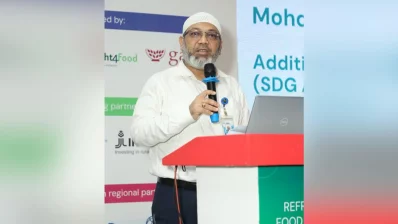
The inaugural session featured several distinguished speakers. Dr Jim Woodhill, Lead Foresight4Food Initiative delivered the welcome address. Keynote speakers Dr Amina Maharjan from ICIMOD and Dr Ravi Khetarpal from APAARI, discussed the current state of food systems transformation in Asia. Dr Ruhul Amin Talukder, Senior Advisor of GAIN Bangladesh, talked about shaping policies in Bangladesh, and Dr Mohammad Monirul Hasan, Country Advisor from GAIN Bangladesh, also delivered a keynote.
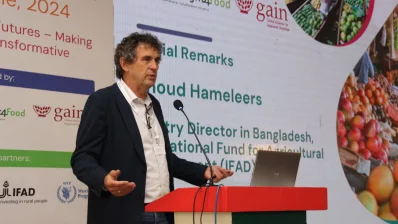
Special remarks were given by Dr Nurun Nahar Chowdhury, ndc, Additional Secretary of the Ministry of Agriculture. Md. Mahmudul Hossain Khan, Secretary, Coordination and Reforms, Cabinet Division thanked GAIN for the initiative with a hope that the workshop will guide sustainable, resilient, and equitable food systems, aligning with national policies and the “Making Vision 2041 a Reality” plan and Bangladesh Delta Plan 2100. Additionally, Md Shahidul Alam ndc, Director General of FPMU, Ministry of Food, spoke at the occasion stressing the importance of collaboration as key to achieving goals more efficiently and effectively. Additional remarks came from the IFAD Country Director Dr Arnoud Hameleers, the WFP Representative Domenico Scalpelli, and Deputy FAO Representative Dia Sanou.
State Minister for the Ministry of LGRD Md Abdul Wadud MP, stressed the need for rural focus in transforming Bangladesh’s food system, emphasizing cooperative’s role, rural entrepreneurship, and women’s empowerment for a strong rural economy.
Jamie Morrison, senior advisor, policy and external relations, GAIN, presented the food systems dashboard and food systems countdown initiatives and Pedro Garzon Delvauz and Katarzyna Czaplicka from FAO presented learnings of developing the Dhaka Food Agenda 2041.
The session concluded with a note of thanks from Dr Rudaba Khondker, Country Director of GAIN Bangladesh. She summarized the discussion at the inaugural session and highlighted the need for collaboration and investment priorities for the foresight for food systems transformation.
In the panel discussion, Dr Mohammad Monirul Hasan from the GAIN, Takahiro Utsumi from WFP, and Grace Bwengye from National Planning Authority of Uganda spoke on the national data governance, data validation, and knowledge platform and their role on the coordination to the foresight and scenario analysis of the food systems transformation.
A second panel discussion on “Foresight and financing food systems transformation” was held by Shino Kimura, Asian Development Bank and Amadou Ba, World Bank.
In case presentations, Wangeci Gitata-Kiriga, Country Facilitator for the Foresight for Food Systems Transformation (FoSTr) programme in Kenya and Joyce Nyamweya, founder of Results for Africa Institute (RAI) presented the experience from East Africa.
The presentation on “Making foresight processes relevant to policies and businesses” was given by Marrion Herens, Senior Advisor, Wageningen University and Research, presented a case study on the Dhaka Food Agenda.
Likewise, Alcade Segnon, Senior Officer at Alliance of Biodiversity International and the International Centre for Tropical Agriculture (CIAT), revealed the data showcasing the semi-arid region in Mali, and how they are a climate change hotspot as the surface temperature rises faster than the average globally.
The workshop ended with the expectations of integrating foresight for food systems in policy guidance and decision-making processes, as well as the need for regional cooperation and investment, cocreating the future with a human-centric approach.
A significant proportion of the population still suffers from food insecurity. That poor diets could cost the global economy almost 3% of its wealth per year by 2035, a similar impact to that of the Covid-19 pandemic.
We are collectively committed to harness foresight methodologies and drive systemic changes by aligning with country and global priorities, to foster nutrition resilient communities. Also here collaborative efforts are important.
Foresight analysis will be useful for showcasing Bangladesh in the UNFSS Stocktaking moments in the coming UNFSS STM +4 and also align with the country’s vision 2041, National Adaptation Plan 2050, Mujib Climate Prosperity Plan 2041, Smart Bangladesh Plan 2041, and Dhaka Food Agenda 2041.
We must support climate resilient agricultural production systems that are better integrated with global and local markets, ensuring food and nutrition security, and improving rural livelihoods.
The Food Transformation Initiative will complement the prospective plan by providing forecasted data and advanced analytical capabilities, aiding in policy decisions, and strengthening the policy-practice interface.
A total of 18 government ministries are working towards the foresight for food initiative. Collaboration is key to achieving goals more efficiently and effectively.
Need to focus for rural transforming Bangladesh’s food system, emphasizing cooperative’s role, rural entrepreneurship, and women’s empowerment for a strong rural economy. Bangladesh is not left behind now. The courage of our leadership is recognized worldwide.
Access to food and nutrition to all is a primary commitment of the government of Bangladesh, and it is a priority to reach that goal by 2030.
The FoSTr initiative will be a great supporting tool the Bangladesh Bureau of Statistics (BBS). This initiative aims to strengthen the science-policy-practice interface, enabling better-informed decision-making and policy development. BBS’s contributions are crucial for achieving a sustainable, equitable, and resilient food system in line with Vision 2041 and the Sustainable Development Goals (SDGs).
Utilize the subsector data and national data, I hope this foresight analysis helps the transformation process.
This workshop in Bangladesh marks a significant step forward in developing forward-thinking agriculture and food security strategies. By uniting government officials, technical experts, and global foresight leaders, critical challenges in today’s food systems can be tackled more effectively.
FAO’s holistic approach targets better production, better nutrition, a better environment, and a better life, leaving no one behind. Integrating foresight is crucial to anticipate and navigate future challenges.
Through shared responsibilities and collaborative efforts, the foresight potential can be further strengthened to ensure sustainable food system transformation globally.