The twelfth national parliamentary election of Bangladesh is scheduled to be held on January 7, 2024. In the meantime, the government parties and their alliances are preparing to participate in the elections in 300 seats of the country.
The last date for submission of nominations has already passed, and main opposition party BNP is adamant in its decision not to participate in the elections. They aim to intensify protests in the field for their one-point demand to hold fair polls under a neutral caretaker government. However, several of their central and district level leaders have submitted nominations from various parties to contest the elections, and many are also gearing up to contest the polls as independent candidates.
The leaders who have gone against BNP’s decision by seeking nominations have already been expelled from the party.
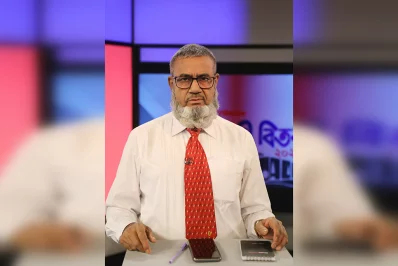
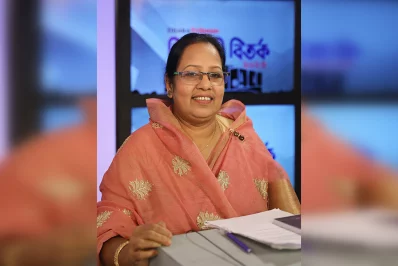
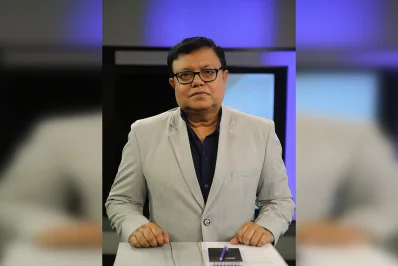
Three political leaders from Jhenaidah-1 constituency commented on the fifth episode of the TV show “Election Debate,” organized by Dhaka Tribune. They are Parveen Zaman Kalpana, Member of Central Executive Committee, Bangladesh Awami League; Md Abdul Wohab, Former Member of Parliament (Jhenaidah-1), BNP; and Monika Alam, Executive Member of Central Committee, Jatiya Party.
Abdul Wohab is not participating in the polls, but he came to the debate to discuss what the BNP would do if it participated and came to power.
The program was moderated by Dhaka Tribune Executive Editor Reaz Ahmad.
The program aired on Channel 24 TV Thursday, where the leaders from Bangladesh Awami League, the main opposition BNP, and the current opposition in Parliament, Jatiya Party, expressed their views on the political situation, current goals, the global situation, economic challenges, women and youth situation in Bangladesh, and their plans for the Jhenaidah-1 Constitution. Additionally, the respective parties discussed their political differences, freedom of expression, and the party’s commitment to anti-corruption.
BNP leader Abdul Wohab said: “If the democratic process does not continue, the economic situation will not improve in Bangladesh. I don't think all political parties will accept this twelfth election. Everyone in the international world wants participatory elections, not just governments.”
He claimed that the reserve's condition is at its lowest level now, and there is no money in the bank. Whichever government comes to power, it will be difficult to restore the economic situation.
Regarding the economic challenges, AL leader Parveen Zaman Kalpana said: “We are going through a global economic recession. However, the government faced the economic challenges with a strong hand during the corona pandemic. We were able to reach a decision to open the garment factory. Now we are thinking of going to Smart Bangladesh, where we will reach and overcome this economic challenge.”
She added: "Our plan is to increase the skills of remittance fighters by providing more training and finding new countries so that we can send more skilled people to new countries."
JP leader Monika Alam said: "The biggest problem is the syndicate, rising commodity prices, and people's standard of living is decreasing as a result. To face the economic challenges and reduce the obstacles, Bangladesh should emphasize the export sector.
“At the same time, the opportunities for remittance fighters should be increased by developing a more skilled population. Also, youth employment will increase through this," she added.
Regarding the employment of women and youths, BNP leader Wohab said: "If local industries, factories, and development projects are implemented, employment of women and youths will increase."
He claimed: "Although many mega projects are implemented in the country, only 10% are benefiting from them."
He said: "Rather than mega projects, local development should be given importance. Without the development of roads, rural electricity, and the industrial system, the overall development of the country is not possible."
He also mentioned: "It is difficult to prevent corruption in this country. This government has allowed corruption for 15 years. My party has zero tolerance for corruption, and our plan is to take strict action against corruption."
Regarding the development potential of the area, AL leader Parveen said: "Our area, Jhenaidah-1, is an agricultural area. High-quality onions are being produced here. From here, we can also send many products abroad through processing. We can establish a jute mill and charcoal mill with jute sticks. Agriculture can also be diversified, and products can be exported directly."
About corruption, she said: "Bangladesh is now in a good position in terms of corruption. During the tenure of BNP, Bangladesh became the champion of corruption five times. But now, digitization will make corruption easier to catch in Bangladesh, and the space for corruption has started to shrink."
JP leader Monika said: "This area is mainly inhabited by agricultural-dependent people. But a threat is that in the last 40 years, a third of the agricultural land here has gone for non-agricultural purposes. Measures should be taken soon to prevent agricultural land loss. We will take action when we come to power. Also, we will work to increase the education rate of women in this area and take measures to increase their employment."
BNP leader Wohab claimed that there was no freedom of the media during the regime of the current government, and many media outlets have been closed by the government.
“There is no freedom of speech, and people have no right to vote; this is why the BNP is demanding elections under a caretaker government,” he said.
AL leader Parveen, opposing the BNP leader's statement, said: "There is freedom of political dissent and mass media in this country, proof of which is that you are still criticizing the government here now. Everyone has 100% total freedom of expression in this country."
JP leader Moika claimed: "Women are afraid to go to the polls now. If the law-and-order situation in the country can be improved, everyone will be able to go to the polling station without fear."
She said: "Ershad's period was called the Golden Age; he was strict on corruption. He stopped student politics and rejected student politics from educational institutions."
What they said
I don't think all political parties will accept this twelfth election. Everyone in the international world wants participatory elections, not just governments. If the democratic process does not continue, the economic situation will not improve in Bangladesh. There is no freedom of speech, and people have no right to vote; this is why the BNP is demanding elections under a caretaker government. This government has allowed corruption for 15 years. Rather than mega projects, local development should be given importance. If local industries, factories, and development projects are implemented, employment of women and youth will increase. Although many mega projects are implemented in the country, only 10% are benefiting from them.
Now, we are thinking of transitioning to Smart Bangladesh, where we will reach and overcome this economic challenge. Digitization will make corruption easier to catch in Bangladesh, and the space for corruption has started to shrink. We are going through a global economic recession. However, the government faced the economic challenges with a strong hand during the corona pandemic. Our plan is to increase the skills of remittance fighters by providing more training and finding new countries so that we can send more skilled people to new countries. In Bangladesh, everyone has 100% total freedom of expression. That is why this government has given permission to the media, and they can criticize the government.
Syndicates are the biggest problem in Bangladesh, with rising commodity prices and the people's standard of living decreasing. To face the economic challenges and reduce obstacles, Bangladesh should emphasize the export sector. Speaking about Jhenaidah-1, there mainly live agricultural-dependent people. But a threat is that in the last 40 years, a third of the agricultural land here has gone for non-agricultural purposes. Measures should be taken soon to prevent agricultural land loss. We will take action if we come to power. Ershad's period was called the Golden Age; he was strict on corruption.
From Bangladesh's Jhenaidah-1 Constituency, BNP, AL, and Jatiya Party presented their party and personal positions, evaluations, political stances, analyses, women, and youth development, as well as future commitments to the people. We observed a difference of opinion among the parties regarding how much the mass people can benefit from the mega projects and local projects. We aim to gather their opinions from this event. Additionally, each party shared its plans for employment and the development of women and youth, believing that through the implementation of their respective master plans, they can address economic challenges and curb corruption. We hope the audience will gain insights from these discussions. Through this participation, we aimed to examine issues at both national and international levels.