


The auditor telling you that your accounts are all wrong is not a good look but that's what has just happened to Pressure Technologies (LON: PRES). Thus the 7% fall this morning in the PRES share price. However, it should be pointed out that this is a change in the timing of expense reporting, not a change in the amount. Therefore the effect upon cashflow and final profit margin is said to be zero. That might not be wholly true because inflation is a fact but still, 7% might be an over-reaction.
The problem is simply multi-year contracts with the government. There's no credit risk here that is. So, moving reported expenses around doesn't change total cashflow nor the total costs of the contract - this profits. It's simply a matter of when costs are recorded in the accounts, rather than any change in what the costs are.
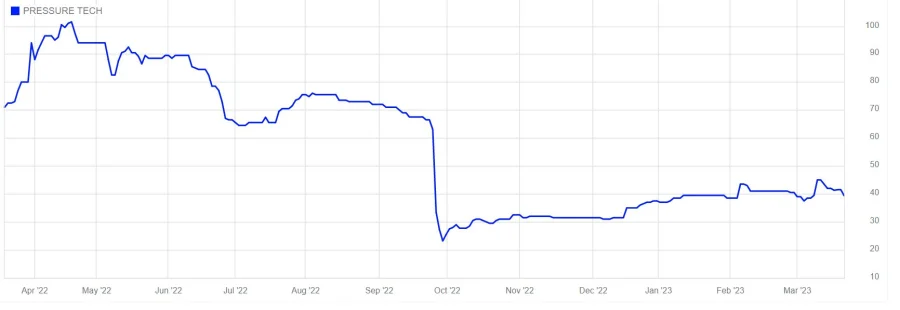
Pressure Technologies share price from London Stock Exchange
The specific problem is laid out here. Over the multiple years of the contract PRES has been smoothing the recording of the associated expenses. This in order to produce a flat profit margin on the contract in each financial year. Under IFRS - so the auditor now says - this is not allowable. Expenses must be recorded when they occur - we think that's about right too.
Therefore the weighting of recorded expenses toward the furniture years of the contract has to be changed. This increases expenses in years already past and so increases the corporate losses for years already passed. As Pressure Technologies is at pains to point out: “Whilst this cost treatment impacted the timing of profit recognition between financial periods, it had no impact on either the total profitability of the contracts over their entire lives, nor the quantum or timing of cash flows.” As long as their bank is happy with that, there are no covenant breaches, that should be pretty much that.
There is just the one further wrinkle. Which is that this past couple of years has seen significant inflation. This does mean that money collected in the past is more valuable than money in the future. Total inflation over a several years could be as much as 20% in fact - that is another change to the valuation that we might want to consider.
