


Codrus Minerals (ASX: CDR) share price is down 21% today in Australia. The difficulty here being that this slump comes from actually confirming some of the details about their rare earths find at Karloning. Which isn't, if rare earths are those sexy beasts that we're all told they are, quite what we might expect to happen. Our read of this is that yes, rare earths are lovely things, ionic clays are a lovely place to get them from, but there are simply too many people announcing much the same discoveries. That is, we're rapidly approaching the stage where we're going to have to drop the “rare” part of the rare earths name. With obvious implications for their price or the value of any specific deposit of them.
The announcement: “Assays from maiden drill program confirm significant high-grade clay-hosted rare earth discovery at Karloning. Widespread clay-hosted REE mineralisation intersected in the Company's first drill program, with grades up to 6,883ppm TREYO and the REE clay zone remaining open in multiple directions.” Which is great. That's a good find, it's a nice deposit. Ionic clays are relatively cheap to mine and they have a distinct advantage over other rare earths sources (like xenotime, bastnaesite etc) when it comes to the cost of processing the concentrates produced at the mine head. So, what's not to like? Well, we've said this before about Codrus Minerals. We've also said it about Thor Energy and Alvo Minerals. In fact, we've said it about the whole sector. Rare earths aren't rare.
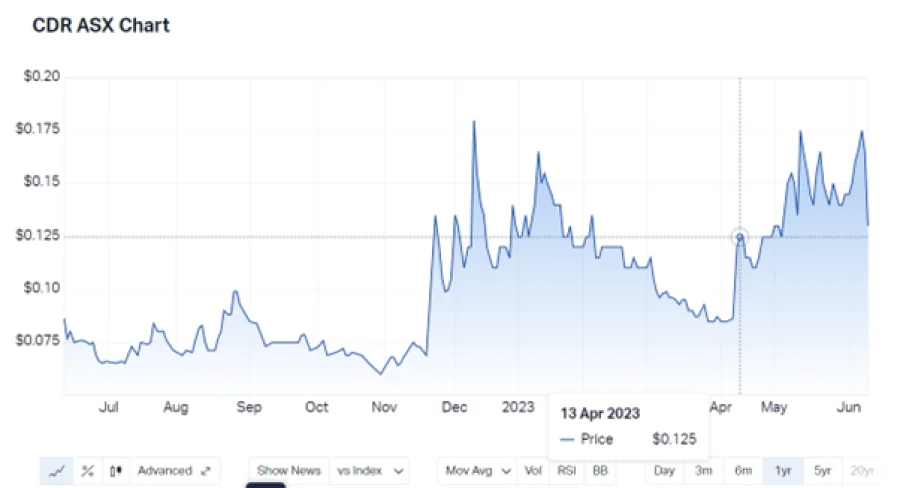
Codrus Minerals share price from ASX
We're slightly losing count now but we think there have been 9 different companies - on the ASX alone - announcing ionic clay deposits of rare earths in just the last two months alone. Now it has always been true that rare earths aren't rare. But it was true that we thought ionic clays - that convenient source - were specific to South China and Burma. What's happened just recently is that we've found out this isn't true. Seems to be a common effect of granites weathering in a subtropical climate. There's even thought that we might find something useful in China Clay deposits as well.
The point being that what we thought was rare is turning out not to be. And things that don't have rarity value are of lower value than those things which do have it.
Rare earths simply are not rare in any economic, mining or geologic sense. Therefore rare earth deposits aren't worth quite as much as people have been thinking they are.
